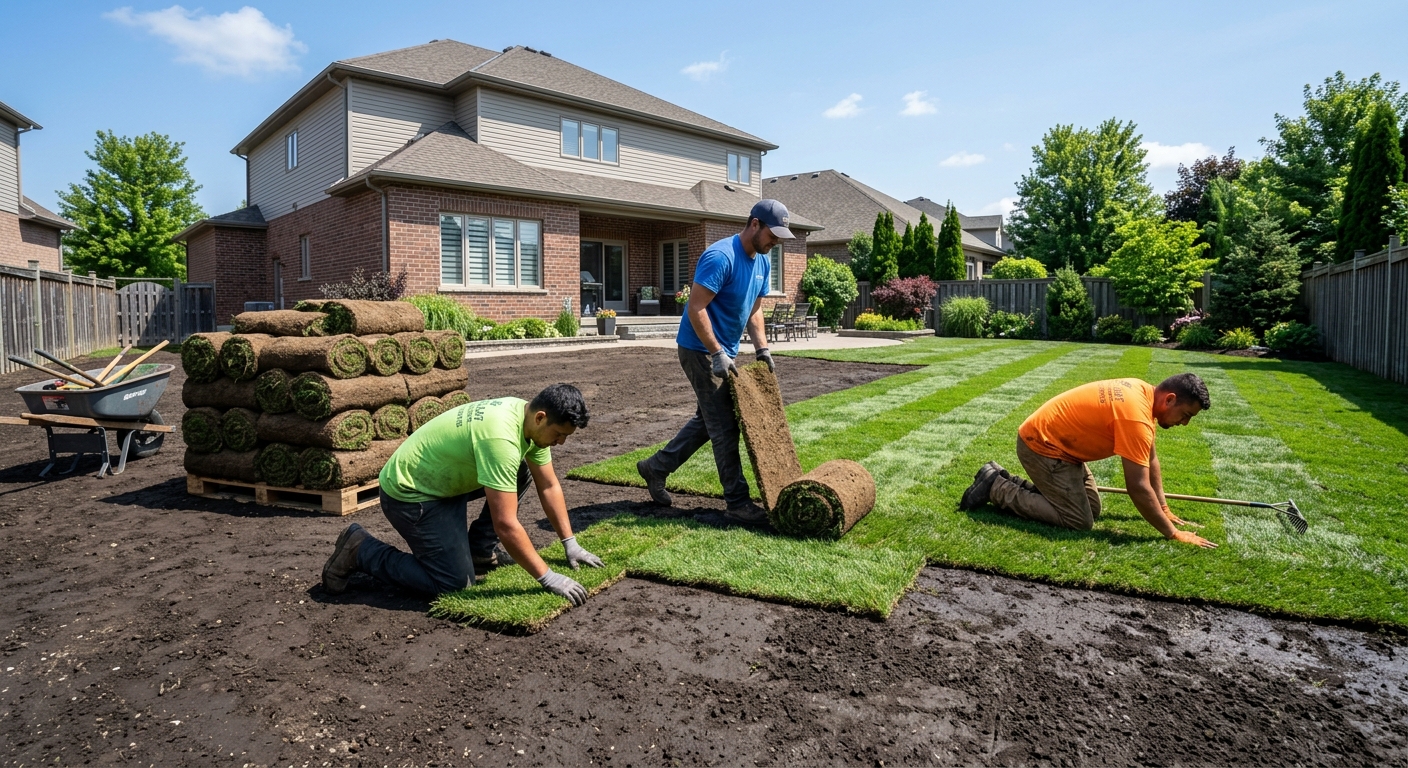
Landscaping options and costs in Ironwood
Ironwood is a great place to invest in a long-term landscape because the yard appeal and daily usability matter—especially in neighbourhoods where detached homes are common and owners tend to build around their outdoor living spaces. With a population of 6,236 people (Statistics Canada, 2021 Census), local demand supports steady work from landscape crews, but scheduling can still tighten during spring and early summer. In the Lower Mainland–Southwest, most properties sit within plant hardiness zones 7–8, which means you can grow a more lush, layered palette than colder parts of British Columbia, and crews have a longer practical season. Mild, wet winters and long, cool summers typically shift costs toward proper drainage, soil prep, and irrigation efficiency rather than heavy winter protection.
That mix also affects how quotes land: softscape labour is more available across the season, while structural work like patios and retaining walls carries risk and time for freeze–thaw cycles—bases must be dug deeper, drains need to be built correctly, and compaction matters. In Ironwood, trade is especially in demand around the busier residential pockets near the core service area, where front-yard curb appeal projects are common and access is tighter. If you’re comparing options before you call for estimates, the table below gives realistic ranges for the most requested services in this area.
| Service |
Description |
Season |
Price Range |
| Full landscape design and installation |
Site measurement, planting plan, hardscape/softscape layout, grading/drainage coordination, labour and materials for a cohesive yard build |
Early spring through fall (weather permitting) |
$5,000–$50,000 |
| Sod installation (supply, grade, lay, roll) |
Light grading, soil prep, sod supply, delivery, rolling, and starter maintenance guidance |
Spring to early fall |
$2,000–$8,000 |
| Lawn seeding (grade, seed, starter fertilizer) |
Minor grading, seed selection, starter fertilizer, first-season establishment |
Spring or early fall |
$1,200–$4,500 |
| Interlocking patio or walkway |
Excavation, compacted base, edge restraints, pavers, pattern alignment and finish grading |
Spring to fall; covered scheduling for wet weeks |
$10,000–$35,000 |
| Retaining wall (interlocking block) |
Block wall build with proper drainage layer (weeper/drain rock) and compaction |
Spring to late fall |
$10,000–$80,000 |
| Tree and shrub planting |
Soil conditioning, planting, staking (as needed), mulching, and establishment watering guidance |
Early spring through fall |
$1,000–$15,000 |
Prices are estimates only and vary by project scope, site access and material selection.
What affects the price of landscaping in Ironwood
It’s common to see quotes for what looks like the “same” landscaping job differ by 30–50% across the Lower Mainland–Southwest and the wider British Columbia market. The biggest drivers are season timing, crew availability, and how detailed the site prep is—especially drainage and grading. In plant hardiness zones 7–8, coastal BC climates can support a longer working and growing season than Prairie regions (Zone 2–4), but that doesn’t eliminate cost: heavy rain means foundations and subgrades must be handled carefully so you don’t trap water against your home. In the dry BC interior (where drought planning and water-efficient layouts are critical), irrigation design costs can rise in different ways. Southern Ontario (Zone 5–6) often faces a moderate season with summer dry spells, whereas Lower Mainland–Southwest projects can be more lush, which sometimes increases the variety—and total price—of plant material.
In Ironwood specifically, you’ll see cost swing based on a few local realities. First, a site with slope correction and drainage improvements can add substantial labour and excavation before you even set pavers—an “easy” patio might land far below the lower band, while a patio tied into retaining work can push toward the upper end of retaining-wall pricing. Second, because frost and freeze–thaw cycles still occur, wall bases and drainage must be built for longevity, not shortcuts. Third, irrigation efficiency is increasingly expected here: smart controller + drip zones typically adds cost up front, but it reduces waste during intermittent restrictions and rainy shoulder seasons.
For many homeowners, the decision between a more comprehensive package (often starting around the mid of the $5,000–$50,000 design band) versus piecemeal changes is where the numbers broaden. For example, sod is often attractive because it looks finished quickly, but a larger lawn can still climb fast into the $2,000–$8,000 range once grading and soil amendments are included.
| Price Factor |
Why It Matters |
Cost Impact |
| Yard size in sq ft — the primary cost driver for softscape |
More area means more labour time, more topsoil/seed/sod, and more planting material to establish. |
Low to very high; commonly the biggest swing across quotes |
| Grading and drainage work — slope corrections add significant cost |
Correct slopes and away-from-home drainage protect foundations and prevent pooling. |
Can add tens of percent to softscape budgets |
| Drainage bed or French drain installation |
Proper perforated pipe, gravel, and cleanouts are labour- and material-intensive. |
Often moves projects from mid-range to upper-range |
| Plant material tier — native shrubs vs. ornamental vs. mature specimen trees |
Mature specimens cost more and require careful handling, staking, and deeper planting holes. |
Medium to high depending on plant sizes and quantities |
| Hardscape vs. softscape ratio — walls and patios cost more per sq ft than lawn |
Base prep, compacted materials, and skilled laying time increase hardscape costs. |
High; hardscape often dominates total project price |
| Irrigation system design and installation |
Drip lines, zoning, smart controllers, and correct head placement improve efficiency. |
Medium to high; more zones and controls raise price |
| Soil amendment and topsoil required |
Heavy rain can expose poor soil structure; amendments support root establishment. |
Low to medium; can become high on degraded or thin soils |
| Tree removal or stump grinding before new planting |
Stumps complicate grading and can delay planting schedules. |
Medium; often required for clean tie-in to new layouts |
Permits & regulations in British Columbia
In British Columbia, most day-to-day landscape work—planting, sodding, and the majority of softscape installations—typically does not require a permit. That includes seeding, adding mulch, installing shrub borders, and laying pavers when you’re not materially changing lot grading in a way that redirects drainage. Where permits commonly come into play is with retaining walls above local height thresholds—often around 1.0 m (3.3 ft) in many municipalities—because walls can affect safety, drainage, and adjacent property impacts. Changes to lot grading that meaningfully alter how water flows (for example, shifting runoff toward neighbouring property or a storm connection) can also trigger approval requirements depending on how the drainage is addressed.
Step 1 for homeowners in Ironwood: confirm your contractor’s utility locates plan. Before digging planting holes or wall footings, utility locates are essential for safety and to prevent service disruptions. Step 2: ask what permits are needed for your specific wall height and any drainage reconfiguration; reputable contractors can tell you whether a building permit is likely and whether engineered drawings are required. Step 3: verify licensing and coverage before work starts. In practice, you should request (a) proof of the contractor’s British Columbia business registration/credentials where applicable, (b) a current certificate of insurance showing liability coverage, and (c) WCB/WSIB-equivalent coverage documentation for workers. Then you can cross-check those documents against the contractor’s listed information and any online registries available.
Finally, always confirm water-use bylaws relevant to your area. Even in coastal BC, occasional watering restrictions and higher water costs make efficient irrigation design (drip + smart controllers) a smart way to protect your investment.
Planning a landscape that thrives in Ironwood's climate
To plan a yard that thrives in Ironwood, design around the Zone 7–8 conditions common in the Lower Mainland–Southwest: wet winters, long cool growing periods, and mild frost timing that still allows freeze–thaw impacts. Start with plant selection. Choose native and zone-appropriate plants so you’re not fighting winter wetness or winter dieback. In practice, well-chosen broadleaf evergreens and layered perennials reduce winter gaps and lower the chance you’ll need expensive replacements. If you’re aiming for curb appeal without constant touch-ups, prioritize mulch-stabilized borders and groundcovers that can handle periodic rain followed by drier stretches.
Next, decide between sod and seed. Sod gives instant coverage, but it’s typically 3–4x the per-sq-ft cost of seeding once you factor in grading, preparation, and labour intensity. In Ironwood, that difference is justified when you need quick results for a sale timeline or when heavy rain has already compacted soil and you want a clean, uniform lawn base built correctly. Otherwise, seeding in spring or early fall can be a smart value—especially when you pair it with soil amendments and correct watering.
Drainage and grading are the make-or-break elements here. Foundation moisture problems often come from poor slopes and blocked flow paths, not from “bad luck.” For patios and retaining walls, base preparation must respect frost impacts: excavate and compact properly, and build drainage layers so water doesn’t sit behind blocks or under pavers. Low-maintenance strategies—mulch, perennials, and drip or smart-controlled irrigation—keep upkeep predictable without sacrificing the lush look this region is known for. If you want to be especially efficient, consider a rain garden in areas that naturally collect water, along with targeted drip zones. That can improve drainage while supporting plant health in a water-cost-aware way.
As a concrete budget example: a modest lawn refresh might sit around the lower end of professional sod installation (roughly the $2,000–$8,000 band depending on area), while a larger “instant curb appeal” upgrade becomes easier to justify if you’re also fixing drainage and upgrading borders—because those are the items that protect your home and reduce long-term replacement costs.
| Element |
Climate Consideration |
Maintenance Level |
Price Band |
| Sod lawn installation |
Mild winters support establishment, but waterlogging can happen in wet spells—grading and drainage matter. |
Medium in year one (watering + monitoring), then low |
$2,000–$8,000 |
| Native perennial garden |
Zone-appropriate natives handle wet-to-drier swings; mulch helps reduce winter splash and summer evaporation. |
Low (seasonal weeding and cutback) |
$3,000–$12,000 |
| Mulched shrub border |
Helps manage inconsistent rainfall and supports roots through cool winters and spring thaw. |
Low to medium (light pruning, topping up mulch) |
$2,000–$9,000 |
| Interlocking stone patio |
Freeze–thaw and heavy rainfall mean correct base depth, compaction, and drainage slopes are non-negotiable. |
Low (occasional joint/edge maintenance) |
$10,000–$35,000 |
| Retaining wall (block) |
Drainage layer prevents water pressure behind blocks; freeze–thaw affects base depth and compaction requirements. |
Low (periodic inspection) |
$10,000–$80,000 |
| Drip irrigation system |
Efficient watering supports long growing season and reduces wasted water during occasional watering limits. |
Low (controller/seasonal checks) |
$3,000–$12,000 |
How to choose a landscaping contractor in Ironwood
When you’re selecting a landscaping contractor in Ironwood, verification should be as important as the price. In British Columbia, ask for proof of general liability insurance and ensure it’s current for the dates of your project. If the contractor uses employees or sub-contracts labour, ask for their workers’ compensation coverage documentation (WCB coverage) so you’re not exposed if someone is injured on your property. Also request any relevant trades credentials or business information they can provide, and confirm the details match what they list online. Where possible, look for the contractor’s public records and any insurance certificate information they can provide on request.
Next, get 2–3 itemised written quotes. You want a breakdown that shows labour versus materials and spells out quantities (for example, square footage for sod or pavers, number of trees/shrubs, and whether topsoil amendments are included). Avoid a single lump sum with vague wording. Read the scope carefully: is disposal included? Is permit pull included for a retaining wall if required? Who handles utility locates if trenching is needed? Is the base depth for hardscape specified? The more clearly the scope is written, the fewer surprises you’ll face after excavation begins.
Warranty matters too. Ask for workmanship warranty length and what it covers—especially for drainage performance, settlement, and plant establishment timelines. Confirm whether product warranties apply directly to you and whether they’re transferable to future homeowners. For payment, never pay more than 10–15% upfront; use a staged schedule and hold back a reasonable portion until you have final grading, cleanup, and punch-list completion. Request a start date and an estimated completion timeline in writing, accounting for wet weather weeks typical to Lower Mainland–Southwest conditions.
- Request itemised quotes (labour + materials + quantities), not lump sums.
- Confirm whether sod/seed prep includes soil amendments, not just laying product.
- Ask for drainage details in writing (slope, outlets, weeper/drain rock for walls).
- Verify general liability insurance with a certificate of insurance.
- Verify WCB/coverage documentation for workers.
- Confirm who pulls permits (if any) for retaining walls above the local threshold.
- Check utility locates procedure before digging planting holes or footings.
- Get a written timeline including weather contingencies for wet periods.
- Ask what’s excluded: tree removal, stump grinding, haul-away, or regrading.
- Clarify warranty terms for workmanship and planting establishment.
- Use a payment schedule with no more than 10–15% upfront.
- Confirm cleanup and site restoration standards (edges, turf line, disposal).
Red flags to watch for in Ironwood: a quote with no drainage/base details; refusing to provide insurance or coverage documents; vague scope language like “pavers installed” without base depth/compaction notes; demanding large upfront payments beyond 10–15%; and no written start/completion dates. If you see these, it’s usually better to keep shopping.
Frequently asked questions — landscaping in Ironwood
Do I need a permit for a retaining wall in British Columbia?
In British Columbia, many landscaping activities like planting and sodding typically don’t require a permit, but retaining walls can. In many municipalities, walls above about 1.0 m (3.3 ft) often require a building permit, and sometimes engineered drawings depending on height, location, and site conditions. Changes to lot grading that affect drainage toward neighbouring properties or storm connections can also trigger approval requirements. For an Ironwood homeowner, the simplest path is to tell your contractor the wall height and where it will sit, then ask directly whether a permit is expected and whether the contractor will handle the permit pull or coordinate it with you. Always confirm utility locates before any excavation for wall footings, since wet Lower Mainland–Southwest sites can conceal underground services.
How do I improve drainage in my yard?
Drainage improvements in Ironwood usually come down to restoring proper slope and giving water a safe path away from your home. In the Lower Mainland–Southwest, the challenge is often wet season pooling and slow drainage rather than drought. Start with an inspection: look for soggy spots near foundations, water that lingers after rain, and damp soil under downspouts. A contractor should assess grading and may recommend a drainage bed or French drain with a cleanout, plus regrading to direct water to a suitable outlet. If you’re adding landscaping, coordinate drainage first—then sod, seeding, or planting. For projects that include retaining walls, make sure the wall includes a proper drainage layer (like weeper/drain rock) so freeze–thaw impacts don’t worsen performance over time.
What is xeriscaping and does it suit Ironwood?
Xeriscaping is landscaping designed to reduce water use by using drought-tolerant plants, efficient irrigation (often drip), smart scheduling, and soil improvements like mulch to limit evaporation. In Ironwood and the wider Lower Mainland–Southwest, winters are mild and wet, so xeriscaping isn’t always about “no watering ever.” Instead, it’s about watering efficiently during dry stretches and avoiding unnecessary irrigation on areas that naturally stay damp. Where it fits best is in front-yard zones, slopes, and areas that tend to dry out faster, paired with rain-garden features where water collects. Even if you’re not in the drier BC Interior, water costs and occasional restrictions still make efficient design attractive. If you’re comparing options, a drip irrigation system (often roughly $3,000–$12,000 depending on zones) can help justify lower-maintenance planting plans and reduce ongoing maintenance.
How do I plan a low-maintenance yard?
A low-maintenance yard plan in Ironwood works best when you combine the right plant palette with “structure”: mulch, groundcovers, and drainage-corrected soil. Start by selecting zone-appropriate and native-friendly plants so they’re adapted to local wet winters and cool growing conditions (Lower Mainland–Southwest zones 7–8). Use groundcovers and perennial groupings to reduce weeding, then rely on mulch shrub borders to suppress weeds and stabilize moisture. For lawns, consider whether you want sod for instant coverage or seeding for lower upfront cost; sod installations often fall in the $2,000–$8,000 range depending on area and prep needs. Pair whichever you choose with a practical irrigation setup—drip and smart controllers are popular because they reduce waste and make watering consistent. Finally, design pathways and patios so you’re not stepping through wet soil season after season.
How deep should a retaining-wall base be for local frost?
For retaining walls in British Columbia, base depth needs to account for freeze–thaw cycles and the frost impacts on soil structure. The exact depth depends on wall height, block type, soil conditions, and site drainage, so a one-size number can be misleading. That said, your contractor should dig below the expected frost influence and build a properly compacted base with drainage measures behind the wall. In the Lower Mainland–Southwest, winter isn’t as harsh as Prairie regions, but freeze–thaw still occurs, so shortening the excavation depth is where walls can settle or fail prematurely. For an Ironwood homeowner, ask your contractor to specify excavation depth in their written scope, describe the drainage layer (weeper/drain rock), and confirm compaction methods. Good drainage is often the difference between a wall that stays straight and one that develops bulging over time.
How much does professional landscape design cost?
Professional landscape design pricing depends on how detailed the plan is and whether it ties directly into installation. In Ironwood and the Lower Mainland–Southwest, design-and-install packages commonly land within broader project bands—often starting around the $5,000–$50,000 range for full landscape design and installation, depending on yard size, drainage work, and the amount of hardscape. If you’re only seeking a design plan without construction, costs are usually lower, but you’ll still pay for site measurement, concept/layout drawings, and a planting palette tailored to zones 7–8 and your site’s wet/dry patterns. When you compare quotes, focus on what’s included: base drawings, planting lists, irrigation notes, drainage recommendations, and whether the scope clarifies responsibilities for disposal and any permit-related steps for retaining walls above typical thresholds.