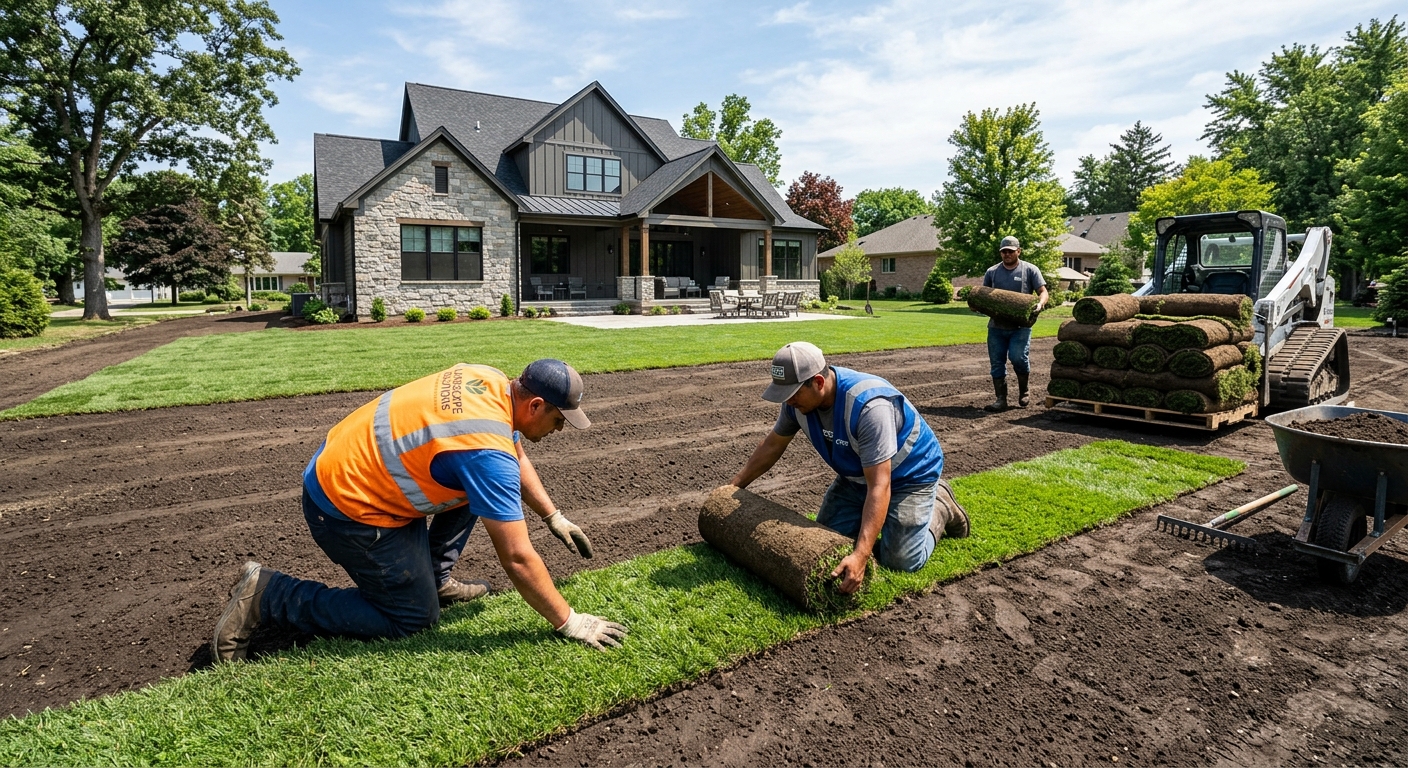
Landscaping options and costs in Cedar Valley
Cedar Valley’s landscaping market is shaped by two things that show up in almost every quote: the yard space people have to work with and the long, cool-but-productive growing season along the Lower Mainland–Southwest. In Cedar Valley (population 8,080, Statistics Canada, 2021 Census), most homeowners have enough lot room to improve both the front curb appeal and the functional back-yard—especially where single-detached homes are common, because you’re not just beautifying a small strip of land. That matters for pricing: larger softscape areas (lawn, beds, planting) can quickly move a project from “refresh” into “full install.”
In the Lower Mainland–Southwest (plant hardiness zones 7–8), winters are mild and wet, and the frost window is comparatively forgiving. That typically means contractors can schedule planting and many softscape tasks for much longer than in colder parts of BC or the Prairies, where frost-free time is short. However, costs still depend on how your site behaves in freeze–thaw: patios and retaining walls require deeper excavation, proper drainage, and compaction to prevent movement. On the slope-and-wet-soil lots common in and around neighbourhoods near the newer commercial corridors, demand is especially strong for layered planting, drainage upgrades, and hardscape that can handle runoff after heavy rain.
Below is a practical price comparison for the services homeowners most often pair in Cedar Valley, so you can benchmark your upcoming quote.
| Service |
Description |
Season |
Price Range |
| Full landscape design and installation |
Site walk, design plan, grading/drainage coordination, soil prep, planting, and hardscape (scope varies) |
Spring to early winter |
$7,500–$45,000 |
| Sod installation (supply, grade, lay, roll) |
Remove old lawn, grade to level, topsoil/loam as required, sod install, light rolling and initial watering plan |
Mid-spring to late fall (avoid the wettest cold weeks) |
$2,500–$7,500 |
| Lawn seeding (grade, seed, starter fertilizer) |
Grade and rake, seed blend, starter fertiliser, seed-to-soil contact, initial watering guidance |
Spring and early fall |
$1,800–$5,000 |
| Interlocking patio or walkway |
Excavate, compact base, install edging, interlocking units, jointing sand, and basic drainage tie-ins |
Spring to late fall |
$10,000–$55,000 |
| Retaining wall (interlocking block) |
Block wall layout, excavation, base/gravel drainage layer, geotextile, backfill and compaction |
Spring to fall (allow for weather windows) |
$12,000–$65,000 |
| Tree and shrub planting |
Soil amendment, staking/correction of planting depth, mulch rings, and seasonal care recommendations |
Spring and fall (with exceptions in mild stretches) |
$1,500–$15,000 |
Prices are estimates only and vary by project scope, site access and material selection.
What affects the price of landscaping in Cedar Valley
For the same “end result,” Cedar Valley homeowners can see quotes that differ by roughly 30–50% across the Lower Mainland–Southwest and other parts of British Columbia because labour availability, soil conditions, and material handling vary from site to site. A coastal-style lush planting plan is easier to execute in zones 7–8 (with a longer working and growing season), but it still costs money to correct drainage, bring in soil, and build hardscape bases that can survive freeze–thaw. In contrast, Prairie regions (zones 2–4) often require drought-tolerant, wind-hardy species and compressed schedules; that changes both what grows well and how contractors staff jobs. In the dry BC Interior, water rules and irrigation design can increase or change scope. Southern Ontario (zones 5–6) can have a moderate season but still needs careful irrigation planning during dry spells.
In Cedar Valley, two local conditions commonly raise cost: first, wet winters and clay-to-loam soils can hold moisture, so grading and drainage work becomes necessary before planting or paving. Second, older housing stock often has uneven slopes toward foundations or existing lawn low spots—fixes that look “cosmetic” on the surface typically become a few thousand dollars of additional excavation, base material, and compaction. For example, moving from simple lawn seeding (often near the $1,800–$5,000 band) to sod can jump the project several thousand dollars because you’re paying for supply and faster results. Similarly, a retaining wall can swing from a mid-range $12,000–$65,000 install to the higher end when you need a more complex drainage layer and deeper, well-compacted base for frost.
Below are the key cost drivers contractors use to explain those differences in your quote, even when the design looks similar on paper.
| Price Factor |
Why It Matters |
Cost Impact |
| Yard size in sq ft — the primary cost driver for softscape |
More area means more topsoil/loam, edging, mulch, labour hours, and plant quantities |
Often the largest driver; expanding from 1,000 to 2,000 sq ft can increase total cost dramatically |
| Grading and drainage work — slope corrections add significant cost |
Fixing pooling or redirecting runoff prevents foundation moisture and winter ponding |
Can add major labour and disposal costs; commonly pushes projects toward the upper bands |
| Drainage bed or French drain installation |
Creates a reliable subsurface pathway for water in heavy-rain areas |
Often a mid-to-high add-on because of excavation depth and gravel/pipe volume |
| Plant material tier — native shrubs vs. ornamental vs. mature specimen trees |
Large specimens, formal shapes, and container sizes cost more and may require lifting equipment |
Switching tiers can raise cost several thousand dollars even with the same plant count |
| Hardscape vs. softscape ratio — walls and patios cost more per sq ft than lawn |
Patios and retaining walls require excavation, compacted base, edging and pavers/blocks |
Higher share of hardscape typically shifts the project into higher hardscaping bands |
| Irrigation system design and installation |
Efficient layouts reduce waste, protect plants, and can align with water-use expectations |
Upgrades (drip zones, controllers) add cost but prevent failures and rework |
| Soil amendment and topsoil required |
Healthy roots need the right mix; clay-heavy or compacted soils often need improvement |
Topsoil/loam hauling and amendments can be a noticeable line-item |
| Tree removal or stump grinding before new planting |
Clearing affects site prep time and can require additional hauling/disposal |
Can add thousands depending on stump size and access |
Permits & regulations in British Columbia
In British Columbia, most planting and softscape work doesn’t require a permit. Typical tasks that generally do not need a permit include: planting new trees and shrubs, applying mulch, installing sod, laying walkway stone without major grade changes, and most interlocking patio installations as long as you’re not altering drainage patterns toward a neighbour or storm connection.
Where permits often do come into play is structural retaining work and significant changes to lot grading. Retaining walls above the usual municipal threshold—commonly about 1.0 m (3.3 ft)—typically require a building permit and, in some cases, engineered drawings. Also, if your proposed grading plan changes how water flows (for example, directing runoff toward neighbouring property or into storm sewer connections), approval requirements can be triggered. In any case, call for utility locates before digging planting holes or wall footings; it’s a safety requirement and helps avoid service interruptions.
To verify a contractor in Cedar Valley (and anywhere in BC), start by confirming the company’s BC licence registration online, then ask for their certificate of insurance showing liability coverage. For workers, request proof they have the required coverage (WSIB/WCB as applicable) and keep a clearance letter or account confirmation. Finally, make sure the insurance dates overlap your project start date—coverage lapses are a common reason disputes get messy.
Planning a landscape that thrives in Cedar Valley's climate
Planning for Cedar Valley’s climate means selecting plants and building details that match zones 7–8, the wet winters, and the frost calendar (last spring frost often in early March to early April near the coast, with first fall frost typically in November). When you design “with” those conditions, you spend less on rework. For plant selection, focus on native and zone-appropriate species that tolerate winter moisture and cooler months without heavy winter protection. In practice, that often reduces annual watering needs and improves winter survival because the plants are accustomed to local humidity and mild temperatures.
Sod vs. seeding is another key decision. Sod gives instant visual results, but it costs roughly 3–4 times more per sq ft than seeding. If your main goal is curb appeal for an upcoming sale, sod can be worth it—especially on a smaller lawn area where you want fast closure. If you’re building a longer-term plan and can manage initial watering, seeding is usually the smarter value, and it pairs well with improved soil and aeration.
Drainage and grading are where many Cedar Valley projects succeed or fail. In the Lower Mainland–Southwest, pooling after heavy rain can keep roots saturated and lead to foundation moisture issues. Getting base preparation right for patios and retaining walls matters too: excavation depth, compacted base materials, and proper drainage layers protect against frost heave and wall movement during freeze–thaw cycles.
For low maintenance, use groundcovers, mulch, and long-blooming perennials instead of planting many narrow “high attention” specimens. If water efficiency is part of your plan (even with fewer Interior restrictions), consider drip irrigation and a rain garden in downspout pathways to capture and filter runoff rather than sending it everywhere.
Dollar example: upgrading a small front lawn from seeding (often within the $1,800–$5,000 band) to sod can be an extra several thousand dollars. That premium is justified when you need immediate results, but it’s usually not the best first spend if drainage is your real problem—fixing grading often prevents future lawn failure and saves you money long-term.
| Element |
Climate Consideration |
Maintenance Level |
Price Band |
| Sod lawn installation |
Performs well in zones 7–8 when installed on correct grade and kept evenly moist during establishment |
Medium (watering during establishment, first mowing season care) |
$2,500–$7,500 |
| Native perennial garden |
Native plants handle wet winters and cool summers better; fewer winter losses when planted at correct depth |
Low to medium (mulch refresh and seasonal weeding) |
$3,000–$12,000 |
| Mulched shrub border |
Mulch insulates roots during wet cold snaps and helps soil moisture stability through freeze–thaw |
Low (annual pruning, topping mulch) |
$2,500–$10,000 |
| Interlocking stone patio |
Base prep and drainage gaps reduce heaving risk during freeze–thaw cycles |
Low (occasional joint sand maintenance) |
$10,000–$55,000 |
| Retaining wall (block) |
Proper base depth, geotextile and drainage layer are critical in wet coastal soils |
Low (inspection after wet winters) |
$12,000–$65,000 |
| Drip irrigation system |
Zones 7–8 benefit from targeted irrigation; drip supports efficiency and reduces leaf disease pressure |
Low to medium (seasonal adjustments) |
$1,500–$8,000 |
How to choose a landscaping contractor in Cedar Valley
Choosing the right contractor in Cedar Valley starts with verification. In British Columbia, confirm the business has the appropriate contractor licensing for the scope they’re proposing, and ask for liability insurance certificate details. For worker coverage, request proof of the applicable WSIB/WCB coverage (and a clearance letter/account confirmation where available). Don’t accept “we’re covered” verbally—ask for documents and confirm the policy dates overlap your start date. If a contractor can’t provide documentation promptly, that’s a strong signal to keep looking.
Next, get 2–3 quotes that are actually comparable. You want itemised written proposals with a labour and materials breakdown (not one lump sum). Ask whether excavation, hauling/disposal, and soil import are included, and whether the quoted price assumes finished grades and drainage tie-ins. Clarify whether permits are included (if your project triggers retaining-wall thresholds) and confirm who is responsible for utility locates.
Warranty matters. Ask for the workmanship warranty length, what it covers (settling, plant replacement period, surface cracking tolerance for pavers), whether it’s transferable, and how claims are handled. For payment schedule, a safe rule is to never pay more than 10–15% upfront; hold back a portion until key completion points are met (base inspection, final grading, and plant establishment). Finally, get a written start date and realistic completion estimate—weather windows in the Lower Mainland–Southwest can affect timing, especially after heavy rain.
- Confirm contractor licence details for the scope on the quote
- Verify liability insurance certificate (coverage amounts and dates)
- Request WSIB/WCB proof and a clearance letter/account confirmation
- Get itemised pricing (labour, materials, disposal, topsoil/loam)
- Ask what’s excluded: stump grinding, waste hauling, soil supply quantity, regrading
- Confirm drainage tie-ins and whether downspouts/curb cuts are addressed
- Check plant list specifics: genus/species, size at install, and warranty/guarantee
- For hardscape, confirm base thickness/compaction method and edging details
- Ask about joint sand and maintenance plan for interlocking stone
- Review irrigation scope: drip vs spray, number of zones, controller type
- Verify permit responsibility if a retaining wall exceeds the typical ~1.0 m threshold
- Use a payment schedule with 10–15% max upfront and progress-based holdback
Common red flags in Cedar Valley include: a quote with no itemisation, promises to “handle everything” without discussing permits/drainage, missing insurance or unclear coverage documents, no written timeline, and installing sod or plants without a stated grade/drainage plan—especially on yards that already pond after rain.
Frequently asked questions — landscaping in Cedar Valley
How do I improve drainage in my yard?
In Cedar Valley and across the Lower Mainland–Southwest, drainage improvements usually start with observing where water pools after heavy rain. If water sits near a foundation or stays in low spots for more than a day or two, you’ll typically need a grading correction and possibly a subsurface solution like a drainage bed or French drain. The “cheap fix” of adding more topsoil often fails if the water has nowhere to go. A contractor should also check downspout discharge points and lawn slope away from the house. If hardscape is involved, base prep is critical for freeze–thaw performance, not just the lawn.
Expect drainage-related work to be priced into the overall landscape scope, and it can be one reason quotes vary by 30–50%. If your site needs drainage plus a patio or wall, your budget may move toward the higher ends of the patio/walkway or retaining wall ranges (for example, patios often sit around $10,000–$55,000 depending on prep and drainage complexity).
What is xeriscaping and does it suit Cedar Valley?
Xeriscaping is landscaping designed to reduce water use by using drought-tolerant plants, smart irrigation, and soil amendments that hold moisture efficiently. In Cedar Valley (BC coastal conditions, zones 7–8), you don’t face the same long dry summers as the drier BC Interior, but water costs and occasional watering limitations still make efficiency attractive. Xeriscape doesn’t mean “no green”—it’s more about layering plants that thrive with less supplemental irrigation and using mulch and groundcovers to reduce evaporation. It also pairs well with rain-garden concepts for capturing runoff from downspouts.
That said, if your yard is frequently waterlogged in winter, your priority shouldn’t be xeriscape plants—it should be drainage and grading. A good plan uses the right plant for the right moisture zone: wet-tolerant plants where water collects and efficient drip irrigation where the soil stays drier.
How do I plan a low-maintenance yard?
A low-maintenance yard in British Columbia usually comes from fewer, stronger plant choices and better hardscape/soil fundamentals. Start with drainage and grading so you’re not fighting standing water or soggy soil that stresses plants. Then choose zone-appropriate plants that handle local wet winters and cool summers with minimal winter protection. Native perennial beds, mulched shrub borders, and groundcovers generally require less replanting and less frequent mowing than lawn-only designs.
For lawn, seeding is typically a lower-cost entry point (often around $1,800–$5,000), while sod gives fast results but costs more and needs careful establishment. A common strategy in Cedar Valley is to reduce lawn area and replace it with mulched beds and perennials near walkways while keeping a smaller “high use” lawn zone. Add drip irrigation with smart controllers where you want consistent moisture without wasting water.
How deep should a retaining-wall base be for local frost?
For retaining walls in Cedar Valley and the Lower Mainland–Southwest, the key isn’t guessing a single “magic depth,” but building the wall foundation correctly for local freeze–thaw behaviour and drainage. Freeze–thaw cycles can cause movement if the base is underbuilt or if water sits behind the wall. In practice, that usually means excavating deeper than a shallow surface-level footing and building a properly compacted granular base with a drainage layer behind the blocks (often with geotextile separation). This is especially important on sloped yards and in heavier soils common in the region.
Your contractor should base excavation depth on the wall height, soil conditions, and drainage details. If the wall exceeds the typical ~1.0 m threshold, a permit and sometimes engineered requirements may apply, which is another reason to treat base depth as a technical spec rather than a guess.
How much does professional landscape design cost?
In Cedar Valley, landscape design pricing varies with how detailed the scope is (site measurements only vs full design with plant lists and grading/hardscape layouts). Many homeowners combine design and installation, which can reduce design cost per dollar of final build. For example, full landscape design and installation budgets commonly land in the broad range of $5,000–$50,000 for the Lower Mainland–Southwest, depending on complexity, soil and drainage work, and whether hardscape or irrigation is included.
If your project is primarily planting, the tree and shrub planting range is often around $1,000–$15,000 depending on plant size and quantities. If you’re adding a patio or walkway, hardscape budgets can start around $10,000 and climb toward $55,000 with prep and base work. The best way to estimate “design-only” vs “design + build” is to ask for an itemised quote that separates the planning fee from installation labour and materials.
How do I compare landscaping quotes?
To compare landscaping quotes in British Columbia (including Cedar Valley), start by matching scope, not just total price. Ask each contractor to provide an itemised breakdown: labour, materials, topsoil/loam quantities, excavation and disposal, and whether drainage beds or French drains are included. Confirm what’s excluded (for instance, stump grinding, utility locates, permit responsibility, or additional grading). Compare plant specifications too—look for genus/species and the size at installation, because “shrubs” can mean different grades that cost thousands differently.
A good quote should also describe workmanship standards: how interlocking patio bases are built for freeze–thaw, how retaining walls include drainage layers, and what warranty covers plant replacement timing. Finally, sanity-check numbers against common bands: if one quote has sod that lands far outside the typical $2,500–$7,500 install range, or if a design+install proposal is wildly lower than the $5,000–$50,000 band, ask what’s missing from the scope.