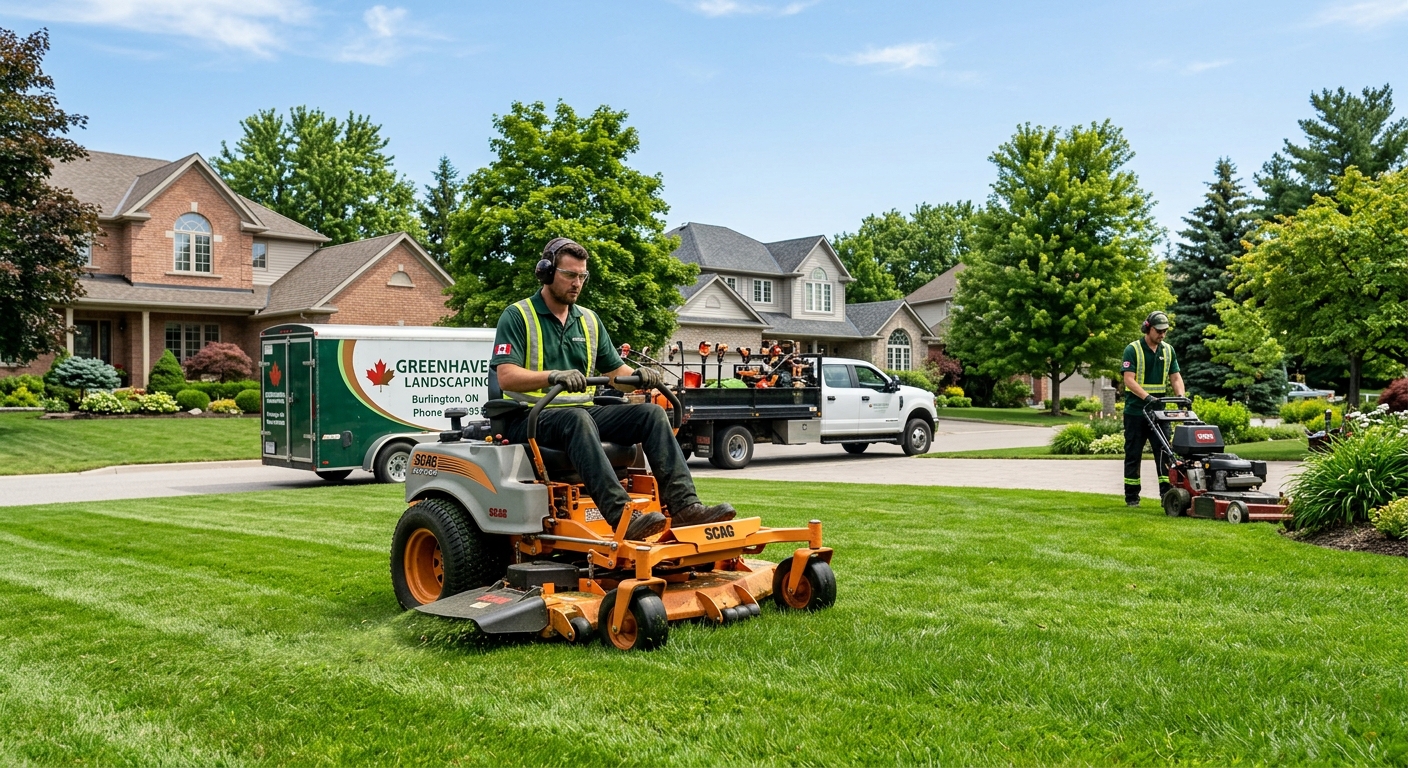
Landscaping options and costs in Saltair
Saltair homeowners usually start planning landscaping with the same question: “What will it cost to make the yard feel finished and low-fuss?” That’s especially common in Saltair, where a community population of 2,069 (Statistics Canada, 2021 Census) supports steady contractor availability and repeat demand for curb appeal upgrades. In the Lower Mainland–Southwest market, you’re also often working on properties with enough yard space to justify layered planting beds, upgraded drainage, and year-round softscape. The coastal climate (hardiness zone 7–8) helps plants establish quickly, but it doesn’t eliminate costs—wet winters and freeze–thaw cycles still affect excavation depth, base prep, and drainage details.
Compared with Prairie regions, the long cool season in coastal BC usually stretches labour demand beyond a single “short window,” which can stabilize scheduling and pricing for design and planting. Structural work like patios and retaining walls still must be built for freeze–thaw, so contractor time goes into proper base excavation, compaction, and weeping/grade corrections. If your project is near areas with older homes and more slope-to-road drainage needs, like the Saltair village area along the main corridor, you’ll typically see more requests for drainage repairs and hardscape.
Below are typical cost ranges to help you compare quotes before you meet with a local crew for a site walk and measurements.
| Service |
Description |
Season |
Price Range |
| Full landscape design and installation |
Site assessment, layout, planting plan, grading/drainage coordination, hardscape and softscape build-out |
Almost year-round; heavy rain periods may shift dates |
$5,000–$50,000 |
| Sod installation (supply, grade, lay, roll) |
Minor grading, soil conditioning, sod supply and installation, rolling and initial watering plan |
Late spring to early fall (avoid the wettest weeks for best lay) |
$2,000–$8,000 |
| Lawn seeding (grade, seed, starter fertilizer) |
Final grading, seed/soil contact improvement, starter fertilizer, light mulch if needed |
Spring or early fall for germination |
$900–$5,000 |
| Interlocking patio or walkway |
Excavation, compacted base, bedding sand, pavers, edging, and joint sand |
Spring through fall; avoid saturated ground when possible |
$10,000–$45,000 |
| Retaining wall (interlocking block) |
Block wall build with base, drainage layer, geotextile, and compaction |
Spring through fall; protect open excavation from storms |
$12,000–$70,000 |
| Tree and shrub planting |
Plant supply, digging, backfill, compost/topsoil, staking (as required), and initial watering guidance |
Most of the year; best results in mild windows |
$1,000–$15,000 |
Prices are estimates only and vary by project scope, site access and material selection.
What affects the price of landscaping in Saltair
In the Lower Mainland–Southwest, it’s common to see quotes for the “same” landscaping idea vary by 30–50% once you compare what’s included and how complex the site is. The biggest drivers are climate-zone realities (what will thrive), working season, and how much construction time is needed for drainage and base prep. Coastal BC sits in plant hardiness zones 7–8, with frost typically arriving early and lingering only until the following spring thaw windows—this supports lush palettes, but it still doesn’t remove the need for proper drainage and freeze–thaw-proof construction for patios and retaining walls. In contrast, Prairie zones (2–4) have short frost-free periods and push clients toward drought- and wind-tolerant planting, with more compressed schedules. Southern Ontario (zones 5–6) often has a moderate season but still requires irrigation planning for dry spells. Those regional differences directly change plant choices, labour pacing, and therefore pricing.
Two concrete examples that commonly raise costs in Saltair are (1) when a sloped yard needs re-grading to prevent water pooling against foundations—grading and drainage corrections can add significant time and excavation; and (2) when heavy rainfall has caused soft, unstable soil, requiring a drainage bed or French drain before you can safely install hardscape. Meanwhile, costs can drop when your yard is already level, drainage is functioning, and you’re opting for lighter softscape changes (for example, planting upgrades within the tree and garden planting band of $1,000–$15,000 rather than moving into full structural builds).
Local housing age also matters: older properties often need deeper base prep for walkways and may require stump grinding prior to new planting. If excavation depth and disposal move you from a small planting project toward a hardscaping scope, your total can quickly align more with retaining walls & hardscaping of $10,000–$80,000.
| Price Factor |
Why It Matters |
Cost Impact |
| Yard size in sq ft — the primary cost driver for softscape |
More square footage means more labour hours, more topsoil/compost, and more plant or turf material |
Often the largest variable; doubling area can roughly double material + installation line items |
| Grading and drainage work — slope corrections add significant cost |
Coastal BC sites can trap water; correcting slopes affects excavation volume, base depth and labour time |
Commonly increases cost materially when downspouts or low spots require rework |
| Drainage bed or French drain installation |
Helps manage persistent wet zones and foundation splash-back risk |
Can shift a softscape project into a hardscape-like cost profile due to excavation and rock |
| Plant material tier — native shrubs vs. ornamental vs. mature specimen trees |
Mature stock costs more and takes more labour to handle, stake, and water during establishment |
Small changes in plant size can create noticeable swings in totals |
| Hardscape vs. softscape ratio — walls and patios cost more per sq ft than lawn |
Pavers, block, base layers and compaction are labour-intensive and require more materials |
Shifting 200 sq ft from lawn to patio can noticeably increase your overall budget |
| Irrigation system design and installation |
Even if you’re not on strict watering bans, efficient systems reduce waste and improve establishment in mild wet climates |
Adding drip lines and a smart controller increases upfront costs but improves long-term performance |
| Soil amendment and topsoil required |
Coastal soils may need compost and structure for drainage and root health; import costs add up fast |
Higher if you’re replacing poor fill or building raised beds/planting pockets |
| Tree removal or stump grinding before new planting |
Root mass removal and disposal time can expand scope beyond planting |
Can add a separate crew day and equipment charges |
Permits & regulations in British Columbia
In British Columbia, most routine softscape work—planting, sodding, and the typical installation of gardens and lawns—usually does not require a permit. Homeowners can typically proceed with planting holes and turf installation without going through a formal building-permit process. However, retaining walls are the common exception. Retaining walls above a height threshold—typically 1.0 m (3.3 ft) in many municipalities—often require a building permit and sometimes engineered drawings, especially if engineering is needed due to soil, drainage, or structural load considerations. Also, changes to lot grading that affect drainage toward neighbouring properties or storm connections may trigger approval requirements depending on how the work changes runoff patterns.
Before any digging, confirm utility locates (so you don’t hit buried services when trenching for drainage or irrigation). For irrigation work, check local water-use rules and bylaws; while the Lower Mainland typically avoids the strict seasonal bans seen in the drier BC Interior, municipalities still care about efficient irrigation and water waste.
To verify your Saltair contractor’s credentials, do this step-by-step: (1) Licensing: look for the contractor’s applicable BC business/contractor information in official online directories (and ask directly for their licence number). (2) Liability insurance: request a current Certificate of Insurance naming you as the certificate holder where appropriate; confirm it covers landscaping/contracting activities. (3) Coverage for workers: in BC, ensure they carry proper workplace coverage for their employees (commonly referenced through WCB/worker protection documentation). Ask for the clearance letter or proof of account status, and keep copies with your contract.
Planning a landscape that thrives in Saltair's climate
Planning in Saltair is about working with zone 7–8 conditions—cool, wet winters and long, growing periods—while protecting your yard from the two perennial challenges in Lower Mainland–Southwest: excess moisture and freeze–thaw movement. Start with plant selection. Choose zone-appropriate, mostly native shrubs and perennials that handle the damp soil season and rebound reliably after winter. The right mix reduces winter die-back and can lower how often you need supplemental irrigation. Next, decide between sod and seeding. Sod gives instant visual payoff, but it’s usually 3–4x more per sq ft than seeding because you’re paying for turf harvest, transport, and intensive lay labour—still, it can be worth it where fast curb appeal matters or you have a small lawn area.
Drainage and grading are make-or-break in this region. Even if your lawn looks fine, pooling near foundations can lead to foundation splashback, damp basements, and washouts that undermine hardscape bases. For patios and retaining walls, base preparation needs to be built to handle frost heave risk: deeper excavations, proper compacted layers, and drainage layers help prevent movement over multiple seasons. Finally, design low-maintenance layers: mulched shrub borders, groundcovers in place of bare soil, and long-blooming perennials reduce annual weeding and keep beds looking full.
If you want a water-smart approach that still looks lush, consider a rain garden or strategically placed bioswale beds that capture roof runoff, plus a drip irrigation system with a smart controller. For example, if you’re debating sod versus seeding for a 500 sq ft lawn, sod can push you toward the $2,000–$8,000 band, while seeding and prep may stay closer to the lower end of lawn budgets—making seeding the better value when your timeline allows a couple growth cycles.
| Element |
Climate Consideration |
Maintenance Level |
Price Band |
| Sod lawn installation |
Best laid in workable mild windows so roots bond before heavy winter wet periods |
Low to moderate (initial watering and mowing frequency) |
$2,000–$8,000 |
| Native perennial garden |
Uses zone-appropriate plants that handle cool winters and summer cool-downs |
Low (seasonal trimming and mulch refresh) |
$3,000–$12,000 |
| Mulched shrub border |
Mulch helps stabilize moisture through wet/dry swings and reduces weed pressure |
Low (weed control and top-up mulch 1–2 times/year) |
$2,500–$10,000 |
| Interlocking stone patio |
Requires compacted base layers to resist freeze–thaw movement |
Low (occasional joint sand refresh and cleaning) |
$10,000–$45,000 |
| Retaining wall (block) |
Needs proper base depth and drainage so water doesn’t build pressure behind the wall |
Low (visual inspections after storms) |
$12,000–$70,000 |
| Drip irrigation system |
Supports efficient establishment and targets root zones during mild dry spells |
Moderate (seasonal checks and controller updates) |
$1,500–$6,000 |
How to choose a landscaping contractor in Saltair
Choosing the right contractor in Saltair starts with proof, not promises. In British Columbia, verify licensing and insurance before work begins. Ask for (1) liability insurance: request a current Certificate of Insurance and check coverage limits are appropriate for landscaping operations. (2) Workplace coverage for employees: confirm they carry worker protection coverage (commonly referred to as WCB) and request proof such as a clearance letter or account status documentation. (3) Any specific trade certifications if they’re doing electrical/irrigation controller wiring or specialized equipment work—don’t assume.
Then get 2–3 itemised written quotes. The best bids break costs into labour and materials (excavation/haul, base, pavers/block, soil/topsoil/compost, plants, and irrigation/drainage components). Avoid a vague lump sum that doesn’t say whether the contractor includes disposal, soil import, edge restraints, or geotextile. Make sure the scope is clear: what’s excluded? Is permit pulling included (where required for taller retaining walls)? Is site access included? If you’re replacing lawn, ask whether they’re handling old turf removal and grading.
Warranty matters too. Confirm workmanship warranty length and whether it covers settling, shifting joints, and plant replacement during establishment. Ask about product/manufacturer warranties separately, and whether they’re transferable if you sell your home.
For payment, never pay more than 10–15% upfront. Hold back a portion until the final inspection and walk-through are complete. Finally, request a written start date and realistic completion estimate that accounts for rain delays, especially for base work.
- Provide proof of liability insurance (certificate available before signing).
- Show worker coverage proof (e.g., WCB clearance/account status documentation).
- Give an itemised quote (labour + materials) instead of a single total.
- List exclusions clearly (disposal, permits, tree removal, soil import, irrigation tie-in).
- Include a base-spec line for patios/walkways/retaining walls (depth + compacted layers).
- Confirm drainage approach in writing (slope direction, French drain/rock bed if needed).
- Spell out plant sizing and quantities (container sizes, mature height/spacing).
- Provide a watering/establishment plan after planting and turf.
- State workmanship warranty length and what’s covered.
- Ask if product warranties apply and how to register/claim.
- Use a payment schedule with small deposits and progress-based releases.
- Agree on a timeline that includes weather contingencies and cleanup standards.
Red flags to watch for in Saltair: (1) no written contract or missing scope details; (2) refusing to provide an insurance certificate or worker coverage proof; (3) promising “one price for everything” without measurements or drainage plans; (4) skipping base specs for patios or retaining walls; and (5) requiring large upfront payments (well beyond 10–15%).
Frequently asked questions — landscaping in Saltair
Sod vs seed — which is better for a Saltair lawn?
In Saltair and coastal BC’s zone 7–8 conditions, both sod and seeding can work well, but the best choice depends on your timeline and your site. Sod is usually the fastest route to a finished look, and you’ll typically see it priced in the $2,000–$8,000 band depending on lawn size, grading, and access. Seeding is more budget-friendly because you’re paying for seed, prep, and labour rather than turf rolls—often the better option when you can tolerate a longer “grow-in” period. If your yard has drainage issues or compacted soil, seeding may struggle unless grading and soil amendment are addressed first. My rule of thumb: choose sod for smaller lawns or curb-appeal urgency, and choose seeding for larger areas where you can manage establishment watering through cool, mild windows in spring or early fall.
How much does a retaining wall cost in Saltair?
Retaining wall pricing in Saltair commonly depends on wall height, length, soil conditions, and whether proper drainage layers and base depth are required for freeze–thaw movement. For interlocking block walls, most projects fall into the broader retaining walls & hardscaping band of $10,000–$80,000, with many typical residential jobs clustering around the middle once excavation, geotextile, and drainage rock are included. A taller wall on a sloped lot usually costs more because it needs deeper footing/base prep and more backfill and drainage work. If your site requires re-grading or a French drain to relieve hydrostatic pressure behind the wall, that can push the budget upward. Always ask for an itemised quote showing block, excavation/haul, drainage layer, and wall height.
When is the best time to landscape in Saltair?
For Saltair, the “best” time often lines up with both plant establishment and workable weather windows. Planting can generally be done over a wide part of the year, because coastal BC rarely has extended frozen ground, but contractors still avoid the wettest stretches when soil is too saturated for base compaction and clean excavations. For sod, late spring through early fall usually gives the best chance for roots to bond before deep winter wet conditions. Seeding is typically best in spring or early fall when temperatures support germination without extreme stress. Hardscape and retaining walls should be scheduled for periods when the site can be kept from turning to slurry—because a weak base will undermine the long-term performance even if the pavers or blocks look great at install.
Do I need a permit for a retaining wall in British Columbia?
In British Columbia, planting and most softscape work typically does not require a permit, but retaining walls often do when they exceed a common height threshold—frequently around 1.0 m (3.3 ft) in many municipalities—especially when engineering drawings are needed. The exact requirement can vary based on wall height, design, and site conditions, so you should confirm with your municipality before construction. In practice, a permit is also more likely when the wall is part of a drainage/grading change that affects runoff direction or storm connections. If your contractor is experienced, they’ll tell you early whether your proposed wall height likely triggers a permit and whether they’re including permit coordination in the quote. Don’t start excavation until you’re confident the approvals are covered.
How do I improve drainage in my yard?
In Saltair and the Lower Mainland–Southwest, drainage problems usually show up as pooling, persistently wet lawn areas, mossy/soft spots, or dampness near foundations. The right fix starts with diagnosing where water is coming from: downspouts, surface runoff from a slope, or poor grading. Often, the solution is a combination of re-grading to direct water away from the home and adding subsurface drainage such as a drainage bed or a French drain where water concentrates. If you’re installing new turf or hardscape, drainage must be planned first; otherwise, you may pay for sod or pavers that settle over time. Also consider efficient irrigation adjustments so you don’t add extra water to an already wet zone. A reputable contractor will propose a drainage plan and explain how it protects foundations during wet winters and freeze–thaw cycles.
What is xeriscaping and does it suit Saltair?
Xeriscaping is a landscaping approach that reduces water use through drought-tolerant planting, smart irrigation, and soil improvements like mulch and compost. In Saltair, it can still suit your yard—but with a coastal twist. Because the Lower Mainland–Southwest has mild, wet winters and generally avoids the strict, frequent drought restrictions seen in the BC Interior, you’re often aiming for “efficient and resilient,” rather than extreme drought-only planting. Xeriscape principles can still work by minimizing lawn area and using native and zone-appropriate shrubs, groundcovers, and rain-garden style planting beds that manage runoff. If you want a practical middle ground, consider replacing part of the lawn with a mulched border and adding drip irrigation with a smart controller—this can reduce waste while keeping a lush look. If you’re budgeting, this kind of softscape change may align better with planting bands than with full hardscape rebuilds.