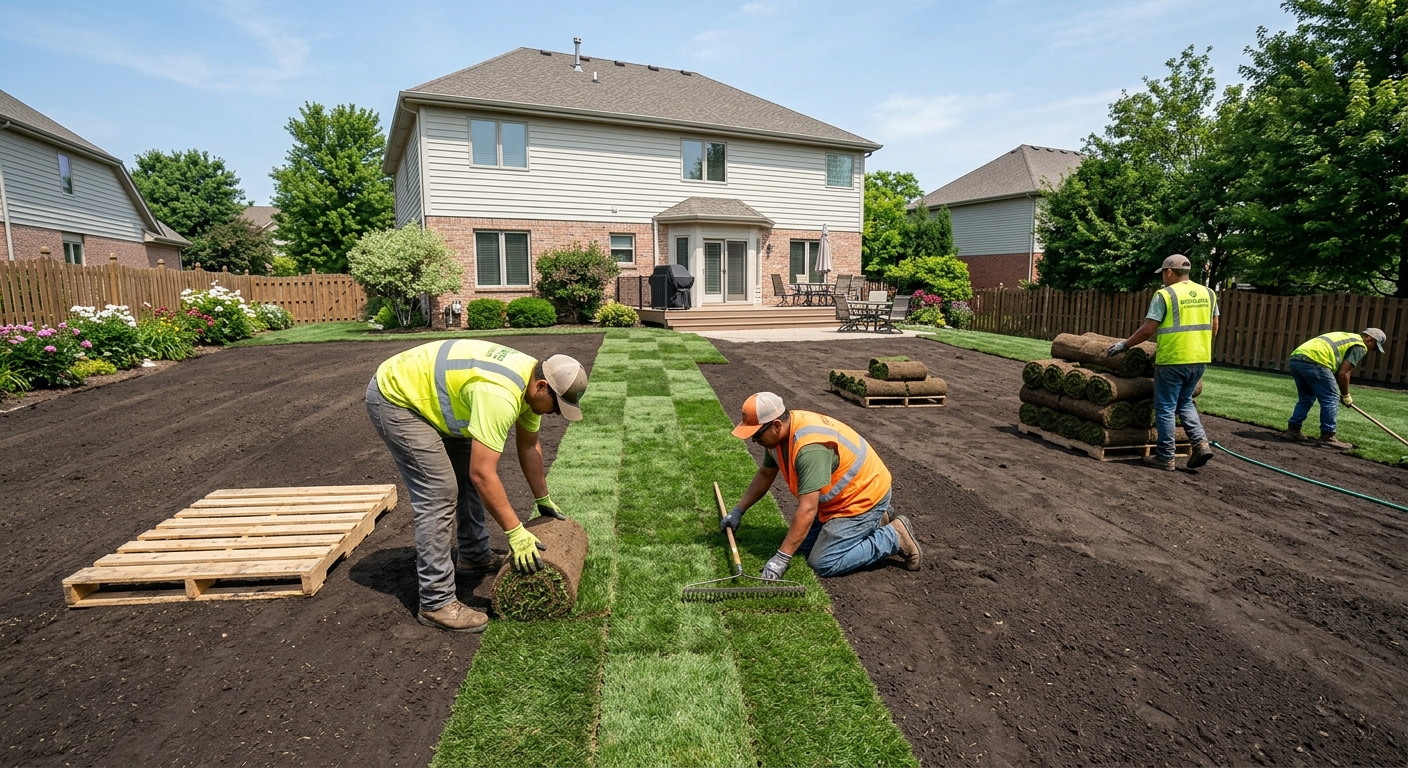
Landscaping options and costs in West Cambie
West Cambie, British Columbia is a great place to upgrade your property’s outdoor living space—especially if you want a layered, green look that stays attractive through winter. With a population of 12,255 (Statistics Canada, 2021 Census), the area has a steady mix of established neighbourhoods and growing demand from homeowners who invest early in curb appeal. In most West Cambie pockets—often around where single-family housing creates the most yard area—you’ll typically see longer driveways, bigger frontages, and more opportunity for planting beds, patios, and irrigation systems.
In the Lower Mainland–Southwest (plant hardiness zones 7–8), costs are shaped by a longer working and growing season. Contractors can plant and build for much of the year (aside from the wettest winter stretches), which can widen scheduling options. At the same time, mild wet winters and cool summers mean drainage work and soil preparation are still non-negotiable—standing water can ruin topsoil, foundations, and plants. That’s why even “softscape-only” projects can land in different price tiers depending on grading, topsoil depth, and whether you need a drainage bed or French drain.
Expect especially strong demand in the West Cambie–Richmond border areas where homeowners often add interlocking walkways, patio extensions, and privacy planting along rear fences. From there, pricing usually pivots between lawn replacement, layered planting, and hardscape features—so the table below helps you benchmark realistic ranges before you request quotes.
| Service |
Description |
Season |
Price Range |
| Full landscape design and installation |
Site visit, concept + layout, planting plan, irrigation notes, soil/grade plan, and full build-out (softscape + selected hardscape) |
Spring–Fall (often year-round for scheduling, weather permitting) |
$5,000–$50,000 |
| Sod installation (supply, grade, lay, roll) |
Remove old turf as needed, grade to slope, install soil amendments/topsoil, lay and roll sod, initial watering guidance |
Late March–October (best before heat spikes) |
$2,000–$8,000 |
| Lawn seeding (grade, seed, starter fertilizer) |
Minor grading, seed + starter fertiliser, light topdressing/rolling, and first-season maintenance plan |
Early spring to early summer; overseed in fall where appropriate |
$1,500–$5,500 |
| Interlocking patio or walkway |
Excavation, base prep with proper drainage, compaction, interlocking stone, edging, clean finish |
Spring–Fall (structural work sensitive to wet weeks) |
$6,000–$35,000 |
| Retaining wall (interlocking block) |
Excavation, compacted base, block + drainage behind wall, cap/header, finishing and vegetation reinstatement |
Spring–Fall |
$10,000–$80,000 |
| Tree and shrub planting |
Soil prep, planting, staking where needed, mulch rings, and initial watering plan |
Spring–Fall |
$1,000–$15,000 |
Prices are estimates only and vary by project scope, site access and material selection.
What affects the price of landscaping in West Cambie
In West Cambie and across the Lower Mainland–Southwest, two quotes for the “same” landscaping job can differ by 30–50% because the workload isn’t identical. Labour rates, equipment access (mini-excavator vs. bobcat), and the real scope behind the scenes—like drainage repairs, hauling, or soil conditioning—change the total. The climate and working season also matter: coastal BC typically sits in plant hardiness zones 7–8 with early spring planting and first fall frost often not until November, so contractors can build more consistently than in Prairie regions (zone 2–4), where shorter frost-free windows and harsher winter conditions force tighter scheduling and tougher material choices.
Here’s how local conditions raise or lower cost in West Cambie. First, although winters are mild, wet soils and freeze–thaw cycles can still create problems around foundations and slopes; that’s why proper bases for patios and retaining walls may require deeper excavation and better compaction. Second, Lower Mainland rainfall means drainage design can be a hidden driver: adding a drainage bed or French drain often pushes a project toward the higher end of the $10,000–$80,000 retaining wall/segment ranges. Third, for lawns, sod looks simple, but it typically costs more than seeding: if you’re trying to “buy back” time, sod can land in the $2,000–$8,000 band, whereas seeding may be less expensive but takes longer to fill in.
Finally, housing age influences site prep. Older lots in established neighbourhoods often need more topsoil conditioning and cleanup around existing tree roots or compromised drainage paths—so what starts as “planting” can become grading and soil amendment. If you’re upgrading a yard on an older property, plan for those add-ons in your budget so the quote you receive matches the actual site conditions.
| Price Factor |
Why It Matters |
Cost Impact |
| Yard size in sq ft — the primary cost driver for softscape |
Material and labour scale directly with area (soil, sod/seed, mulch, plants, top dressing) |
Low to high: small changes in area can shift pricing materially |
| Grading and drainage work — slope corrections add significant cost |
Fixing pooling or redirecting water away from foundations requires excavation and regrading |
Often +$2,000 to +$10,000 depending on slope and access |
| Drainage bed or French drain installation |
Improves subsurface water management; needs proper stone gradation and pipe placement |
Frequently a major swing factor; can push projects up a price tier |
| Plant material tier — native shrubs vs. ornamental vs. mature specimen trees |
Higher-tier plants cost more and may require larger equipment and longer planting time |
Mature specimens can add thousands quickly |
| Hardscape vs. softscape ratio — walls and patios cost more per sq ft than lawn |
Stonework relies on excavation depth, base materials, and compaction |
Higher ratios move pricing toward the upper part of hardscape bands |
| Irrigation system design and installation |
Drip lines, zones, controllers, valves, and testing vary with plant layout |
Can add moderate-to-significant cost but improves survival |
| Soil amendment and topsoil required |
Heavy clay or disturbed fill often needs imported soil and conditioning for roots |
Common uplift on older lots or problem soils |
| Tree removal or stump grinding before new planting |
Site clearance is labour-heavy and may involve hauling and safety measures |
Can move you from “planting” pricing into “full landscape” territory |
Permits & regulations in British Columbia
For most landscaping in British Columbia—planting, sodding, and the majority of softscape work—typically no permit is required. If you’re installing new lawn, planting beds, mulch, or replacing topsoil, your project is usually handled as a standard construction/landscape scope. However, retaining walls can be different: in many BC municipalities, retaining walls above a height threshold (commonly around 1.0 m or 3.3 ft) usually require a building permit, and sometimes engineered drawings depending on height, location, and site conditions. Changes to lot grading that affect drainage flow toward neighbouring properties or storm sewer connections may also trigger review or approval.
Before any digging, contractors should arrange utility locates (and you should confirm it’s done) because planting holes, French drains, and wall footings can intersect buried services. Also verify local irrigation and water-use bylaws—BC Interior drought rules can influence best practices, and even in coastal areas homeowners are increasingly asked to use efficient systems during restricted periods.
How to check your West Cambie contractor properly: (1) licence/registration: confirm they’re legitimately registered for the work type they’re performing, using available online registries; (2) liability insurance: ask for a current certificate of insurance showing your job site is covered; (3) worker coverage: request proof of coverage/clearance where applicable (such as worker protection coverage letters or proof documents). A reputable contractor will provide documents without pressure and match the insured name to the company quoting the job.
Planning a landscape that thrives in West Cambie's climate
Planning for West Cambie means designing with zone 7–8 conditions and the Lower Mainland–Southwest rainfall pattern—not against it. Start with plant selection: choose zone-appropriate, native or well-adapted species that handle cool wet winters and occasional drying periods in summer. That reduces winter protection and lowers replacement risk. For lawns, decide early between sod and seed: sod gives instant results but generally costs about 3–4x more per square foot than seeding, so it’s best when you need fast curb appeal or you’re reseeding a spot that will experience traffic right away.
Drainage and grading are the next big lever. In this region, pooling can create foundation moisture issues and drown roots; even a “beautiful” planting layout will fail if runoff isn’t managed. If your yard slopes, plan for proper grading and consider a drainage bed or French drain where water collects. For hardscape like patios and retaining walls, base preparation must account for freeze–thaw cycles: bases should be excavated and compacted correctly to prevent frost heave and settlement. That’s where good contractors add value—straight edges come from disciplined subbase work, not guesswork.
Finally, go low-maintenance without going bare. Use mulch, groundcovers, and perennial groupings to reduce annual upkeep, and layer plants for different bloom times. If you want a water-smart option, look at rain-garden beds or xeriscape-adjacent plantings with drought-tolerant varieties in drier micro-sites (like south-facing edges) while keeping moisture-tolerant species in naturally wetter zones.
$2,000–$8,000 sod projects can be worth it when you need fast results (e.g., a finished patio reveal). But if your priority is long-term savings, seeding is often the better value and still benefits from correct grading and starter fertiliser.
| Element |
Climate Consideration |
Maintenance Level |
Price Band |
| Sod lawn installation |
Strong early establishment in cool seasons; requires consistent initial watering in wet-to-dry transitions |
Medium (first season watering and weed control) |
$2,000–$8,000 |
| Native perennial garden |
Better resilience in zone 7–8; supports long-bloom structure with less replanting |
Low to Medium (mulch refresh and seasonal pruning) |
$1,000–$12,000 |
| Mulched shrub border |
Mulch reduces evaporation and limits winter splash from heavy rain events |
Low (annual mulch/top-up and occasional shaping) |
$1,500–$10,000 |
| Interlocking stone patio |
Needs proper base compaction and drainage to handle freeze–thaw cycles |
Low (occasional joint regrading/spot cleaning) |
$6,000–$35,000 |
| Retaining wall (block) |
Drainage behind the wall is crucial to prevent water pressure and movement |
Low (inspection after seasons, minor resets if needed) |
$10,000–$80,000 |
| Drip irrigation system |
Efficient water delivery in a region where rules may tighten and costs rise |
Low (seasonal checkups and controller setup) |
$1,500–$8,000 |
How to choose a landscaping contractor in West Cambie
When you hire a landscaping contractor in West Cambie, verification matters as much as the plants. First, confirm British Columbia coverage and eligibility for the work: request proof of liability insurance (certificate of insurance) and ask for documentation showing worker protection coverage where applicable (clearance/coverage letter or proof). If the contractor is subbing trades (excavation, irrigation, or engineering for a wall), make sure those parties are covered too.
Next, get 2–3 itemised written quotes. A good quote breaks labour and materials down (excavation and base materials, stone quantities, drainage parts, plants by size, soil/topsoil volumes, and any irrigation components). Avoid “lump sum” quotes that don’t explain assumptions. Read the scope carefully: what’s included in disposal/hauling, what’s excluded (tree removal, permits if required, or replacement of lawn in other areas), and whether the contractor is responsible for restoring disturbed edges and grass. If a retaining wall requires a permit, confirm whether permit pull and associated drawings are included or excluded.
Ask about warranty: workmanship warranty length, who provides product/manufacturer warranty, and whether it’s transferable to future owners. For payment schedule, never pay more than 10–15% upfront; hold back a portion until the job is complete and plants have been established properly. Finally, insist on a timeline in writing—start date, milestones, and completion date—so a wet week doesn’t become an open-ended delay.
- Ask for current certificate of insurance naming your property/job as covered.
- Confirm worker protection coverage/clearance documentation is provided on request.
- Get quotes that list quantities (sq ft for sod/paving, linear ft for curbs/walls, plant counts/sizes).
- Require base specs for patios and walls (depth, compaction steps, and drainage details).
- Confirm grading direction so runoff doesn’t move toward neighbouring lots or your foundation.
- Clarify disposal/hauling inclusion (topsoil, debris, surplus soil).
- Check if utility locates are arranged before digging.
- Ask who supplies topsoil/soil amendment and what mix is used.
- Confirm irrigation: drip vs spray, zone count, and controller type if included.
- Verify plant warranty approach (replacement policy if plants fail in the first season).
- Review the payment schedule and keep a holdback until cleanup and handoff.
- Get dates in writing, including a re-scheduling plan for heavy rain periods.
Red flags in West Cambie include: refusing to provide insurance/coverage documents, vague scopes with no quantities, no mention of drainage/grading standards, “lowest price wins” bids that exclude disposal and restoration, and requests for large upfront payments beyond 10–15%.
Frequently asked questions — landscaping in West Cambie
When is the best time to landscape in West Cambie?
In West Cambie and across the Lower Mainland–Southwest, spring through early fall is usually the most reliable window for planting and most softscape work, because the soil warms up and the cool, wet conditions are manageable. Because the region typically sees last spring frost in early March to early April near the coast—and first fall frost often not until November—you can often plant again after late-summer heat settles. That said, scheduling still depends on rain: wet weeks can slow excavation and base preparation. If you’re planning sod or new lawn, aim for late March to October for best establishment. For larger hardscape, spring and summer are ideal, since compaction and base work are easier when the ground isn’t saturated.
Do I need a permit for a retaining wall in British Columbia?
Sometimes, yes—retaining walls are the main landscaping item that commonly triggers permits in British Columbia. While planting and typical softscape work usually do not require a permit, many municipalities require a building permit for retaining walls above a height threshold that’s often around 1.0 m (3.3 ft), and engineered drawings may be requested depending on the situation. Changes to grading that redirect drainage toward neighbouring properties or storm sewer connections can also trigger approval requirements. For a West Cambie project, your best step is to ask your contractor to confirm whether the design meets the threshold and whether they include permit-related work in the quote. If not, ask about costs and timelines before signing.
How do I improve drainage in my yard?
Drainage improvements usually start with observing where water pools after rain and where runoff travels during storms. In West Cambie, heavy rain can quickly reveal low spots that keep soil soggy, which leads to shallow roots and mossy turf. A practical approach is re-grading (so water flows away from your foundation) combined with installing a drainage bed or French drain where water collects. If you’re adding a patio or retaining wall, include drainage behind those features to relieve water pressure. Your quote should spell out what’s included—grading amounts, pipe/stone components, and how disposal is handled. Getting this right can be the difference between a project that’s just “pretty” and one that actually performs. It also prevents future rework that often pushes budgets beyond the mid-range, like moving from basic planting into full hardscape scope such as $10,000–$80,000.
What is xeriscaping and does it suit West Cambie?
Xeriscaping is a water-wise landscape strategy—using drought-tolerant plants, efficient irrigation, smart mulching, and designs that reduce unnecessary watering. In West Cambie (zone 7–8) you do get rain, so traditional xeriscaping “everything rock and cactus” usually isn’t necessary. However, it can still suit parts of your yard: south-facing borders, dry edges near driveways, or areas where grass struggles. Many homeowners combine lush coastal-BC planting with targeted water-smart zones—think rain-garden style beds for wetter areas and drought-tolerant shrubs or groundcovers for drier micro-sites. The key is zoning irrigation correctly and matching plant palettes to your yard’s wet/dry patterns, which keeps maintenance down while staying compliant with efficient water expectations.
How do I plan a low-maintenance yard?
A low-maintenance yard in West Cambie is usually built around three principles: fewer, better plantings; strong soil prep; and efficient upkeep routines. Choose native and zone-appropriate plants that establish well in coastal BC conditions, use mulch to suppress weeds and stabilize soil moisture, and pick plants that bloom at different times so you don’t rely on constant replacement. Reduce lawn area where it’s difficult to maintain and focus on perennial beds, shrub borders, and groundcovers. For turf, decide whether sod or seeding fits your timeline: sod can be faster but is higher cost (often within $2,000–$8,000), while seeding is typically cheaper and takes longer to fill. Add drip irrigation where it improves survival, and keep a realistic seasonal plan: mulch refresh in spring and light pruning as needed.
How deep should a retaining-wall base be for local frost?
Retaining-wall base depth depends on wall height, soil conditions, and drainage design, not just frost. In West Cambie and the Lower Mainland–Southwest, freeze–thaw cycles mean you still need proper excavation, compacted base layers, and drainage to prevent movement and frost-related heave. As a general contractor’s approach, walls are built with a properly prepared compacted base that extends below the frost-affected zone where required by the design and local conditions. Because the correct depth can vary significantly from one site to another, you should treat “one number” as a guideline—not a substitute for a site assessment and (when required) engineering. Your best bet is to ask your contractor to document base specs in the quote and confirm drainage behind the wall. If the project is in the permit-triggering range, insist the permit package and engineered requirements are followed.