Landscaping options and costs in Lowertown
Lowertown, Ontario is where older inner-city streets meet homeowners who want curb appeal without a lot of fuss. With the City of Toronto’s housing mix, many residential properties include usable yard space—especially in neighbourhood pockets like Little Italy and parts of the nearby downtown grid—so landscaping upgrades are a common way to add value. Lowertown sits within a broader Toronto region of about 12,824 residents (Statistics Canada, 2021 Census), and that density means contractors move quickly between jobs, but it also means schedules can tighten when spring demand hits. The result: costs are often competitive, yet availability can influence timelines and sometimes price.
In the GTA, we work in plant hardiness zones 6a–7a, with winter lows roughly near –23 to –18°C and frequent freeze–thaw cycles. That climate affects both what plants survive and how we build hardscape. Concrete, stone, patios, and retaining walls need deeper, well-compacted granular bases and careful drainage; when we have to excavate clay or adjust grades for foundation protection, labour and disposal rise. For lawns and softscape, the frost-free window (often May to October) limits when we can reliably install sod, trees, and major planting beds.
Below is a practical price comparison for common Lowertown projects. Use it as a budgeting baseline, then match the scope to your site conditions and desired look.
| Service |
Description |
Season |
Price Range |
| Full landscape design and installation |
Consultation, layout, grading/drainage plan, material selection, softscape + hardscape install |
Spring to early fall (typically May–September) |
$8,000–$40,000 |
| Sod installation (supply, grade, lay, roll) |
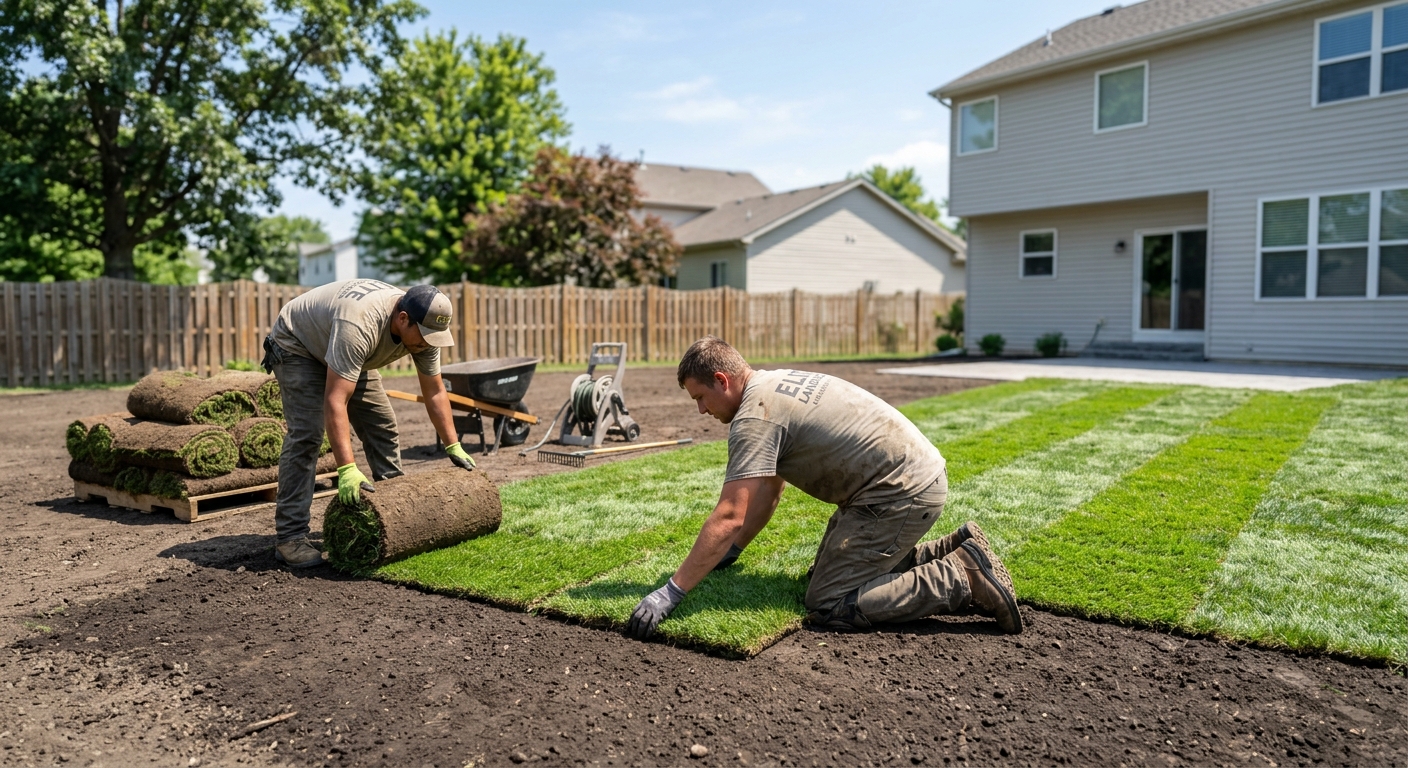
Site prep, topsoil/compaction, sod delivery, laying pattern and roll-in |
Best: late spring to early fall |
$2,500–$8,000 |
| Lawn seeding (grade, seed, starter fertilizer) |
Light grading, seed blend, starter fertilizer and initial watering plan |
Spring or early fall |
$1,500–$5,500 |
| Interlocking patio or walkway |
Excavate, compacted base, pavers, edging, joint sand, basic drainage allowance |
Spring to fall |
$6,000–$30,000 |
| Retaining wall (interlocking block) |
Block wall build with proper base, geogrid (as required), and drainage backfill |
Spring to fall |
$6,000–$30,000 |
| Tree and shrub planting |
Soil prep, planting, staking (if needed), mulch ring, initial watering plan |
Spring or fall (best survival) |
$800–$6,000 |
Prices are estimates only and vary by project scope, site access and material selection.
What affects the price of landscaping in Lowertown
In Lowertown and across the Toronto area, quotes for the “same” landscaping idea can swing by 30–50% because the cost drivers are site-specific. Two yards can look alike from the street, but grading, soil type, access for skid-steer or trailer, and drainage needs can radically change labour hours and material quantities. Toronto-area projects also feel pricing pressure from a concentrated working season and higher disposal/transport costs compared with milder climates.
Climate and soil influence what contractors can do—and when. In our plant hardiness zone 6a–7a, winters with deep frost and frequent freeze–thaw cycles demand proper base depth for hardscape and reliable plant selection for winter survival. By contrast, Prairie regions (Zone 2–4) often require drought- and wind-hardy species and can face a shorter working season, while coastal BC (Zone 7–8) supports lush palettes but still requires strong drainage in heavy-rain areas. In the dry interior of BC and Alberta, water restrictions shape irrigation design and can push costs toward drip systems and low-precipitation layouts. In southern Ontario, moderate seasons still include summer dry spells, so even “low-water” designs often need strategic watering to establish plants.
Concrete examples from Lowertown: (1) if your yard has clay fill or low spots near the foundation, we may need excavation plus drainage beds or a French drain—adding cost quickly to a patio or full install in the $8,000–$40,000 range. (2) If you’re moving from seeding to sod for a small front lawn, sod can be a faster win but usually costs far more per square foot; that can shift your overall project budget even when the rest of the design stays similar. (3) If you’re planting a mix that includes mature specimen trees, you’ll pay more up front, but the survival and visual impact can justify the premium versus small caliper stock.
| Price Factor |
Why It Matters |
Cost Impact |
| Yard size in sq ft — the primary cost driver for softscape |
More area means more soil, labour, seed/sod, mulch, and maintenance time |
Often the biggest line-item; scales directly with budget |
| Grading and drainage work — slope corrections add significant cost |
Toronto freeze–thaw and foundation protection require proper pitch and runoff control |
Can add substantial labour and excavation costs |
| Drainage bed or French drain installation |
Reduces pooling and water pressure behind walls and near foundations |
Material + labour add-ons; common in clay-heavy lots |
| Plant material tier — native shrubs vs. ornamental vs. mature specimen trees |
Hardier native species may cost less; mature trees cost more due to size, sourcing, and installation |
Can shift planting budgets by hundreds to thousands |
| Hardscape vs. softscape ratio — walls and patios cost more per sq ft than lawn |
Stone, base materials, and compaction equipment drive hardscape pricing |
Higher % hardscape typically pushes projects toward upper price bands |
| Irrigation system design and installation |
Even in Ontario, summer establishment and drought spells benefit from planned irrigation |
Adds cost, but improves plant survival and reduces rework |
| Soil amendment and topsoil required |
Clay soils often need amendment for root health and lawn success |
Hauling and labour can be a meaningful surcharge |
| Tree removal or stump grinding before new planting |
Stumps block grading, and roots can interfere with sod/bed prep |
Can add a separate mobilization and disposal cost |
Permits & regulations in Ontario
In Ontario, most planting and softscape work typically does not require a permit. That means tasks like sodding, lawn seeding, mulching, installing garden beds, and planting trees/shrubs are generally “standard” homeowner landscaping and commonly proceed without municipal approvals. However, retaining walls can cross into permit territory depending on their height; in many municipalities the threshold is around 1.0 m (3.3 ft), and walls above that often require a building permit and sometimes engineered drawings.
Another area that can trigger review is changes to lot grading and drainage. If your project re-shelves the yard in a way that directs water toward a neighbour’s property or toward storm connections that aren’t currently designed for it, you may need approval to ensure drainage patterns remain safe. Also, if your digging work involves tie-ins near services, you should plan for utility locates before any excavation—both for planting holes and for retaining wall footings.
For Lowertown, your step-by-step verification should look like this: (1) ask the contractor for proof of Ontario business licensing status if required for their operations, (2) request WSIB/WCB clearance (or equivalent proof of coverage where applicable), (3) review their certificate of insurance showing general liability and confirm it’s active for the project dates, and (4) confirm they document site conditions (photos, slope notes) in the estimate. If a retaining wall or major grading is proposed, ask whether a permit is required and whether they will pull it or provide the paperwork support.
Planning a landscape that thrives in Lowertown's climate
A successful Lowertown yard works with our zone 6a–7a winters, humid summers, and freeze–thaw cycles instead of trying to “fight” them. Start with plant selection: choose native, hardy perennials and woody plants that can handle winter lows near –23 to –18°C, then group them by sun and moisture so they don’t compete for water. For lawns, decide early between sod and seed. Sod gives instant coverage and reduces weed establishment, but it costs about 3–4× more per square foot than seeding, so it’s best for areas you need to look finished quickly (front walks, display lawns) or where you’re dealing with thin turf. Seed is slower but usually more economical for larger areas.
Drainage and grading are non-negotiable in Toronto. We typically aim for water to shed away from foundations, and we build in proper base preparation for hardscape so pavers and blocks don’t heave. For patio and retaining walls, that means excavating to stable subgrade, adding granular base in the right layers, and including drainage backfill behind walls.
Low-maintenance design strategies help year after year: mulch to moderate soil temperature, groundcovers to suppress weeds, and perennial structures for consistent form. Rain-garden elements and xeriscape-style beds (without going fully xeric) can still make sense in the GTA by improving infiltration and reducing runoff—especially when you pair them with hardy shrubs and deep-rooted perennials. For example, if you compare a lawn refresh of 600 sq ft: seeding might fit a smaller budget, while sod could justify the premium if your goal is a “finished” look for the season and faster curb appeal.
| Element |
Climate Consideration |
Maintenance Level |
Price Band |
| Sod lawn installation |
Establishment needs consistent moisture during the May–October window; freeze–thaw affects shallow root systems if grading is off |
Low to moderate (watering in establishment year; mowing) |
$2,500–$8,000 |
| Native perennial garden |
Choose zone-appropriate perennials for winter survival; mulch protects crowns during cold snaps |
Low (weeding first season; pruning as needed) |
$1,200–$6,000 |
| Mulched shrub border |
Helps control soil temperature and moisture in summer humidity; reduces heaving risk when paired with correct base/soil prep |
Low (top-up mulch and light shaping) |
$800–$4,500 |
| Interlocking stone patio |
Requires correct base compaction to resist freeze–thaw movement and pooling |
Low (periodic cleaning and occasional joint sand) |
$6,000–$30,000 |
| Retaining wall (block) |
Freeze–thaw and hydrostatic pressure demand proper base depth and drainage backfill behind the wall |
Low (inspection after major thaws/spring runoff) |
$6,000–$30,000 |
| Drip irrigation system |
Target watering supports drought-tolerant planting during hot humid stretches and reduces runoff |
Low to moderate (seasonal adjustments) |
$1,500–$7,000 |
How to choose a landscaping contractor in Lowertown
Choosing the right landscaping contractor in Lowertown starts with verification, not promises. First, confirm Ontario coverage: ask for a current certificate of insurance (general liability) and ensure it matches the job value and dates. For work on job sites that can involve employees and physical work, request WSIB/WCB clearance documentation (or the applicable proof of coverage). If they can’t provide both insurance and clearance, treat it as a major risk. Next, get 2–3 itemised written quotes—labour and materials separated—so you can see what’s included (soil, stone, pavers, excavation, and disposal) and what isn’t (permit fees, regrading, or hauling beyond the base scope).
Read scope details carefully: does the quote include permit pulling for retaining walls above the local threshold? Is waste disposal included or does it require additional bin fees? For workmanship, ask about warranty length and what it covers (settlement, base failure, plant replacement). Also ask whether product/manufacturer warranties apply and whether they’re transferable to you as the homeowner. A responsible payment schedule should be conservative: typically no more than 10–15% upfront, with progress payments tied to milestones and a holdback until the job is complete and reviewed.
Finally, insist on a written timeline. Ask for a start date, expected duration, and how weather impacts the schedule—then ensure it’s reflected in the contract.
- Provide a clear, itemised estimate (labour + materials), not only a single lump sum.
- Include site prep scope: excavation depth, base layers, and compaction details for hardscape.
- Confirm drainage plan: where water goes and how pooling near foundations is prevented.
- Ask what soil amendment/topsoil is included (type, thickness, and quantity).
- Require utility locates documentation before digging (especially for footings and drain lines).
- Verify insurance: general liability and project dates on the certificate.
- Verify WSIB/WCB clearance (or applicable coverage proof) and that it’s current.
- Ask if permits are included for retaining walls above local height thresholds.
- Confirm disposal/haul-away is included (or specify the arrangement and costs).
- Review warranty terms in writing for workmanship and product coverage.
- Ensure payment schedule is milestone-based with a 10–15% max deposit and final holdback.
- Get a written start/completion timeline and a weather-delay communication plan.
Red flags in Lowertown: (1) no itemisation or vague “allowances” that hide real costs, (2) contractors who can’t show current insurance and WSIB/WCB clearance, (3) promises of “no permits required” without assessing retaining wall height or grading impacts, (4) requesting a large upfront payment beyond 10–15%, and (5) no written timeline or no commitment to drainage and base prep—especially important given Toronto’s freeze–thaw behaviour.
Frequently asked questions — landscaping in Lowertown
How do I design a low-water yard in Lowertown?
In Lowertown, “low-water” usually means reducing runoff and watering only what needs it during establishment and hot stretches. Start by designing beds for infiltration: add compost and mulch, then grade gently so water doesn’t pool near your foundation. Pair native and zone-appropriate plants (hardy in Ontario’s zone 6a–7a) with deep-rooted perennials to avoid constant surface watering. If you’re replacing turf, consider seeding or smaller sod sections; sod is faster, but budgets can move quickly—projects like sod installs often fall into the $2,500–$8,000 band. For irrigation, drip lines to shrubs and a simple timer help. Always plan for freeze–thaw and spring runoff, because water management matters as much as water quantity in Toronto.
How do I find a licensed landscaper in Lowertown?
For Ontario homeowners, “licensed” usually means confirming the contractor’s credentials for their business operations and verifying coverage before work begins. Ask for proof of general liability insurance (with dates matching your project) and a current WSIB/WCB clearance document. Then request itemised proof of scope—especially drainage work, soil amendments, and hardscape base preparation. In practice, you’ll also want to check the contractor’s public business information and any online registry listing they provide, then cross-check that their certificate of insurance covers the correct entity. If you’re doing a retaining wall above the local permit threshold, ask whether they can pull permits or provide the required documentation. For clarity, get 2–3 quotes and compare what’s included line by line, not just the final total.
How much does landscaping cost in Lowertown?
Landscaping in Lowertown commonly ranges widely because drainage, grading, and hardscape scope can add major costs. A full design and installation is often budgeted between $8,000–$40,000, depending on whether you’re adding patios, walls, and major soil work. For softscape only, sod installs typically land in the $2,500–$8,000 band depending on area and prep; seeding is usually less expensive but takes longer to fully fill in. Interlocking patios and retaining walls can both run into the $6,000–$30,000 range once you include excavation, base materials, and proper drainage for freeze–thaw stability. The best way to pin down pricing is an itemised quote that matches your yard size, soil conditions, and drainage needs.
What plants thrive in Lowertown's climate zone?
Lowertown sits in Toronto’s hardiness zone band 6a–7a, so plan for winter lows near –23 to –18°C and humidity-driven summers. In my crews, we favour cold-hardy, resilient natives and well-adapted ornamental plants that form strong structure: shrubs that hold winter shape, perennials with reliable crown survival, and trees chosen for tolerance of Toronto soils and urban stress. Mulching is important to protect crowns and roots during freeze–thaw. If your yard stays damp, choose plants suited to consistent moisture; if it dries out, select drought-tolerant varieties and consider deeper watering during establishment. For a planting budget, tree and shrub installations frequently start around $800–$6,000, with mature specimens pushing higher.
Sod vs seed — which is better for a Lowertown lawn?
Sod is better when you want immediate coverage and a cleaner look for the season—useful for front yards and walkways where bare spots aren’t acceptable. In Toronto’s freeze–thaw conditions, sod also benefits from correct grading and soil preparation so roots anchor securely before winter. Seed is usually the better value if you can tolerate a longer timeline and you’re working on a larger area. In terms of cost, sod tends to run much higher per square foot than seeding, and sod installation commonly lands in the $2,500–$8,000 band depending on prep and yard size. A common compromise is seeding the bulk lawn while using sod only for high-visibility strips.
How much does a retaining wall cost in Lowertown?
A retaining wall in Lowertown depends on height, length, soil conditions, and drainage requirements behind the wall. With Toronto’s freeze–thaw cycles, proper base depth, geogrid where needed, and drainage backfill are critical—those details drive cost. For budgeting, retaining wall projects commonly fall into the $6,000–$30,000 range in the GTA when excavation and proper drainage are included. If your wall is above the local permit threshold (often around 1.0 m), you may also need a building permit and sometimes engineered support, which can add time and cost. Before you price a wall, ask the contractor to address drainage planning and utility locates so you don’t run into expensive surprises mid-job.