Landscaping options and costs in Northwood
Northwood homeowners often start with the same question: “What can I afford, and what will actually survive our winters?” With a population of 14,017 (Statistics Canada, 2021 Census), the local GTA-style demand for reliable softscape and long-lasting hardscape is steady, especially where detached homes create more yard frontage for curb appeal projects and seasonal upkeep. In Northwood, landscaping investment is also influenced by how many properties are set up for driveways, walkways, and front-garden beds—once you choose a design direction, you typically want it to look good for years, not just a season.
Cost varies because Toronto-area work is shaped by plant hardiness zones 6a–7a, freeze–thaw cycles, and the need for proper drainage. Those winter conditions drive contractor focus on correct granular bases, geogrid/footing depth, and soil preparation—especially for patios, steps, and retaining walls. At the same time, the working season (roughly May to October) means labour can be booked quickly in peak months, which can affect scheduling and the fastest-turnaround availability.
In Northwood’s rolling residential pockets near the main arterial corridors and older neighbourhood streets, retaining walls, front-walk renewals, and drainage improvements are especially in demand—often because older drainage patterns and clay/filled soils can cause pooling after heavy spring rains. If you’re considering a complete refresh, the budget range is wide, so the table below compares common options and what they typically include.
| Service |
Description |
Season |
Price Range |
| Full landscape design and installation |
Site assessment, layout, plant palette, grading/drainage plan, hardscape + softscape build |
May–October |
$8,000–$40,000 |
| Sod installation (supply, grade, lay, roll) |
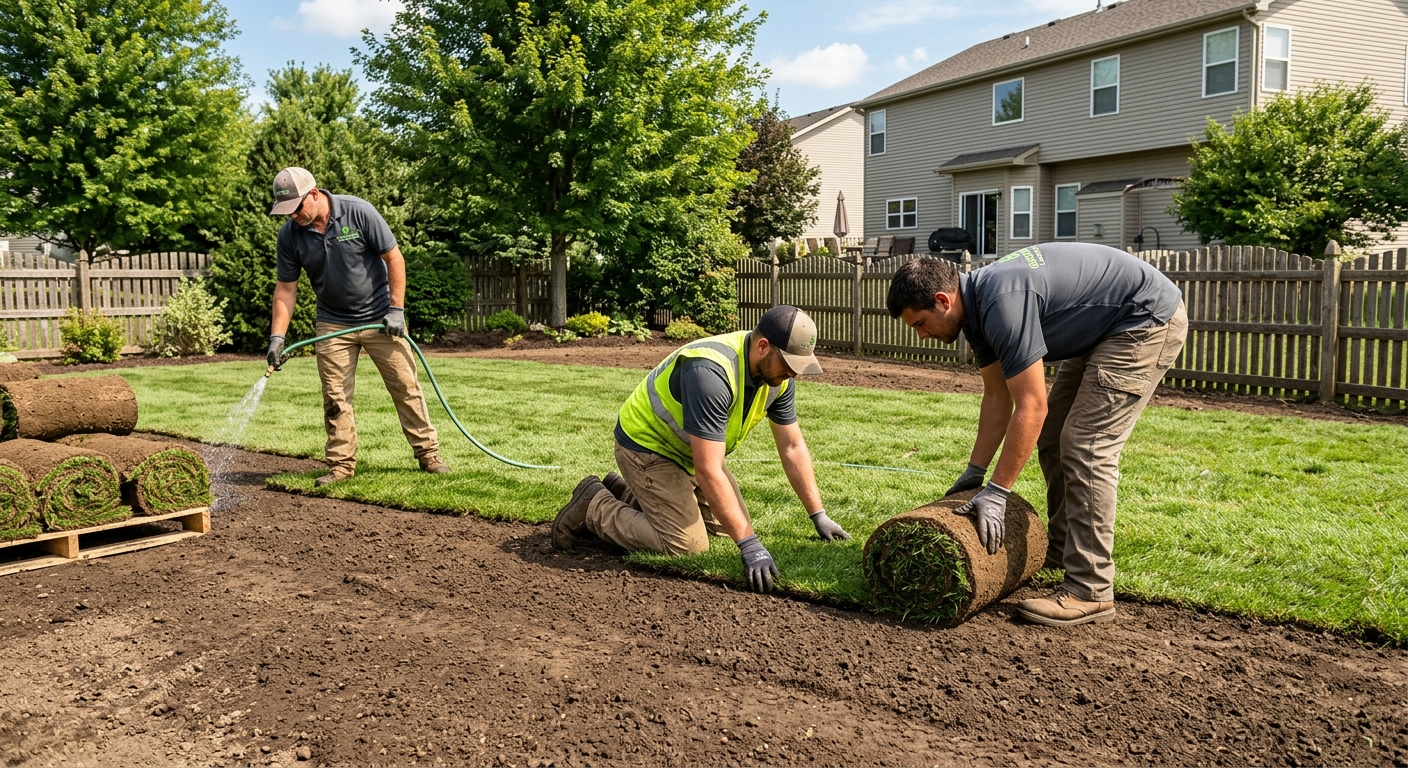
Remove debris/old turf (if needed), grade, topsoil/compaction, sod placement, starter fertilizer, roll and water setup |
Late April–June; August–September |
$2,500–$8,000 |
| Lawn seeding (grade, seed, starter fertilizer) |
Light soil prep, grade touch-ups, seed blend selection, starter fertilizer, raking/cultipacking, first mow guidance |
April–May; August |
$1,800–$6,000 |
| Interlocking patio or walkway |
Excavate, base (granular + compacted), geogrid (as needed), edge restraints, pavers, joint sand, finishing |
May–September |
$6,000–$30,000 |
| Retaining wall (interlocking block) |
Excavation, compacted granular base, block installation, drainage stone + weep provisions, caps/finishing |
May–September |
$7,000–$30,000 |
| Tree and shrub planting |
Soil improvement, planting holes, staking (if required), mulch rings, watering plan |
May–October |
$800–$6,000 |
Prices are estimates only and vary by project scope, site access and material selection.
What affects the price of landscaping in Northwood
In Northwood and across the broader Toronto market, even “the same job” can land 30–50% apart because quotes often reflect different assumptions about soil, drainage, access, and plant specifications. Contractors also schedule labour differently during peak months—when the working window is tight (roughly May to October), experienced crews may price for speed, protection of adjacent property, and efficient staging. In older GTA neighbourhoods, hidden fill, clay behaviour, and drainage direction can turn a simple refresh into a drainage-and-rebuild project.
Climate influences pricing in practical ways. Southern Ontario sits around plant hardiness zones 6a–7a, with winter lows roughly near –23 to –18°C, plus frequent freeze–thaw. That means patios, steps, and retaining walls need deeper, well-compacted granular bases and drainage layers to prevent heaving. In Prairie regions (Zone 2–4), shorter seasons and colder, windier conditions push designs toward drought-tolerant, ultra-hardy plants and often simpler palettes; retaining wall base depth must go below the frost line. Coastal BC (Zone 7–8) supports longer growing seasons and lush planting palettes, but heavy-rainfall drainage still matters. In the dry BC interior, water restrictions drive drip irrigation design and more xeric planting.
Two common Northwood examples: (1) If clay soils require excavation and soil amendment before sodding, your sod budget can move from the low end of $2,500–$8,000 toward the higher end because base prep and compaction become the main cost. (2) If a patio needs regrading and thicker base to manage pooling, it can push toward the top end of $6,000–$30,000 due to added granular depth, labour, and disposal. Add in older lot grading and freeze–thaw movement, and it becomes clear why scope clarity changes the final number.
| Price Factor |
Why It Matters |
Cost Impact |
| Yard size in sq ft — the primary cost driver for softscape |
More area means more labour hours, more topsoil/seed/sod, and more materials and cleanup |
Usually the biggest swing item; can change total by thousands |
| Grading and drainage work — slope corrections add significant cost |
Fixing ponding or redirecting runoff is labour-intensive and may require additional base materials |
Often adds substantial cost versus “flat” yards |
| Drainage bed or French drain installation |
Trenches, perforated pipe, filter fabric, and stone must be installed correctly for long-term performance |
Can be a major add-on if issues are widespread |
| Plant material tier — native shrubs vs. ornamental vs. mature specimen trees |
Specimen sizes and sourcing affect both purchase price and labour for planting/protection |
Can shift a planting job dramatically |
| Hardscape vs. softscape ratio — walls and patios cost more per sq ft than lawn |
Interlocking stone requires excavations, base layers, and compaction; lawn is lighter and quicker |
Higher hardscape percentages raise total cost |
| Irrigation system design and installation |
Designing coverage, trenching depth, backflow considerations, and zones adds both labour and equipment |
Often adds mid-to-high thousands on larger properties |
| Soil amendment and topsoil required |
Clay/fill may need engineered soil improvement to support roots and reduce settlement |
Material + delivery + placement increases costs |
| Tree removal or stump grinding before new planting |
Removal adds equipment, disposal, and sometimes permits/approvals depending on conditions |
Can add significant one-time cost |
Permits & regulations in Ontario
In Ontario, most landscaping work such as planting, sodding, seeding, and typical softscape upgrades generally does not require a permit. Where things change is when you start adjusting drainage in a way that affects neighbouring properties, or when you build structures that alter grade stability.
Work that often DOES require a permit: retaining walls above the local threshold—commonly around 1.0 m (3.3 ft) in many municipalities—may require a building permit and sometimes engineered drawings. Work that may require approval: changing lot grading so runoff no longer flows as it did originally, or tying drainage to storm sewer systems in a new way, can trigger municipal review. Additionally, excavation close to utilities requires proper precautions.
Before digging (even for a planting hole), call for utility locates so you don’t hit buried lines. For backyard drainage and irrigation, confirm local irrigation and water-use bylaws—this is especially important during drought conditions in other parts of Canada, and Ontario municipalities can also tighten restrictions in dry periods.
How to verify your Northwood contractor:
1) Ask for their Ontario licence information and check it through the relevant online registry linked to the trade they perform. 2) Request a Certificate of Insurance (general liability) showing coverage adequate for the job, and verify the named insured and policy expiry date. 3) For labour-side coverage, confirm WSIB/WCB coverage where applicable—ask for the clearance letter or proof document number, and match it to the contractor’s legal business name. A reputable contractor won’t resist providing these documents up front.
Planning a landscape that thrives in Northwood's climate
Designing for Northwood means working with the climate instead of fighting it. Northwood sits in the GTA hardiness zone range (about 6a–7a), where plants must handle winter lows near –23 to –18°C and a season that’s constrained by frost. The best results come from three priorities: zone-appropriate selection, drainage-first grading, and a hardscape base built for freeze–thaw.
1) Plant selection: choose native and zone-suitable trees, shrubs, and perennials that tolerate local winters and typical humidity. Group plants by water needs and avoid fragile species that need extra winter protection. 2) Sod vs. seed: sod gives instant curb appeal, but it costs more because you’re paying for turf production and careful installation. In Toronto-area pricing, sod is commonly in the $2,500–$8,000 band, while seeding is often less—if you can tolerate a slower “wear-in” period. 3) Drainage and grading: Toronto yards often sit on clay and fill; pooling around foundations can lead to moisture issues. Correct slope and subgrade prep reduce winter heaving risk and spring sogginess. 4) Hardscape base preparation: patios, walkways, and steps need proper granular layers and compaction so freeze–thaw doesn’t lift pavers. 5) Low-maintenance strategies: mulch, groundcovers, and well-spaced perennials reduce annual upkeep without looking sparse.
If you want water-smart options, consider a rain garden in a low spot and xeriscaping for side yards—usefully, xeric plantings can cut irrigation demand while still staying within Ontario winter tolerance when you choose the right species. A practical example: upgrading from seeding to sod might add a few thousand dollars within the $2,500–$8,000 sod band. That difference is often justified when you need immediate visual results before a sale, or when the yard is heavily trafficked and you want faster establishment.
| Element |
Climate Consideration |
Maintenance Level |
Price Band |
| Sod lawn installation |
Needs strong root contact and proper grade for spring runoff and winter freeze–thaw |
Medium (watering early, mowing schedule, spot repair) |
$2,500–$8,000 |
| Native perennial garden |
Zone-appropriate plants handle cold snaps better with less winter protection |
Low to medium (weeding in year 1, then routine grooming) |
$1,200–$5,500 |
| Mulched shrub border |
Mulch buffers soil temperature swings and reduces evaporation in humid summers |
Low (occasional edging, mulch top-ups) |
$800–$4,000 |
| Interlocking stone patio |
Proper base depth and drainage prevent movement from freeze–thaw cycles |
Low (seasonal sweeping, joint sand top-ups) |
$6,000–$30,000 |
| Retaining wall (block) |
Needs a well-drained base so water doesn’t build pressure during thaw periods |
Low (visual inspections after major winters) |
$7,000–$30,000 |
| Drip irrigation system |
Improves efficiency during hot, humid summers and supports drought-resilient planting plans |
Low to medium (winterize, seasonal checks) |
$2,500–$9,500 |
How to choose a landscaping contractor in Northwood
Choosing the right contractor in Northwood is mostly about verification and clarity. Start with Ontario licensing applicable to the trade they perform (ask what category applies, then confirm through the appropriate Ontario online registry). Next, require liability insurance: ask for a Certificate of Insurance that lists the business’s legal name, policy limits appropriate for your scope, and an active expiry date. For labour coverage, request proof of WSIB/WCB coverage where applicable—many reputable contractors provide a clearance letter or a document reference number you can cross-check.
Then get 2–3 itemised written quotes. Avoid lump sums that don’t break out labour vs. materials. A good quote will state quantities (sq ft of sod/pavers, linear feet of wall, excavation depth assumptions), and what’s included (topsoil type, base thickness, edging, disposal). Read exclusions: are permits included (if required), is demolition included, and who handles disposal/landfill? Also confirm the workmanship warranty length (for example, grading settling, drainage performance, paver movement) and whether it’s backed for the homeowner. Product warranties for plants are different from workmanship guarantees—ask what happens if plants fail due to winter damage versus improper watering.
Payment schedule should be controlled: never pay more than about 10–15% upfront for most scopes, and hold back a portion until the job is complete and cleanup is confirmed. Finally, request a written start date and an estimated completion window, not just “weather permitting.”
- Provide Ontario licence details and confirm them online before signing.
- Ask for Certificate of Insurance and verify the named insured and expiry date.
- Confirm WSIB/WCB clearance or proof for workers.
- Use itemised quotes with labour + materials line items (no “mystery lump sum”).
- Ask for base specs (granular depth, compaction approach, geogrid use if needed).
- Clarify drainage scope: grading only vs. French drain vs. drain bed.
- Confirm disposal is included (soil, debris, old turf removal).
- Specify product tiers: sod type, interlocking stone model, block manufacturer, and plant sizes.
- Ask what “site access” assumptions are included (gate width, driveway permits, staging area).
- Verify warranty terms for workmanship and whether they carry over to future homeowners.
- Agree on a payment schedule (10–15% max upfront; holdback until punch list complete).
- Get a written timeline with start date, milestones, and weather contingencies.
Red flags in Northwood: quotes that don’t include drainage/grading assumptions, refusal to provide insurance/WSIB proof, vague product descriptions (no stone/block/plant sizes), demanding large upfront payments, and no written timeline or warranty details.
Frequently asked questions — landscaping in Northwood
Do I need a permit for a retaining wall in Ontario?
In Ontario, many landscaping tasks like planting and sodding typically don’t require permits, but retaining walls often do when they exceed a local height threshold—commonly around 1.0 m (3.3 ft) in many municipalities. Because requirements can vary by municipality and wall design, your best step in Northwood is to ask your contractor to confirm the anticipated wall height and design details before work begins. If the wall requires a permit, expect paperwork for grade impact and sometimes engineered documentation. A well-prepared quote should say whether permit pulling is included (if applicable) and what construction assumptions are being used to manage water behind the wall—critical for performance through Toronto-area freeze–thaw cycles.
How do I improve drainage in my yard?
Start by observing where water goes after spring rain: if it pools near the foundation, you usually need both grading corrections and a drainage plan—not just surface topdressing. In Northwood (Toronto area), clay and fill soils can hold water and then heave with freeze–thaw, so proper slope and subgrade preparation matter. Common fixes include regrading to direct runoff away from the house, installing a drainage bed or French drain in the low area, and using clean, well-sized aggregate layers. If you’re also planning hardscape, drainage upgrades are often easier to bundle during patio or retaining wall work. Budget-wise, drainage add-ons can be a major portion of a project that otherwise sits in the $6,000–$30,000 range for interlocking.
What is xeriscaping and does it suit Northwood?
Xeriscaping is landscape design that reduces water use by selecting drought-tolerant plants and using smart layout, mulch, and (when needed) efficient irrigation like drip. For Northwood, it can suit many yards—especially side areas and beds where grass struggles—because Ontario summers can be humid but dry spells still happen, and efficient planting helps establish resilient roots. The key is choosing species that are hardy for Southern Ontario’s zone range and can handle winter lows near –23 to –18°C. Xeriscaping doesn’t mean “no greenery”; it means grouping plants by water needs, using mulch, and avoiding thirstier species in exposed spots. Pair xeric beds with rain gardens where you naturally collect water, so you get both water control and curb appeal.
How do I plan a low-maintenance yard?
A low-maintenance yard in Northwood usually comes from designing fewer, stronger “plant choices” rather than trying to maintain many finicky areas. Focus on: zone-appropriate native or proven shrubs/perennials, deep mulch beds to suppress weeds, and groundcovers that fill in so you’re not constantly weeding. Pair that with drainage-first grading to reduce spring mud and summer pooling. For lawns, decide whether you want fast coverage (sod) or a longer establishment period (seeding). Sod is typically priced within the $2,500–$8,000 band, and it often reduces early labour by giving instant coverage. For curb appeal with less weekly work, many homeowners combine a mulched shrub border with a simple, well-edged walkway or patio built on a stable base.
How deep should a retaining-wall base be for local frost?
For retaining walls in Southern Ontario, the goal isn’t a single “magic depth” for every project; it’s a properly engineered footing/base depth that accounts for freeze–thaw and soil conditions. In practical landscaping terms for Northwood, contractors typically excavate to reach competent subgrade, then build a compacted granular base designed to prevent movement as temperatures cycle. Walls need proper drainage stone and weep provisions so water doesn’t build pressure behind the block during thaw periods. If your wall is high enough to require permits, engineered drawings (or at least design sign-off) become especially important. This is one reason quotes vary—what’s under the soil matters as much as the wall height itself.
How much does professional landscape design cost?
Professional landscape design for a typical Northwood/Greater Toronto backyard can range widely because it depends on plan complexity, whether you’re doing grading/drainage concepts, and how many installation components are included. In the GTA pricing reality, full design & installation projects often fall within the broader $8,000–$40,000 range for turnkey work. If you’re only seeking a design and want to DIY installation, the cost can be less, but you still need accurate measurements and a clear plant palette that matches Northwood’s winters and sun exposure. When comparing quotes, ask whether design is included with installation, whether revisions are included, and whether the contractor provides a planting list with sizes and spacing for zone-appropriate results.