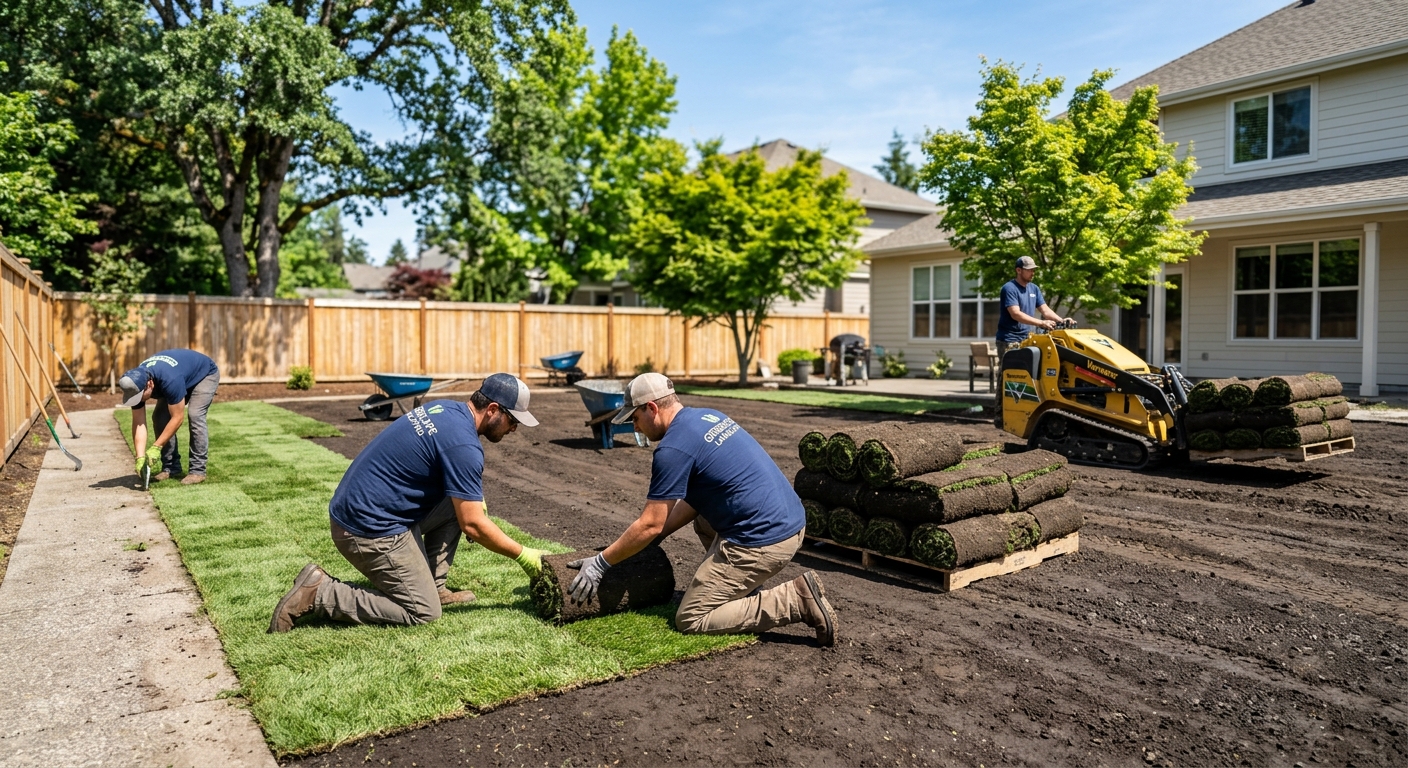
Landscaping options and costs in Caulfeild
Caulfeild homeowners usually start with one of three goals: curb appeal, practical outdoor living, or long-term low-maintenance planting. With Caulfeild’s population sitting at 3,757 residents (Statistics Canada, 2021 Census), demand is concentrated on quality workmanship and tasteful designs rather than high-volume installs. That matters for pricing: crews are smaller, and projects like patios, drainage corrections, and layered planting need careful scheduling, especially on slopes common in the Lower Mainland–Southwest.
Many properties here are detached homes with yard space, so landscaping can be more than “nice-to-have”—it’s often the primary way to upgrade usability around the home. In the Lower Mainland–Southwest (plant hardiness zones 7–8), mild wet winters and long cool growing seasons support broader planting palettes than you’d see in harsher climates. As a result, contractors can realistically build lush, layered gardens and even do softscape work for extended periods, but structural work still has to respect freeze–thaw cycles. Expect costs for retaining walls and patio bases to include deeper excavation, drainage, and compaction so you avoid frost heave and wall movement.
In neighbourhoods like Upper Caulfeild, where larger lots and hillside properties are common, interlocking patios, stepped planting beds, and drainage tune-ups tend to be in especially high demand. Below is a practical comparison of common options and realistic budget ranges, so you can match the scope to the kind of yard you want.
| Service |
Description |
Season |
Price Range |
| Full landscape design and installation |
Site walk, concept + planting plan, grading/drainage approach, hardscape build, planting, soil amendments, and irrigation coordination |
Mar–Dec (heavier work schedules May–Oct) |
$15,000–$50,000 |
| Sod installation (supply, grade, lay, roll) |
Minor grading, topsoil/top dressing, supply and installation of sod, rolling, and initial watering plan |
Apr–Nov (best window depends on rainfall) |
$4,000–$8,000 |
| Lawn seeding (grade, seed, starter fertilizer) |
Grading + raking, seed blend, starter fertilizer, light cover, and establishment care |
Apr–Jun and Sep–Oct |
$2,000–$5,500 |
| Interlocking patio or walkway |
Base prep, compaction, interlocking stone install, edge restraints, and final leveling |
Mar–Nov |
$10,000–$35,000 |
| Retaining wall (interlocking block) |
Excavation, block system, drainage layer, geotextile, and cap/finishing as specified |
Mar–Nov (subject to wet soil access) |
$12,000–$55,000 |
| Tree and shrub planting |
Soil improvement, spacing, staking as needed, mulching, and watering-in plan |
Mar–Nov |
$2,000–$12,000 |
Prices are estimates only and vary by project scope, site access and material selection.
What affects the price of landscaping in Caulfeild
In the Lower Mainland–Southwest, it’s common to see the same backyard project come in 30–50% apart between quotes. The difference usually isn’t the contractor’s “margin”—it’s the scope depth and the details: soil prep, drainage work, excavation limits, plant size and quality, and how closely the plan is tailored to your site. Caulfeild’s local market also means crews are scheduling around wetter winter windows and longer shoulder seasons, so mobilization and protection of existing landscaping can shift labour costs.
Climate sets both what grows and how long crews can work. Caulfeild sits in plant hardiness zones 7–8, so you can choose more lush perennials and broadleaf evergreens than Prairie zones (2–4), where short frost-free windows push homeowners toward drought-tolerant, wind-hardy choices and compressed timelines. Coastal BC also means freeze–thaw still matters for structural work: patio and retaining wall bases need proper drainage and compaction so water doesn’t freeze beneath foundations or footings. By contrast, the dry BC Interior and Alberta often force irrigation design around restrictions and higher evaporation, changing both equipment and ongoing upkeep strategy.
Concrete examples that move price up or down in Caulfeild include: (1) converting a flat lawn to a properly graded yard with swales or corrected slope—grading and drainage can add significant labour and hauling; (2) moving from small nursery shrubs to a mature, instant-privacy tree package—tree & garden planting can jump quickly within the $1,000–$15,000 band depending on specimen size; and (3) choosing interlocking hardscape versus seeding—hardscape sits in the $10,000–$80,000 range when base prep and drainage are substantial, while lawn seeding budgets typically stay much lower.
Finally, many Caulfeild homes have older drainage patterns: during wet periods, water can pool where it wasn’t designed to. Fixing foundation moisture risk isn’t optional if you want the landscaping to last—so those dollars show up early in the quote, even if it feels “unseen” on day one.
| Price Factor |
Why It Matters |
Cost Impact |
| Yard size in sq ft — the primary cost driver for softscape |
More area means more materials, labour hours, and more soil/compost and amendments to spread |
Small front yard may fit lower $2,000–$5,500 seeding ranges; larger installs can move into design-scale budgets |
| Grading and drainage work — slope corrections add significant cost |
Correcting swales and ensuring run-off doesn’t hit foundations requires excavation and re-compaction |
Can add thousands depending on how much cut/fill and regrading is needed |
| Drainage bed or French drain installation |
Heavy-rain seasons can expose poor drainage; drains protect patios, walls, and planting beds |
Often shifts a project from “standard” to “structural drainage,” increasing hard-to-avoid labour and stone costs |
| Plant material tier — native shrubs vs. ornamental vs. mature specimen trees |
Specimen size, availability, and root-ball weight affect price and planting labour |
Native and smaller stock tends to land near the lower end; mature trees can push toward upper planting budgets |
| Hardscape vs. softscape ratio — walls and patios cost more per sq ft than lawn |
Stone/blocks require base prep, restraints, and compaction to meet performance expectations |
Higher hardscape ratios commonly move costs toward the $10,000–$80,000 band |
| Irrigation system design and installation |
Drip lines, valves, and smart controllers are labour- and material-intensive but prevent over/under-watering |
Up-front cost increases, but it reduces warranty callbacks related to dry spots and washouts |
| Soil amendment and topsoil required |
Coastal soils may be heavy; amendments improve aeration, drainage, and root development |
More hauling and labour can raise total install cost even when plant quantities stay the same |
| Tree removal or stump grinding before new planting |
Removal affects disposal, access, and the time needed to prepare the planting footprint |
Often adds a separate line item that can materially change project timing and budget |
Permits & regulations in British Columbia
In British Columbia, most routine landscaping work—like planting, sodding, and typical softscape installation—generally does not require a permit. However, retaining walls can be different. As a rule of thumb across many BC municipalities, retaining walls above a height threshold (commonly 1.0 m, or 3.3 ft) typically require a building permit, and sometimes engineered drawings depending on height, soil conditions, and design. Changes to lot grading that meaningfully affect drainage toward neighbouring properties or toward storm sewer connections may also trigger review or approval.
Before a contractor digs anywhere in Caulfeild, have them arrange utility locates (to mark buried services) before drilling holes, excavating for planting, or installing wall footings. This is basic safety and it helps avoid costly delays.
To verify a contractor’s eligibility and coverage in British Columbia, follow a simple checklist: (1) License/qualification—check the provincial business credentials or relevant trade registration where applicable using the contractor’s name; (2) Liability insurance—ask for a current Certificate of Insurance showing sufficient limits for landscaping/hardscape work; (3) Work coverage—confirm they have the required workplace coverage for workers (often WCB/WCB equivalent documentation depending on the arrangement). Request the paperwork before signing, and keep copies for your records. If they can’t provide clear documentation, pause and ask for it—reputable crews will.
Planning a landscape that thrives in Caulfeild's climate
Planning a landscape in Caulfeild means working with plant hardiness zones 7–8, the local wet/cool seasonal pattern, and the region’s frost calendar rather than fighting it. Start with plant selection: choose zone-appropriate native and well-adapted species that handle coastal moisture and cool winters, and they’ll typically require less winter protection and fewer “rescue” waterings. For lawns, your choice between sod and seed changes cost and timing. Sod gives instant green, but it usually costs about 3–4 times per sq ft compared with seeding due to material and installation labour. In Caulfeild, seeding works well during the cool establishment windows (spring and fall), while sod is best when you need quick results and can support consistent watering-in.
Drainage and grading are critical in the Lower Mainland–Southwest. Pooling water can cause patchy turf, root issues, and foundation moisture. If you’re adding an interlocking patio or stepping grade changes, hardscape base preparation must account for freeze–thaw: deeper base, proper compaction, and drainage layers help prevent movement. For low-maintenance design, use groundcovers, mulched shrub borders, and repeatable perennial groupings—so you’re weeding less and enjoying more consistent colour.
If you want to improve water resilience, consider rain-garden style planting beds that absorb downspout discharge and slow runoff. A rain-garden approach can be more cost-effective than adding more lawn area that struggles in wet patches. As a dollar example, if you’re debating a small sod replacement that might land around $4,000–$8,000 for a typical section, switching to a seeded approach at roughly $2,000–$5,500 can free up budget for a proper drainage fix—often the better long-term investment when the site already holds water.
| Element |
Climate Consideration |
Maintenance Level |
Price Band |
| Sod lawn installation |
Reliable in cool/wet establishment periods; still needs good drainage to avoid soggy roots |
Low-to-moderate during establishment, then moderate with mowing and periodic feeding |
$4,000–$8,000 |
| Native perennial garden |
Zone-appropriate plants handle coastal winters; layered structure supports year-round interest |
Low after first season (weeding, a little shaping, mulch refresh) |
$2,500–$12,000 |
| Mulched shrub border |
Mulch buffers moisture swings and reduces soil splash during heavy rains |
Low (weed suppression + seasonal pruning) |
$2,000–$9,500 |
| Interlocking stone patio |
Needs freeze–thaw-resilient base prep and drainage to prevent settling |
Low (occasional joint weed control and rinsing) |
$10,000–$35,000 |
| Retaining wall (block) |
Wall performance depends on drainage backfill and proper compaction under frost-prone conditions |
Low (periodic inspection of weep holes/cap alignment) |
$12,000–$55,000 |
| Drip irrigation system |
Efficient watering supports coastal moisture variability and reduces waste during wetter-than-average stretches |
Low (set-and-check; occasional filter/line maintenance) |
$3,000–$15,000 |
How to choose a landscaping contractor in Caulfeild
Choosing the right landscaping contractor in Caulfeild comes down to proof, clarity, and accountability. Start with British Columbia coverage: request their Certificate of Insurance for liability and confirm they carry the required workplace coverage for their workers (WCB/WCB-equivalent documentation). If they’re reputable, they’ll provide certificates on request and won’t hesitate when you ask for the dates and policy limits.
Next, get 2–3 itemised written quotes that break labour and materials apart. You want line items for excavation, base material, compaction, drainage components, soil/compost, plant quantities and sizes, delivery fees, irrigation parts, and disposal. A quote that’s a single lump sum can hide scope gaps—especially if your property has slope corrections, foundation-protection drainage, or older underdrains that need attention.
Read the scope carefully: what’s excluded (tree removal, rock disposal, utility locates, topsoil haul-in, permit fees, saw-cutting for edging, rain-garden rock revisions)? Is disposal included? Is a permit pull included for any retaining wall above threshold heights? A good contractor will tell you which decisions affect cost and which decisions affect performance.
Warranty matters too: ask for a workmanship warranty length, what product/manufacturer warranties apply, and whether warranties are transferable to you as the homeowner. For payments, never pay more than about 10–15% upfront; hold back a portion until the job is substantially complete and final cleanup is done. Finally, insist on timeline documentation: a start date and a completion estimate in writing—weather can slow installs, but your contractor should still provide a realistic plan.
- Confirm liability insurance and that it covers hardscape/retaining-wall work if included.
- Ask for workplace coverage documentation and verify it’s current before work begins.
- Check their recent Caulfeild/Lower Mainland–Southwest projects (photos, not just ads).
- Require itemised quotes with quantities (sq ft for paving/lawn, plant counts and sizes).
- Ask who supplies topsoil/soil amendments and what spec they’re using.
- Verify drainage plan details: where water goes, and whether French drains/sumps are included.
- Confirm base preparation and compaction steps for patios and walkways (not “we’ll level it”).
- Clarify irrigation scope: drip vs spray, smart controller included or not.
- Ask about disposal: hauling, dump fees, and whether stump grinding is included.
- Confirm warranty: workmanship duration and response process for settling/plant failures.
- Set payment milestones tied to inspections (rough-in, drainage check, then final).
- Get a written schedule and weather contingency plan for wet weeks.
Red flags specific to landscaping contractors in Caulfeild: (1) refusing to provide insurance or workplace coverage proof; (2) quoting a retaining wall without discussing drainage backfill/weep holes; (3) skipping utility locates before digging; (4) offering only “ballpark” pricing with no quantities or soil/drainage details; and (5) pushing for large upfront payments beyond 10–15%.
Frequently asked questions — landscaping in Caulfeild
What is xeriscaping and does it suit Caulfeild?
Xeriscaping is a water-wise landscaping approach that reduces irrigation through drought-tolerant plants, efficient irrigation (often drip), soil improvements, and smart layout (grouping plants by water needs). In Caulfeild and the broader Lower Mainland–Southwest, xeriscaping still makes sense, but the focus shifts: it’s less about surviving extreme drought and more about avoiding wasted watering and creating resilient beds through variable coastal moisture. Because Caulfeild falls in plant hardiness zones 7–8, you can use a mix of native perennials, evergreen structure, and hardy groundcovers that tolerate both cool wet periods and occasional dryer stretches. A properly designed drip system and mulch strategy can reduce maintenance without relying on large lawn areas—especially if your site already struggles with pooling or foundation moisture.
How do I plan a low-maintenance yard?
A low-maintenance yard is usually planned in layers: fewer turf-only zones, more repeatable planting areas, and drainage that prevents recurring “spot problems.” In Caulfeild, start by addressing grading and water movement so plants aren’t constantly stressed by soggy soil or run-off. Then choose zone-appropriate shrubs and native perennials grouped in drifts; repetition reduces labour and makes seasonal upkeep predictable. Mulch shrub borders and groundcovers help suppress weeds and keep soil temperatures stable through wet/cool seasons. For lawns, seeding can be a lower-cost entry point than sod, with typical seeding budgets around $2,000–$5,500 depending on the area and preparation. If you want instant results, sod may land closer to $4,000–$8,000, but consider investing the savings difference into better drainage if you have pooling. Finally, add drip irrigation or soaker lines where needed and avoid overwatering—soil health reduces replanting.
How deep should a retaining-wall base be for local frost?
For retaining walls in Caulfeild, the right base depth isn’t one universal number—it depends on wall height, soil conditions, and the specific block system—but the principle is consistent: build below the frost-affected zone and ensure proper drainage backfill so water doesn’t freeze against the wall. The Lower Mainland–Southwest has freeze–thaw cycles, so contractors typically excavate deeper than you’d expect for “just a wall” and use engineered-style base prep with compaction and drainage layers. If you’re considering a wall near the permit threshold (commonly around 1.0 m in many BC municipalities), it’s especially important to match depth and drainage to the design. The fastest way to get this correct is to ask your contractor to include the base construction details in writing—excavation depth, base material, compaction method, and drainage layer/weep provisions—rather than relying on a generic standard.
How much does professional landscape design cost?
Professional landscape design in the Lower Mainland–Southwest typically ranges widely based on how detailed the plan is and whether it includes drawings, planting specifications, and irrigation/hardscape layout. For Caulfeild homeowners, the most useful way to budget is to treat design as part of the overall project—many full landscape projects land in the $15,000–$50,000 range once installation is included. If you’re doing design-only, costs can still vary because some designers provide concept sketches while others provide engineered-style details for drainage and hardscape locations. The key is to confirm deliverables: a planting list with quantities and sizes, a grading/drainage strategy concept, and clear assumptions about materials. If you already have a contractor ready to build, require the designer to specify plant sizes and soil amendment requirements so you don’t lose budget later to “value engineering.”
How do I compare landscaping quotes?
To compare landscaping quotes in Caulfeild, make sure you’re comparing apples to apples: identical scopes, quantities, and specifications. Ask each contractor to provide itemised pricing that separates labour and materials, including excavation/base prep for patios and walls, drainage components (like French drains or drainage beds), soil amendment and topsoil specs, plant counts and sizes, and irrigation parts if applicable. Confirm what’s excluded—permit pulling (for retaining walls above the typical height threshold), utility locates, disposal/dump fees, and stump grinding/tree removal. Also check how they handle drainage and freeze–thaw: a quote that glosses over base depth, compaction, and drainage will often cost more later when you get settling or water issues. As a quick anchor for budgeting, interlocking patio work frequently starts around $10,000–$35,000, while retaining wall projects commonly move into the $12,000–$55,000 range depending on height and site conditions.
How long does a landscaping project take in Caulfeild?
Project timelines in Caulfeild depend on scope and weather—Lower Mainland–Southwest crews can work for longer stretches than Prairie regions because frost typically arrives later and spring frost is early, but wet soil can still slow structural work. Softscapes like planting and mulch generally move faster, while patios, retaining walls, and drainage require staged excavation, compaction, and cure/check periods. As a practical baseline, a focused planting update can be completed in a day or two, while drainage corrections and hardscape builds often take a week or more depending on base preparation and access. Scheduling also matters: materials delivery, tree availability, and irrigation parts can extend timelines. If you’re doing a full design-and-install, plan for multiple visits—design, ordering, then build—before final planting. Always ask for a written start date, a completion estimate, and weather contingency notes, so the timeline stays realistic during the wetter winter weeks.