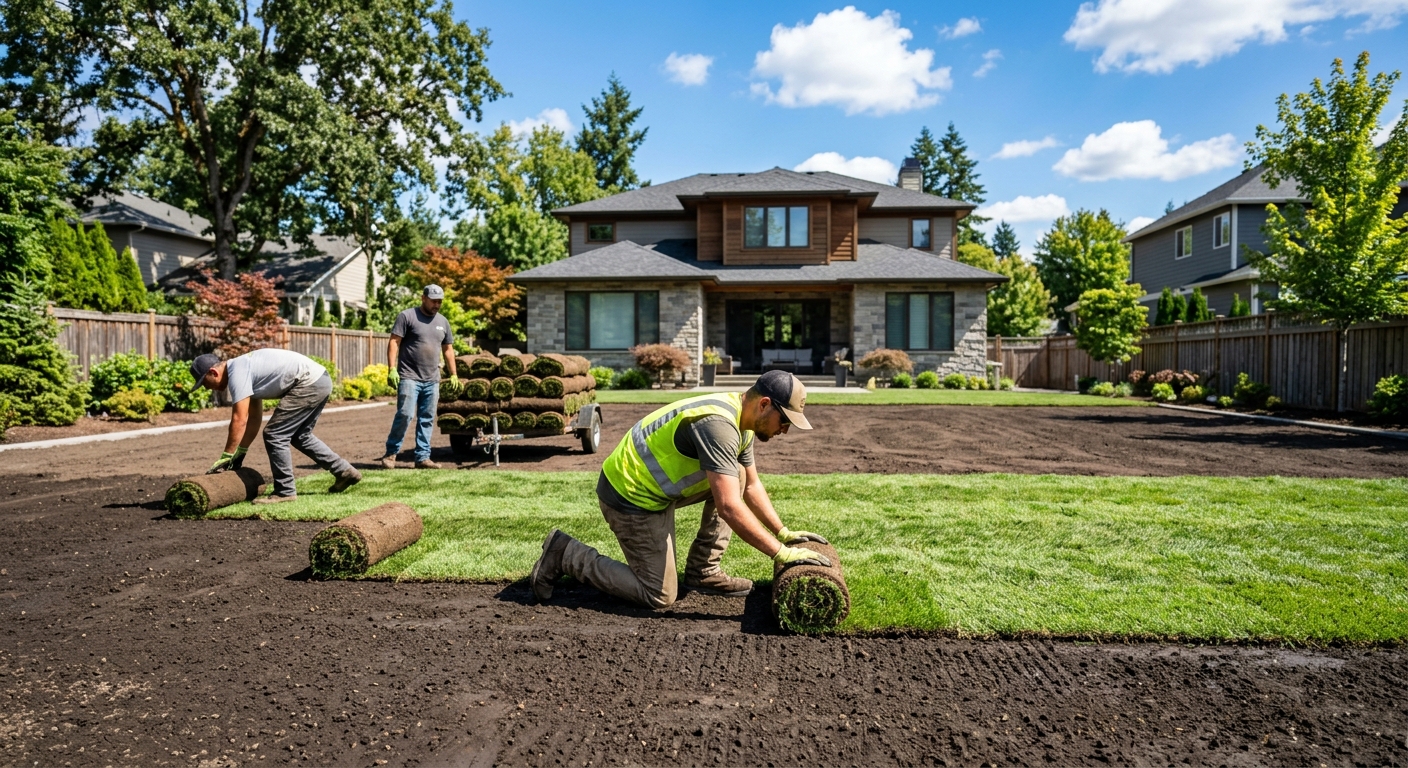
Landscaping options and costs in Metchosin
Metchosin homeowners typically spend on landscaping because the area’s housing mix and ownership profile strongly favours yard improvements. With 77.9% of dwellings being single-detached homes and 82.2% of households owning, many properties have enough outdoor space for real upgrades—front curb appeal, side yards, and sloped backyard drainage fixes. At the same time, nearly half of local homes were built before 1981 (49.3%), so it’s common to see older foundations, older grading, and mature tree canopies that require more careful excavation, soil repair, and root-aware planting.
On Vancouver Island and the Coast, landscaping pricing is shaped by mild, coastal growing conditions (plant hardiness zones 7–9) and a long installation window. Contractors can often install through much of spring, summer, and into late fall, which can lower scheduling risk compared with short-season regions. Costs still rise when wet winters demand robust drainage solutions and when sites have sloped grades common around the Metchosin area. Labour availability also affects pricing in high-demand pockets—especially near Brentwood Bay—where patios, stepping-stone paths, and retaining wall projects often get bundled with planting for a “complete transformation.”
Below is a practical comparison of common landscaping services and what they typically cost in Metchosin, so you can match contractor bids to scope before you sign.
| Service |
Description |
Season |
Price Range |
| Full landscape design and installation |
Site visit, concept + final plan, plant palette, grading/drainage coordination (as needed), and coordinated build-out (hardscape + softscape) |
Early spring to late fall |
$5,000–$40,000 |
| Sod installation (supply, grade, lay, roll) |
Soil prep, grading/leveling, sod supply, lay and roll, first watering set-up, and clean-up |
Spring or early fall |
$1,500–$8,000 |
| Lawn seeding (grade, seed, starter fertilizer) |
Light grading, seeding, starter fertilizer, and a maintenance/establishment plan |
Spring to early summer; early fall can also work |
$900–$4,500 |
| Interlocking patio or walkway |
Excavation, base/gravel, edge restraints, pavers/stone, bedding sand, and compaction |
All season for planning; install mainly spring–fall |
$4,000–$20,000 |
| Retaining wall (interlocking block) |
Layout, excavation and base prep (often key to frost stability), block installation, and drainage behind wall |
Spring to fall (dry-weather installation) |
$4,000–$60,000 |
| Tree and shrub planting |
Soil improvement, planting, staking where needed, mulching, and basic aftercare |
Spring to early fall |
$800–$15,000 |
Prices are estimates only and vary by project scope, site access and material selection.
What affects the price of landscaping in Metchosin
It’s common to see quotes for the “same” landscaping scope vary by 30–50% across Vancouver Island and the Coast, depending on site complexity, timing, and contractor approach. In practice, two contractors may quote different levels of drainage engineering, soil preparation, and plant sizing—even if they use the same headline description. Weather and season length also matter: coastal BC’s milder conditions support a lush planting palette and longer installation window, while the BC Interior’s dry summers and drought-focused irrigation design can drive up the cost of efficient systems. In Southern Ontario, a moderate season still means irrigation planning during summer dry spells; and in Prairie zones (2–4), short growing seasons and wind exposure push homeowners toward hardy, drought-tolerant choices and careful establishment strategies.
For Metchosin specifically (zones 7–9), drainage and frost-safe base work are major cost drivers, not just plant selection. A sloped yard that needs retaining wall base depth and proper compaction can push hardscaping into the higher end of the $4,000–$60,000 retaining wall band. Meanwhile, a full makeover that bundles design, grading, planting, and a patio can land anywhere from the mid to top of the $5,000–$40,000 design-and-install range.
Two concrete examples we see around Saanich/Metchosin-style properties: (1) adding a French drain to fix persistent pooling can raise costs because of excavation, pipe bedding, and outlet coordination, but it often prevents premature lawn failure; (2) upgrading to larger-caliper trees or multi-season ornamentals increases material cost quickly, especially where older garden beds need soil amendment before roots establish. Also, with many homes built before 1981 (49.3%), older landscaping layouts can mean more demolition and soil repair before new work can start.
| Price Factor |
Why It Matters |
Cost Impact |
| Yard size in sq ft — the primary cost driver for softscape |
More area means more topsoil, amendments, mulch, plants, and establishment work |
Higher totals as square footage scales; often the biggest single swing between quotes |
| Grading and drainage work — slope corrections add significant cost |
Correcting runoff patterns protects foundations and turf; it requires excavation and re-shaping |
Can add substantial labour and disposal; frequently pushes projects toward the upper price band |
| Drainage bed or French drain installation |
French drains require proper depth, perforated pipe bedding, and discharge planning |
Typical “hidden scope” that can increase budgets quickly if pooling is discovered on-site |
| Plant material tier — native shrubs vs. ornamental vs. mature specimen trees |
Mature specimens and premium nursery stock cost more and may need root-safe handling and staking |
Can shift a “mid” planting into a high-end planting range |
| Hardscape vs. softscape ratio — walls and patios cost more per sq ft than lawn |
Pavers, base stone, and labour-intensive base prep are more expensive than seed or basic mulch beds |
Higher hardscape mix often moves the project toward the top of $4,000–$60,000 retaining wall or $5,000–$40,000 full installs |
| Irrigation system design and installation |
Coastal BC still benefits from efficient design; drip saves water and reduces disease pressure |
Complex zones, controller set-up, and backflow protection increase costs |
| Soil amendment and topsoil required |
Old soils (common with older homes) may need compost, aeration, and improved structure |
Volume hauling and prep labour can add noticeable cost to planting and turf work |
| Tree removal or stump grinding before new planting |
Root systems and stumps can complicate base prep and reduce planting longevity |
Often a major variance item; can be the difference between staying mid-range or jumping higher |
Permits & regulations in British Columbia
In British Columbia, most planting and typical softscape work usually does not require a permit—such as sodding, lawn seeding, mulching, shrub and tree planting, and installing walkway patios that don’t change structural drainage patterns. However, retaining walls can trigger permitting. As a general rule of thumb used across many municipalities, retaining walls above about 1.0 m (3.3 ft) often require a building permit and sometimes engineered drawings, particularly if the wall height, surcharge loads, or soil conditions are significant.
Also consider lot grading approvals. Changes to lot grading that redirect drainage toward neighbouring properties or toward storm sewer connections can require review—especially if your new plan alters where stormwater goes during wet periods. Before any digging, call for utility locates and confirm service routes, because planting holes and wall footings must avoid buried lines. For water management, confirm local irrigation and water-use bylaws—this is especially important during drought-style restrictions even when the BC Interior is more affected than the coast.
To verify a Metchosin-area contractor properly:
- Licence/registration: check the contractor’s business info and any required trade registration with appropriate online provincial resources (where applicable).
- Liability insurance: request a Certificate of Insurance showing active coverage and coverage limits that match the job size.
- Workers’ coverage (WSIB/WCB): ask for clearance/coverage confirmation for the company and subcontractors; keep it in writing.
- Ask for references for similar slopes, drainage fixes, and retaining wall base prep.
Planning a landscape that thrives in Metchosin's climate
Metchosin landscaping works best when you design around coastal conditions—zone-appropriate plants, consistent moisture management, and drainage that prevents pooling near foundations. Start with plant selection: choose native and zone-appropriate species that handle mild winters with less fuss, and group plants by water needs to reduce winter stress and summer watering spikes. In the wet shoulder seasons, overwatering is just as harmful as under-watering; healthy drainage and proper soil structure do most of the “maintenance work” for you.
For lawns, decide between sod and seeding. Sod gives instant curb appeal and faster erosion control on slopes, but it typically costs about 3–4x more per sq ft than seeding once you include supply and labour. In a small Metchosin front-yard refresh, that difference can be the deciding factor: for example, if sod quotes land in the $1,500–$8,000 band depending on area, seeding may fit budgets below that—while still requiring careful establishment watering and a weed-control plan.
Drainage and grading are critical on Vancouver Island and the Coast. Even in gentler coastal freeze conditions, poor drainage leads to algae pressure, mossy lawns, and foundation moisture. If you’re adding hardscape like a patio or block wall, base preparation matters: proper base build-up and compaction help prevent settlement, and retaining walls need stable base depth designed for local frost behaviour and soil movement. Finally, keep upkeep reasonable with low-maintenance strategies: mulched shrub borders, groundcovers, and perennials that fill in over time without constant replanting.
If you want to lean into water-wise design, consider rain gardens or xeriscape-style edges using drought-tolerant grasses and well-spaced shrubs—especially in exposed, south-facing areas where watering demand peaks.
| Element |
Climate Consideration |
Maintenance Level |
Price Band |
| Sod lawn installation |
Instant erosion control in coastal winters; establishment works best in spring/early fall |
Medium during first season; lower once established |
$1,500–$8,000 |
| Native perennial garden |
Zone-appropriate plants handle mild coastal winters with less winter protection |
Low to medium; weeding mainly in year one |
$800–$15,000 |
| Mulched shrub border |
Helps manage wet winters and reduces splash-back soil movement |
Low; occasional refresh of mulch and pruning |
$1,200–$10,000 |
| Interlocking stone patio |
Base compaction and drainage channels matter during wet seasons |
Low; periodic cleaning and joint sand refresh |
$4,000–$20,000 |
| Retaining wall (block) |
Requires proper base prep and drainage behind wall through freeze–thaw |
Low long-term if drainage is done correctly |
$4,000–$60,000 |
| Drip irrigation system |
Efficient watering supports drought-tolerant palettes and exposed sites |
Low once tuned; seasonal checks for clogs/leaks |
$1,500–$6,500 |
How to choose a landscaping contractor in Metchosin
Choosing the right contractor is about verifying coverage, confirming scope, and making sure you get a buildable plan—not just a sales pitch. In British Columbia, you should ask for evidence of liability insurance (request a Certificate of Insurance) and workers’ coverage for the company and any subcontractors (WSIB/WCB clearance documentation). Where applicable, also confirm the contractor’s business registration and any relevant trade registration in BC. Don’t rely on verbal assurances—ask for the documents, check dates, and keep copies.
Next, request 2–3 itemised written quotes. You want labour and materials broken out (base stone vs. bedding sand, plant quantities and sizes, disposal fees, drainage components, and irrigation parts). A lump-sum quote with unclear inclusions often leads to change orders once excavation begins. Read the scope for exclusions: is permit work included if required for a retaining wall? Is disposal/haul-away included for soil and debris? Are utility locates included or the homeowner’s responsibility? Confirm warranty details: workmanship warranty length, product/manufacturer warranty for pavers/blocks/plants where applicable, and whether the warranty is transferable if you sell your home.
Use a fair payment schedule. Never pay more than about 10–15% upfront, and hold back a portion until the job is fully complete, cleaned up, and reviewed. Also require a timeline in writing: start date, key milestones, and a realistic completion estimate based on weather windows typical for Metchosin’s spring-to-fall installation season.
- Provide Certificate of Insurance for liability coverage (with active dates and job-name reference).
- Provide WSIB/WCB clearance (or equivalent documentation) for workers and subcontractors.
- Quote is itemised: labour + materials, quantities, and unit pricing for major line items.
- Scope clearly states what’s included for drainage (pipe, gravel bed, outlet) if pooling is present.
- Retaining wall quote includes base prep depth, compaction steps, and drainage behind wall.
- Permit responsibility is spelled out where required for retaining wall height/structural elements.
- Disposal/haul-away fees are listed separately or clearly included.
- Irrigation design is described by zones and plant type; drip vs. sprinklers is not guessed.
- Plant list includes species, size (e.g., container size/caliper), and quantity.
- Soil amendment/topsoil volume is stated (and whether it’s imported or local).
- Warranty is written: workmanship duration, what’s covered, and the process to claim.
- Payment schedule stays near 10–15% upfront and uses holdback until final completion.
Red flags in Metchosin: (1) no proof of liability insurance or workers’ coverage; (2) quotes without itemised line items for drainage, base prep, or disposal; (3) vague plant substitutions like “similar plants” without sizes/species; (4) offers to start without confirming utility locates; (5) pushing large upfront payments or refusing a written timeline.
Frequently asked questions — landscaping in Metchosin
What is the best grass type for a Metchosin lawn?
In Metchosin and much of coastal British Columbia, homeowners generally do well with cool-season turf grasses that handle mild winters and shoulder-season moisture. A common approach is a blend of fine fescues (and sometimes perennial rye for quick establishment), because fine fescue tolerates coastal conditions well and can be more forgiving in partial shade. If you’re dealing with damp areas near downspouts, avoid “high-humidity” thick turf habits—good drainage and mowing height matter as much as the seed choice. For budget planning, many Metchosin lawn refreshes fall within the broader sod or seeding bands; sod installations often land in the $1,500–$8,000 range depending on area and prep.
When should I aerate and overseed my lawn in Metchosin?
For Metchosin, the best timing is typically spring through early summer, or again in early fall—aiming for periods when the soil is workable and grass can recover before wetter winter conditions slow growth. Aerating helps reduce compaction and improves oxygen and nutrient movement, especially on older lawns laid into older soils (common around homes built earlier, when landscaping systems often predate modern soil amendment practices). Overseed right after aeration so new seed makes good contact with soil. If you’re quoted sod in the $1,500–$8,000 band, it’s usually faster but more expensive than overseeding; a planned aerate-and-overseed program can be a smarter step if your lawn is thin rather than fully dead. Follow up with light, consistent watering during establishment, but avoid waterlogging.
What trees grow best in Metchosin's climate zone?
Metchosin sits in coastal hardiness zones 7–9, so many temperate broadleaf trees and well-adapted evergreens perform strongly when drainage and placement are correct. In practice, homeowners often do well with trees like Pacific dogwood, red alder, and various ornamental evergreens depending on sun exposure and wind exposure on the site. The best “fit” is more about your yard conditions than any single species: soil moisture, slope, and proximity to patios or drainage systems will determine success. If your yard has older grades (many homes were built before 1981), the biggest gains come from soil improvement and correct planting depth. For budgeting, tree and shrub planting commonly sits in the $800–$15,000 range depending on number of trees, sizes, and whether soil amendment or root-safe adjustments are required.
How much does sodding a yard cost in Metchosin?
Sod cost in Metchosin is usually priced by area and depends heavily on prep: grading/leveling, soil amendment, and how difficult it is to remove existing turf. As a planning reference, sod installation (supply, grade, lay, roll) is commonly estimated in the $1,500–$8,000 range for typical residential projects. Bigger variance usually comes from slope corrections and drainage tweaks—if your yard pools after rain, contractors may need to adjust grading or add drainage before laying sod. Sodding can be justified when you need immediate erosion control or a fast visual change, while seeding is often better when your lawn has enough coverage to recover and you can manage a longer establishment period.
How do I prevent weeds in my Metchosin garden?
Weed control in Metchosin is mostly about preventing “gaps” and managing soil conditions. Start with a proper bed prep: remove existing roots where possible, then build a clean base with landscape fabric only if your contractor is confident it matches your plant type and soil drainage (many gardeners prefer mulch-heavy approaches instead). Use a consistent mulching strategy—fresh mulch reduces light reaching weed seeds, and it moderates wet winter conditions. Choose dense, zone-appropriate groundcovers and correctly spaced shrubs so weeds don’t find open space. If you see recurring weeds in specific pockets, it often signals drainage issues or disturbed soil near downspouts. For help budgeting, garden planting and beds including soil work commonly fall within the $800–$15,000 planting band, especially when soil amendment and multiple plant sizes are included.
How do I design a low-water yard in Metchosin?
Low-water design in Metchosin focuses on reducing irrigation demand and improving how the soil holds moisture through the wet/dry swings. Start by grouping plants by water needs and selecting drought-tolerant, zone-appropriate species (even on the coast, exposed or south-facing areas can dry out faster). Add mulch, use groundcovers, and consider rain gardens or swales in areas where water naturally collects—this can capture and slowly soak rainfall while reducing runoff. If you’re installing irrigation, drip systems are typically more efficient than sprinklers and can be zoned to match plant density. While Metchosin has generally milder conditions than the BC Interior, smart irrigation design still matters; efficient systems can reduce unnecessary watering. When comparing options, remember sod is faster but more resource-intensive; many low-water designs blend perennials, shrub borders, and selective turf instead of trying to cover the whole yard with grass.