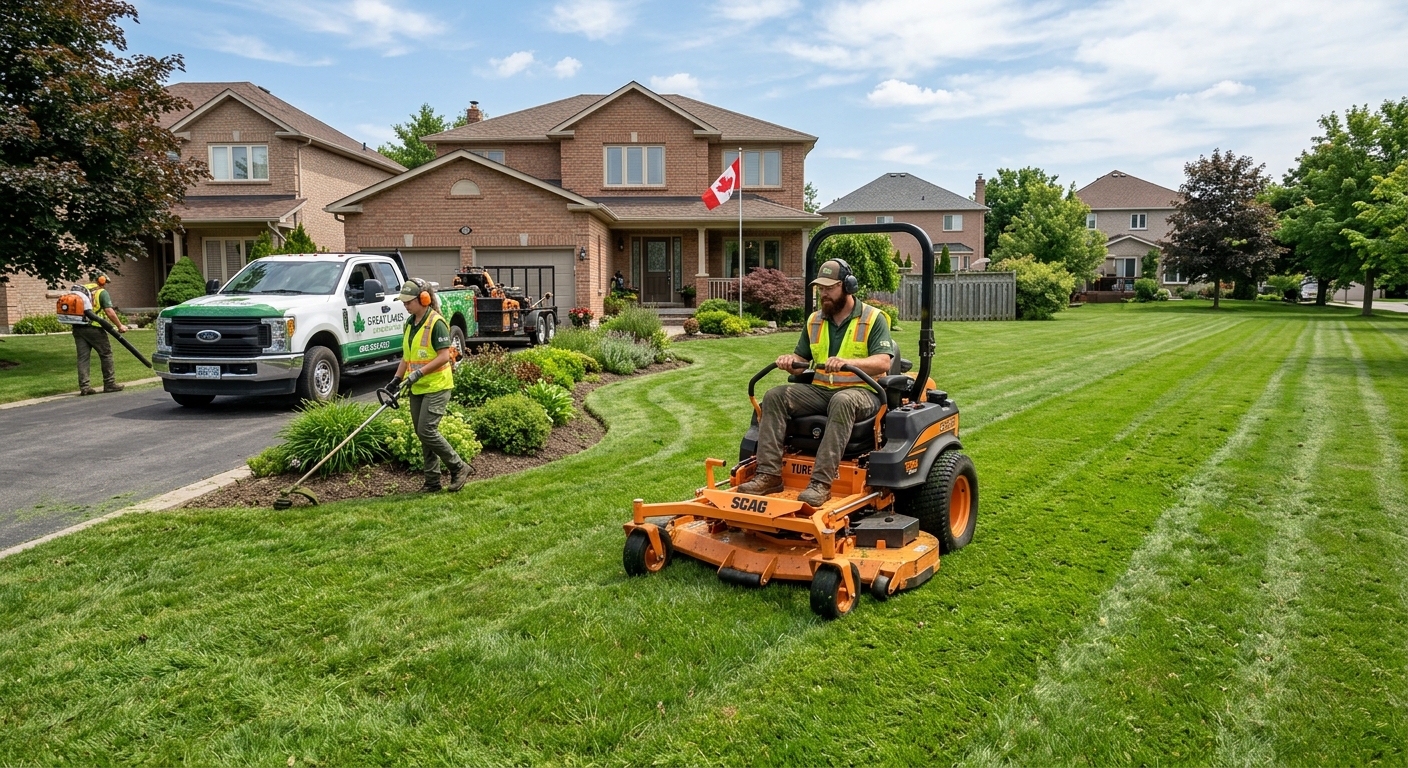
Landscaping options and costs in Westgate
Landscaping in Westgate, Alberta is where practical design meets a tough climate. With a 2021 population of 3,225 in the area (Statistics Canada, 2021 Census), most projects are neighbourhood-scale—driveways, backyard refreshes, and front-curb makeovers—rather than mega-developments. Westgate also has a strong incentive to invest because many households are living in single-detached neighbourhood settings, where homeowners feel the yard is part of daily life and curb appeal. In a market like Calgary’s, contractor availability and lead times often tighten when the ground finally thaws and crews can safely excavate.
Calgary’s prairie hardiness zone 3–4 and severe freeze–thaw cycles shape both what lasts and what it costs to install it. Retaining walls, patios, and walkways are particularly sensitive: if the base isn’t deep and well-compacted, the frost push can heave edges and crack pavers. Labour typically represents about 40–60% of a full project, so any additional grading, trucking, or drainage correction quickly moves the total. Across Calgary’s semi-arid conditions—where chinooks can swing temperatures but cold snaps still arrive early—most reliable work uses cold-hardy, drought-tolerant plants, plus efficient irrigation design (or no irrigation where feasible).
In Westgate, jobs are often in especially high demand around the residential pockets near the main arterial routes where homeowners are coordinating driveway and walkway upgrades. If you’re comparing options, the table below gives realistic cost ranges for common scopes in Westgate before you talk to a contractor.
| Service |
Description |
Season |
Price Range |
| Full landscape design and installation |
Site walk, concept + layout, grading plan, base prep, planting, sod/seed, hardscape and optional irrigation |
Mid-April to October (weather-dependent) |
$5,500 – $35,000 |
| Sod installation (supply, grade, lay, roll) |
Soil prep, fine grading, sod supply, layout, rolling, starter fertilizer, initial watering guidance |
May to early October (avoid extreme heat/frost) |
$2,500 – $6,000 |
| Lawn seeding (grade, seed, starter fertilizer) |
Light tilling, seed selection, starter fertilizer, seeding, mulch/track protection as needed |
Early spring or late summer/early fall |
$1,500 – $3,500 |
| Interlocking patio or walkway |
Excavation, compacted base, geotextile, levelling sand, pavers, edging, joint sand and cleanup |
May to October |
$9,000 – $30,000 |
| Retaining wall (interlocking block) |
Block wall build, reinforced base prep, backfill, drainage rock and weeping/drainage piping as required |
May to September (best conditions for compaction) |
$10,000 – $35,000 |
| Tree and shrub planting |
Soil amendment, planting pits, stakes where needed, mulch rings, initial watering plan |
May to October (container/seasonal stock permitting) |
$900 – $12,000 |
Prices are estimates only and vary by project scope, site access and material selection.
What affects the price of landscaping in Westgate
In Westgate, you can see the same landscaping scope come back 30–50% apart across Calgary and other Alberta communities because the variable “unknowns” are usually hidden in the ground: soil condition, drainage patterns, and how much base depth the frost line demands. Even if two quotes both mention “a patio” or “sod,” one contractor may include deep compaction and proper drainage beds while the other assumes the existing base is adequate. That’s also why comprehensive projects across the Calgary area commonly land in the mid five-figure range once grading, hardscape, planting and irrigation are included—labour and equipment time add up quickly when frost-affected soils have to be corrected.
Prairie hardiness zone 3–4 is a major driver. Short working seasons (and late-spring frosts) limit when crews can excavate and compact, which can increase scheduling costs. Short seasons also push quality choices: cold-hardy, wind-tolerant and drought-tolerant species cost more upfront than generic bedding plants, but they survive Alberta winters with less replacement. In contrast, coastal climates (like Zone 7–8 in parts of BC) allow a longer growing season and broader planting palettes, but heavy-rainfall drainage requirements still raise base-build complexity—so the “cost shape” changes even if the total stays similar. In Calgary’s semi-arid conditions, smart irrigation design and soil improvement often matter more than high-water turf.
Concrete examples you’ll feel in Westgate: (1) swapping from sod to seeding can reduce lawn costs—sod often lands around the mid $2,000s to $6,000+, while seeding is commonly lower in the $1,500 to $3,500 range; (2) grading to correct pooling near a foundation can add significant trucking and labour, pushing a walkway from a straightforward install into the higher end of interlocking pricing. If your yard has older fill or repeated freeze–thaw heaving from poor compaction, expect additional base prep depth and drainage rock—those changes are often where the biggest quote differences appear.
| Price Factor |
Why It Matters |
Cost Impact |
| Yard size in sq ft — the primary cost driver for softscape |
More area means more soil prep, more seed/sod or more mulch and plants |
Small lots can stay near the low end; larger lots move totals into higher bands quickly |
| Grading and drainage work — slope corrections add significant cost |
Proper slopes protect foundations and prevent pooling after spring melt and summer storms |
Can add thousands when excavation and re-compaction are extensive |
| Drainage bed or French drain installation |
Freeze–thaw cycles punish water trapped in sub-base or near footings |
Typically increases hardscape/softscape budgets by a noticeable amount |
| Plant material tier — native shrubs vs. ornamental vs. mature specimen trees |
Mature stock costs more and needs bigger pits, staking and soil amendment |
Range varies from a few hundred to several thousand per installation set |
| Hardscape vs. softscape ratio — walls and patios cost more per sq ft than lawn |
Pavers, block systems, and base materials are labour-intensive and equipment-driven |
Shifts overall project from lower five-figures toward mid five-figures |
| Irrigation system design and installation |
Zoned systems, controllers, and proper head spacing are critical in Alberta’s climate swings |
Can add a meaningful line item compared with rain/hand-watering-only plans |
| Soil amendment and topsoil required |
Compacted or sandy soils need structured amendments for roots and drainage |
Increases trucking and material costs depending on volume |
| Tree removal or stump grinding before new planting |
Stumps affect new bed prep and may require disposal and haul-away |
Often adds several hundred to more, depending on size and access |
Permits & regulations in Alberta
In Alberta, most routine landscape work—planting new trees and shrubs, sodding, seeding, mulch and typical softscape bed builds—typically does not require a permit. Where permits commonly enter the picture is when you’re changing engineered structures or altering drainage in a way that could affect neighbouring properties. For example, retaining walls above a height threshold (often around 1.0 m / 3.3 ft, depending on local rules) usually require a building permit and sometimes engineered drawings. Also, if you’re doing substantial grading changes that redirect stormwater to neighbouring lots or to a storm sewer connection, approvals may be required.
Before anyone digs in Westgate, insist on utility locates. Call to have buried services located for planting holes, trenching for drains, and wall footings. This is especially important near older service corridors or where driveways may have existing lines.
To verify a contractor’s credentials step-by-step, homeowners should: (1) confirm their Alberta business/contractor registration as applicable (and request their contactable verification details); (2) ask for a current certificate of insurance (liability) showing you’re covered in case of property damage; (3) request proof of WSIB/WCB coverage if they have employees—don’t accept “we’re insured” without documentation; (4) ask for the clearance letter or coverage status document they use for clients; and (5) keep copies of all documents with your signed contract and itemised estimate.
Planning a landscape that thrives in Westgate's climate
Planning for Westgate means working with Calgary’s zone 3–4 reality: cold snaps, rapid temperature swings, and hard freeze–thaw. Start with plant selection. Prioritise native and proven cold-hardy species that can tolerate wind and winter exposure, and consider winter protection where needed (mulch depth, sheltered placement). Next, choose sod vs. seed with your timeline in mind. Sod gives instant visual results, but it’s often about 3–4 times the cost per square foot of seeding in typical Alberta projects. If your goal is a fast green front while you wait for beds to mature, sod can be worth it—but if budget matters, seeding often gets you there more economically.
Drainage and grading are the make-or-break items in Calgary. Pooling near foundations can show up as basement moisture or heaved edges after thaw cycles, so we design slopes and sub-base drainage before we lay stone or block. For hardscape, base preparation must reach appropriate depth and include proper compaction and drainage layers to handle the frost line. Finally, build low-maintenance structure: groundcovers, mulch, perennials, and hardy shrubs reduce annual upkeep without sacrificing curb appeal.
A good xeriscape approach here is efficient irrigation and smart soil—use drip irrigation only where plants actually need it, and consider rain-garden style grading in swales to capture runoff. If you compare a small lawn refresh, spending the premium for sod might be justified when you need immediate curb appeal (for example, a sod install can land around the mid $2,000s to $6,000+), while seeding is usually more budget-friendly in the $1,500 to $3,500 range when you can accept a longer “green-up” period.
| Element |
Climate Consideration |
Maintenance Level |
Price Band |
| Sod lawn installation |
Needs stable soil temp and watering support through early establishment; freeze–thaw can lift poorly prepped bases |
Medium during first season, then low |
$2,500 – $6,000 |
| Native perennial garden |
Zone-appropriate plants handle Alberta winters better and typically need less irrigation |
Low to medium (weeding first year, then trimming) |
$1,800 – $8,000 |
| Mulched shrub border |
Mulch buffers soil temps and reduces moisture loss; choose wind-hardy shrubs |
Low (mulch refresh and light pruning) |
$1,200 – $6,500 |
| Interlocking stone patio |
Requires deep, compacted base and drainage to prevent frost heave |
Low (occasional joint sand/top-ups) |
$9,000 – $30,000 |
| Retaining wall (block) |
Backfill and drainage rock are essential to prevent pressure build-up during freeze–thaw |
Low (annual inspection recommended) |
$10,000 – $35,000 |
| Drip irrigation system |
Zoned drip conserves water and helps plants recover in Alberta’s dry spells; controllers support seasonal scheduling |
Low (seasonal adjustments and checks) |
$2,000 – $8,000 |
How to choose a landscaping contractor in Westgate
Choosing a contractor in Westgate is mostly about documentation, clarity, and risk control. Start with Alberta licensing/registration as applicable for the business doing the work, then verify liability insurance: ask for a current certificate of insurance and ensure it’s active for the project dates. If they have employees, request proof of WSIB/WCB coverage (and a clearance status letter if they can provide one). Don’t rely on verbal assurances—ask to see the certificate before you sign.
Next, get 2–3 itemised written quotes, not lump sums. You want a labour + materials breakdown so you can compare apples to apples: excavation/haul-away, base material depth, geotextile use, drainage rock, edging, paver/block systems, topsoil/compost volumes, and plant counts/sizes. Also read the exclusions carefully—disposal included or not? Permits included or not? Top-up watering after install included or not? In Alberta winters, the “what happens if” part matters too, so ask about protection measures during cold snaps.
Warranty is another key difference. Ask for the workmanship warranty length for installation (not just manufacturer warranties for materials). Confirm whether the warranty is transferable to future homeowners. For payments, never pay more than 10–15% upfront; hold back a portion until the job is complete and you’ve verified graded slopes, drainage function, and a tidy final walk-through. Finally, get timeline details in writing: start date and an estimated completion window based on weather and curing/compaction needs.
- Ask for Alberta insurance and WSIB/WCB documentation before finalising the contract.
- Request licence/registration details and confirm the business name matches the quote and invoice.
- Get 2–3 itemised quotes with line items for base depth, drainage, and materials.
- Confirm whether disposal/haul-away is included for excess soil, roots, or old sod.
- Verify geotextile, compaction method, and base build-up are included for hardscape.
- Ask who supplies and installs edging restraints (critical for long-lasting patios).
- Check plant sizes/counts (not just “shrubs”): container size, height, and spacing.
- Ask about irrigation scope: heads, zones, controller, and smart timer settings.
- Confirm drainage plan: slopes away from foundation and how pooling is addressed.
- Review warranty terms for workmanship and whether it covers settlement/heaving issues.
- Agree on payment schedule: keep the upfront portion modest and set a holdback.
- Get a written schedule that accounts for weather and curing/compaction time.
Red flags in Westgate include: quotes that don’t specify base depth/compaction (especially for patios/walkways), “all-in” pricing with no drainage or disposal details, refusal to provide insurance/WSIB/WCB proof, pressure to pay large deposits up front, and vague timelines that ignore freeze–thaw constraints and curing needs.
Frequently asked questions — landscaping in Westgate
How do I improve drainage in my yard?
In Westgate and the wider Calgary area, drainage problems usually come from soil compaction, incorrect slopes, or water being trapped near foundations after spring melt. The best first step is a site assessment: look for pooling spots, soft ground, and areas where meltwater flows toward the house. A common fix is re-grading plus a drainage bed or French drain where water collects—then rebuilding affected hardscape or lawn on a properly compacted base. If you’re planning a patio or walkway, we design the base with adequate depth and drainage layers to resist freeze–thaw heaving. Budget-wise, drainage work can be a meaningful part of the project; combined with a walkway/patio, it can push you into the mid five-figure range rather than a simple repair. Always confirm contractor insurance and utility locates before any trenching.
What is xeriscaping and does it suit Westgate?
Xeriscaping is designing a landscape that reduces water use while still looking good—typically using drought-tolerant plants, mulch, efficient irrigation (often drip), and smart soil preparation. In Westgate’s zone 3–4 prairie conditions, xeriscaping usually makes a lot of sense because you can’t rely on a long growing season and you’ll often see dry, windy stretches where turf struggles. Many homeowners pair native perennials and hardy shrubs with groundcovers and thicker mulch to cut evaporation. You can also use rain-garden style grading to capture runoff in a controlled way. Where Alberta water rules are in effect locally, or if you simply want to manage costs, zoned controllers and drip lines help target watering. If you’re comparing lawn options, sod budgets (often around the mid $2,000s to $6,000+) may not be the best choice if the goal is long-term water efficiency; seeding or converting parts to planting beds can be a better fit for the climate.
How do I plan a low-maintenance yard?
A low-maintenance yard in Westgate starts with reducing the “jobs” your plants need. Choose cold-hardy, wind-tolerant species that are proven for zone 3–4, and build planting beds with mulch and weed suppression fabric where appropriate (especially for shrub borders). Structure helps: groundcovers, a defined shrub framework, and perennial groupings reduce gaps that invite weeds. For lawns, consider whether you truly need sod everywhere; seeding or smaller sod zones can cut annual mowing and re-establishment costs. Hardscape can also lower upkeep—interlocking patios and walkways, when built on the right base, stay neat for years with only joint maintenance. If you’re budgeting, “full design + install” ranges widely depending on grading and irrigation, but typical Westgate projects often land in the broader $5,000–$50,000 spectrum depending on scope. A detailed scope with labour/material line items will keep your maintenance goals realistic.
How deep should a retaining-wall base be for local frost?
For retaining walls in Westgate, depth is driven by the wall height, soil type, drainage approach, and how far the frost zone affects your specific site. The key principle in Calgary-area freeze–thaw conditions is that you need a properly engineered base and backfill system, including drainage rock and weeping/drainage provisions so water doesn’t build up behind the block. Even if your wall is “only” around 1.0 m or slightly above, the base often requires excavation to remove unsuitable soil and rebuild with compacted granular layers, then re-establish slope and drainage. If the wall may exceed local permit thresholds (commonly around 1.0 m / 3.3 ft in many municipalities, though you should confirm locally), plan on permitting and possibly engineered drawings. A contractor should also explain the compaction method, material specifications, and how they handle drainage—those details matter as much as the depth for frost performance.
How much does professional landscape design cost?
Professional landscape design in the Calgary region can be priced as a standalone design fee or bundled into an installation contract, depending on the contractor. In Westgate, homeowners typically feel design costs through the scope: a full “design + installation” project commonly falls into the $5,000–$50,000 range when grading, hardscape, planting, and irrigation are included. The design piece is especially valuable when you need a cohesive drainage plan, a layout that works around existing grades, or a multi-zone planting strategy for zone 3–4. If you’re only doing a smaller update—like a shrub border plus mulch and edging—the design may be lighter, but you still benefit from correct plant spacing and soil prep. Ask for a clear scope: what’s included in the design (layout drawings, plant list, irrigation notes), and what’s separate. Compare quotes by line items rather than only the total.
How do I compare landscaping quotes?
To compare landscaping quotes in Westgate, start by requesting 2–3 itemised written estimates with labour and materials broken out. You want clarity on base preparation depth and compaction for hardscape, drainage rock/French drain inclusion, and whether geotextile is used. Confirm what each quote includes for disposal/haul-away and whether any permits are included. Scope matters—some quotes only price “surface work” while others include grading corrections and soil amendment, which is where freeze–thaw failures often begin. Compare timelines in writing too: in Alberta, crews can only work safely when soils are thawed enough for proper compaction. Use price references as a reality check; for example, interlocking patios/walkways often land around $9,000–$30,000, while sod installs commonly fall around $2,500–$6,000. If one quote is far below these bands without explaining drainage/base differences, treat it as a risk signal and ask for clarification.