Landscaping options and costs in Capilano
Capilano homeowners usually start planning landscaping with one goal in mind: a yard that looks finished without becoming a second job. In a community of about 3,177 residents (Statistics Canada, 2021 Census), many properties are detached or semi-detached, and that extra yard space (plus ownership pride) is exactly why landscape improvements are in steady demand. The Lower Mainland–Southwest context also affects pricing: hardiness zones 7–8 and milder coastal weather mean contractors can work longer into the year than in colder regions, and a wider range of lush, layered plant palettes stays viable through winter. That longer working window can lower some costs, but it also increases competition for labour during peak spring and early summer, keeping install rates steady.
In Capilano—particularly around Capilano Road and the Capilano Elementary area—we see frequent requests for drainage fixes, privacy planting, and clean curb appeal on sloped lots. Those slope corrections and proper drainage detailing matter here because wet winters can cause pooling and foundation moisture if grading is off. Structural work like patios and retaining walls still needs freeze–thaw planning, so bases are typically dug deeper with more attention to compaction and drainage.
Below is a practical comparison of common projects so you can benchmark your quote before we talk specifics.
| Service |
Description |
Season |
Price Range |
| Full landscape design and installation |
Site review, layout, plant selection, grading/drainage allowance, planting, sod/seed, and hardscape coordination |
Year-round (best value: spring to early fall) |
$12,000–$45,000 |
| Sod installation (supply, grade, lay, roll) |
Minor grading, soil prep, sod delivery and installation, rolling and initial watering guidance |
Spring to early fall (avoid the wettest cold snaps) |
$3,500–$7,500 |
| Lawn seeding (grade, seed, starter fertilizer) |
Light grading, seed selection, starter fertiliser, raking and initial coverage |
Spring to early summer; touch-ups in fall |
$2,000–$4,500 |
| Interlocking patio or walkway |
Excavation, base, edging, compacted sand, pavers, and finishing; includes basic drainage grading |
Late spring to fall |
$10,000–$35,000 |
| Retaining wall (interlocking block) |
Block wall layout, drainage rock and weep provisions, base and compaction to reduce movement |
Late spring to fall (weather dependent) |
$18,000–$60,000 |
| Tree and shrub planting |
Soil prep, planting, staking (if needed), mulch ring, and establishment watering plan |
Spring to early fall; sheltered planting possible in winter |
$2,500–$12,500 |
Prices are estimates only and vary by project scope, site access and material selection.
What affects the price of landscaping in Capilano
In Capilano and across the Lower Mainland–Southwest, you can see quoted prices swing by 30–50% for what appears to be the “same” landscaping job—usually because the scope hides real labour and materials differences. A contractor may price one design with mid-tier plants and light grading, while another includes full drainage correction and higher-quality topsoil/soil amendments. In coastal BC (zones 7–8), the long season allows more lush planting, but it doesn’t eliminate cost drivers—it shifts them. Bases still must be built for stability through wet winters and freeze–thaw cycles, so excavation depth, compaction, and drainage rock aren’t optional.
Compare this with colder Prairies (zone 2–4), where frost-free windows are short, labour scheduling is tighter, and drought- and wind-tolerant palettes are prioritized—often compressing work into fewer days. In the dry BC interior and Alberta, irrigation design becomes a cost anchor, while in Southern Ontario (zone 5–6) you still plan for dry spells during summer. Back in Capilano, heavy rain plus clay-prone pockets on older lots can raise drainage costs; if pooling near foundations is addressed properly, your project budget often trends toward the upper end of the $10,000–$80,000 hardscaping band.
Two concrete examples from local installs: (1) adding a French drain and re-grading a sloped yard can turn a modest walkway into a bigger machine-and-haul job; (2) replacing poor soil with proper amendments and weed-suppression layers under shrubs can add labour up front, but it reduces plant failures and rework. Even the yard start point matters—an older lot with compacted fill and shallow topsoil commonly adds hundreds to thousands in preparation before you can reach premium planting outcomes.
| Price Factor |
Why It Matters |
Cost Impact |
| Yard size in sq ft — the primary cost driver for softscape |
More area means more soil prep, more seed/sod, more edging and more planting labour |
$500 to $10,000+ depending on coverage |
| Grading and drainage work — slope corrections add significant cost |
Fixing slope so water runs away from foundations requires excavation and re-compaction |
Often adds 20%–40% to softscape or wall projects |
| Drainage bed or French drain installation |
Drain rock, pipe, sock/filter fabric, and tie-in points are material- and labour-heavy |
Typically $2,000 to $12,000+ for common residential runs |
| Plant material tier — native shrubs vs. ornamental vs. mature specimen trees |
Size, sourcing, and transplanting difficulty (ball size, root pruning) drive cost |
Can swing $1,000 to $10,000+ for the same “look” |
| Hardscape vs. softscape ratio — walls and patios cost more per sq ft than lawn |
Pavers/block require deeper base prep, compaction, and heavier materials handling |
Patios/walls can dominate budgets even when area is small |
| Irrigation system design and installation |
Drip zones, smart controllers, pressure checks and trenching add measurable scope |
Often $1,500 to $8,000+ depending on zoning and coverage |
| Soil amendment and topsoil required |
Capilano gardens often need structural soil or improved topsoil thickness for rooting |
Usually $500 to $4,000+ based on depth and quantity |
| Tree removal or stump grinding before new planting |
Access, stump size, and disposal add time and equipment |
Commonly $800 to $5,000+ per tree/stump |
Permits & regulations in British Columbia
In British Columbia, most routine landscape improvements do not require a permit—especially planting, sodding, and the majority of softscape work like garden bed preparation, mulching, and seeding. However, retaining walls above a typical municipal threshold (commonly around 1.0 m / 3.3 ft, depending on local bylaws) generally require a building permit, and sometimes engineered drawings. Also watch for projects that alter drainage: significant lot grading that changes where stormwater flows—particularly if it directs water toward neighbours or connects toward storm sewer tie-ins—may trigger review or approval requirements.
Before any digging, have utility locates completed for planting holes, trenching for irrigation, and any wall footings. This is not just good practice—it’s how you avoid expensive utility strikes.
For homeowners in Capilano, verify your contractor’s credentials step-by-step:
- Request the contractor’s British Columbia business licence information (and confirm it on the applicable provincial registry if the contractor provides it).
- Ask for a certificate of insurance (COI) showing general liability coverage; confirm the project address/insured party name matches.
- Confirm workers’ compensation coverage (WCB) and ask for evidence/clearance documentation—especially if crews will be working on-site.
- Have them provide a written scope that states who pulls permits (if any) and whether drawings are included for a wall.
- Verify product coverage: list plant warranties, and confirm whether workmanship warranties are in writing.
Planning a landscape that thrives in Capilano's climate
Planning in Capilano starts with working with the yard’s natural rhythm: coastal zone 7–8 weather, wet winters, and a frost calendar that usually keeps the ground workable from spring into fall. Select plants that match the zone first, then refine for microclimates—windward exposures, shaded corners, and spots that stay damp after rain. When you choose native or zone-appropriate shrubs and long-blooming perennials, you’re typically reducing watering needs and winter protection requirements compared with species that struggle locally.
For lawn establishment, the sod-versus-seed decision is where many budgets diverge. Sod gives instant coverage but commonly costs 3–4x more per sq ft than seeding once you include soil prep and installation. If you have a heavily used front lawn and you want curb appeal quickly, sod can be justified; for example, upgrading a small front area may add a few thousand dollars, but it can be worth it when you’re also correcting grading and drainage. If the priority is cost control, seeding is often the smarter route, especially when you can commit to the initial watering and protection period.
Drainage and grading are critical in Lower Mainland–Southwest yards. Avoid pooling near foundations by directing water away with subtle slopes and ensuring any subsurface layers drain properly. Hardscape base preparation also matters: patio and walkway bases need proper thickness and compaction to handle coastal wetting and freeze–thaw movement. Retaining walls require drainage rock and weep provisions to prevent hydrostatic pressure. To keep upkeep low without giving up curb appeal, use mulch in beds, add groundcovers to suppress weeds, and group perennials for seasonal impact. Consider rain-garden shapes or xeriscape planting in downspout catch areas—both can improve yard function while reducing irrigation demand during warmer months.
| Element |
Climate Consideration |
Maintenance Level |
Price Band |
| Sod lawn installation |
Fast coverage helps in cool, wet coastal conditions, but avoid saturated winter installs; ensure drainage and rolling |
Medium (watering until rooted, then regular mowing) |
$3,500–$7,500 |
| Native perennial garden |
Zone-appropriate plants handle mild winters and reduce winter protection; choose well-drained planting sites |
Low to medium (mulch top-ups, light weeding) |
$2,500–$9,000 |
| Mulched shrub border |
Mulch buffers wet/dry swings; proper spacing reduces disease pressure in coastal humidity |
Low (seasonal pruning and weed control) |
$1,800–$6,500 |
| Interlocking stone patio |
Base and compaction protect against freeze–thaw movement; slope away from the house |
Low (occasional leveling/cleaning) |
$10,000–$35,000 |
| Retaining wall (block) |
Use drainage rock and weeps to manage winter rains; correct base depth for stability |
Low (visual checks, minor maintenance if needed) |
$18,000–$60,000 |
| Drip irrigation system |
Drip supports efficient watering if restrictions occur; smart controllers help prevent overwatering |
Low (seasonal checks, monitoring) |
$1,500–$8,000+ |
How to choose a landscaping contractor in Capilano
Choosing the right contractor matters in Capilano because a lot of your long-term success depends on the fundamentals: drainage detailing, proper base prep, and plant establishment—not just appearance. Start by verifying British Columbia licensing/registration as applicable for the contractor’s business and trades. Then check liability insurance by requesting a certificate of insurance (COI). The COI should include adequate general liability limits and list the correct insured entity. For work involving crews on-site, confirm WSIB/WCB coverage (in BC this is WCB) by asking for evidence of coverage or clearance documentation before signing.
Next, request 2–3 itemised written quotes. A good quote breaks labour and materials into sections (excavation/base, drainage components, pavers/block, soil amendments, plants, irrigation, disposal), rather than a single lump sum. Carefully review the scope: what’s excluded (extra excavation due to surprises, replacing rotten topsoil, permit pulls), and what’s included (site protection, saw cutting, disposal of surplus soil). For any retaining wall, clarify who handles permit applications and whether engineered drawings are included if required.
Warranty is another area where contractors differ. Ask for: workmanship warranty length, product/manufacturer warranty coverage, and whether the warranty is transferable if you sell your home. On payment, never accept a schedule that demands more than 10–15% upfront. Hold back a final portion until the project is complete and any punch-list items are addressed. Finally, insist on a written timeline: a start date and estimated completion window, with weather contingencies noted for wet periods.
- Ask who conducts the site visit and who signs the final plan.
- Require itemised labour/materials (not just totals).
- Confirm disposal: dump fees included or not? What about soil haul-away?
- Check whether utility locates are included in the schedule.
- Ask about drainage strategy: where does water go after grading?
- For sod/seed, request the soil prep steps and amendment plan.
- Verify irrigation scope if you’re installing drip: tubing, filters, pressure regulator, controller.
- For hardscape, ask for base thickness and compaction method.
- Clarify wall details: drainage rock, weeps, and tie-back requirements.
- Confirm plant list: common name + Latin name + container size/species tier.
- Put warranties in writing (workmanship and product), including start date and claim process.
- Keep a clear payment schedule with a holdback for completion and punch-list items.
Red flags in Capilano include: (1) no COI or WCB evidence provided when requested; (2) vague scopes like “install patio” without base preparation details; (3) asking for large upfront payments beyond 10–15% without a signed contract; (4) refusing to itemise quotes or hiding permit/responsibility terms; and (5) promising sod “instant results” without addressing grading/drainage and establishment watering.
Frequently asked questions — landscaping in Capilano
When should I aerate and overseed my lawn in Capilano?
In Capilano, the best timing is typically early spring to jump-start root recovery, or early fall for overseeding when temperatures cool but the ground still isn’t frozen. Because Lower Mainland–Southwest winters are mild and wet, you generally want to avoid overseeding during the coldest saturated weeks—seed germination can fail if the soil stays waterlogged. If your lawn is thinning from shade, traffic, or compaction, aeration first helps relieve density before you overseed. In a practical plan, aerate and overseed in one pass, then keep mowing heights consistent and water lightly to maintain moisture until seedlings establish. If you’re comparing budgets, seeding is often within the $2,000–$4,500 range for typical residential areas, while sod is usually higher due to install labour and materials.
What trees grow best in Capilano's climate zone?
Capilano’s coastal hardiness zones 7–8 support a wider tree palette than colder provinces, and you can choose options that fit your yard’s soil moisture. Many homeowners do well with broadleaf evergreens and hardy ornamentals that handle wet winters without constant special protection. A good approach is to match the tree to microclimate: near downspouts (moister), along wind-exposed edges, or in shaded pockets. Also consider mature size—many older Capilano properties have established canopy but limited root space due to sidewalks and foundations. A licensed landscaper can assess rooting conditions and recommend container size or transplant method. While exact recommendations depend on your site, it’s common to see results improve when you choose zone-appropriate trees rather than pushing marginal species that struggle and then cost more to replace later.
How much does sodding a yard cost in Capilano?
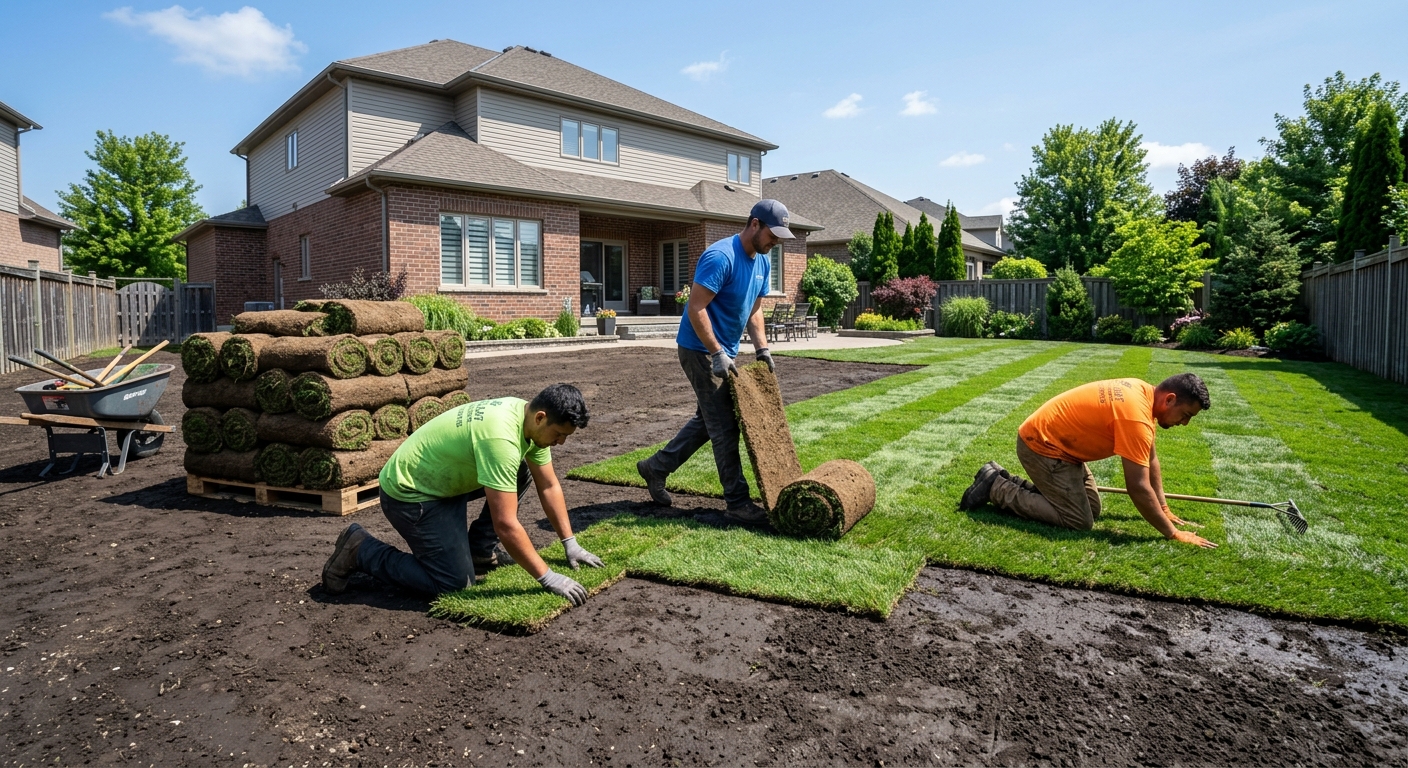
Sodding costs in Capilano depend mainly on area and the amount of grading or soil correction required. For many typical residential front or side lawns, you’ll often see estimates in the neighbourhood of $3,500–$7,500 when sod supply, grade prep, and installation are included. If the yard needs substantial drainage correction—common on sloped or poorly draining spots—the price can move higher because excavation, compaction, and sometimes additional soil amendments add labour and materials. Wet-season planning matters too: sodding during the wettest stretches can slow rooting. A proper contractor will also explain establishment watering and how they’ll protect sod from heavy foot traffic during the first couple of weeks.
How do I prevent weeds in my Capilano garden?
Weed prevention works best when you build it into the plan rather than treating weeds after they take over. For Capilano gardens, start with soil prep: remove perennial weeds with roots, then use a consistent mulch layer (thicker in bed zones, thinner around crowns). Landscape fabric can help in some applications, but it’s not a substitute for proper prep and good plant spacing—dense, healthy plants outcompete weeds. Groupings of shrubs and perennials also reduce open soil where weed seeds can germinate. If you’re adding a new border, ask your contractor to specify how they’ll handle edging and under-bed weed control. This is one reason itemised quotes matter: the cheapest option often skips soil amendment, proper mulch depth, or edging details, which leads to higher maintenance later.
How do I design a low-water yard in Capilano?
Low-water doesn’t mean no greenery—it means designing for efficient water use and smart plant placement in Capilano’s coastal climate. Even with milder weather, you’ll get better results by targeting watering to where plants actually need it. Consider drip irrigation with a smart controller, especially if you want the yard to tolerate occasional water-use changes without lawn die-off. Design by grouping plants by moisture needs and using mulch to slow evaporation. Incorporate rain-garden elements or downspout catch beds so stormwater is captured and absorbed rather than run off. For lawns, overseeding and then reducing irrigation once established can lower ongoing water demand. If you’re comparing options, seeding (often $2,000–$4,500) can help manage early costs versus sod, but either approach should be paired with drainage and irrigation efficiency.
How do I find a licensed landscaper in Capilano?
To find a licensed landscaper in Capilano, start by verifying credentials and insurance before you ever pick a contractor. Ask for proof of liability insurance (COI) and request evidence of workers’ compensation coverage (WCB) so you know the company is covered if someone is hurt on-site. Then confirm their business information/registration where applicable and make sure the quote is written with a clear scope. In BC, many jobs like planting and most softscape do not require permits, but retaining wall work above typical thresholds often does—so ask whether permits (and engineered drawings, if needed) are included. You can also shortlist contractors with a strong track record: look for itemised quotes, clear timelines, workmanship warranty terms, and photos of comparable Lower Mainland–Southwest projects. Avoid anyone who won’t provide documentation or who pushes for a large upfront payment.