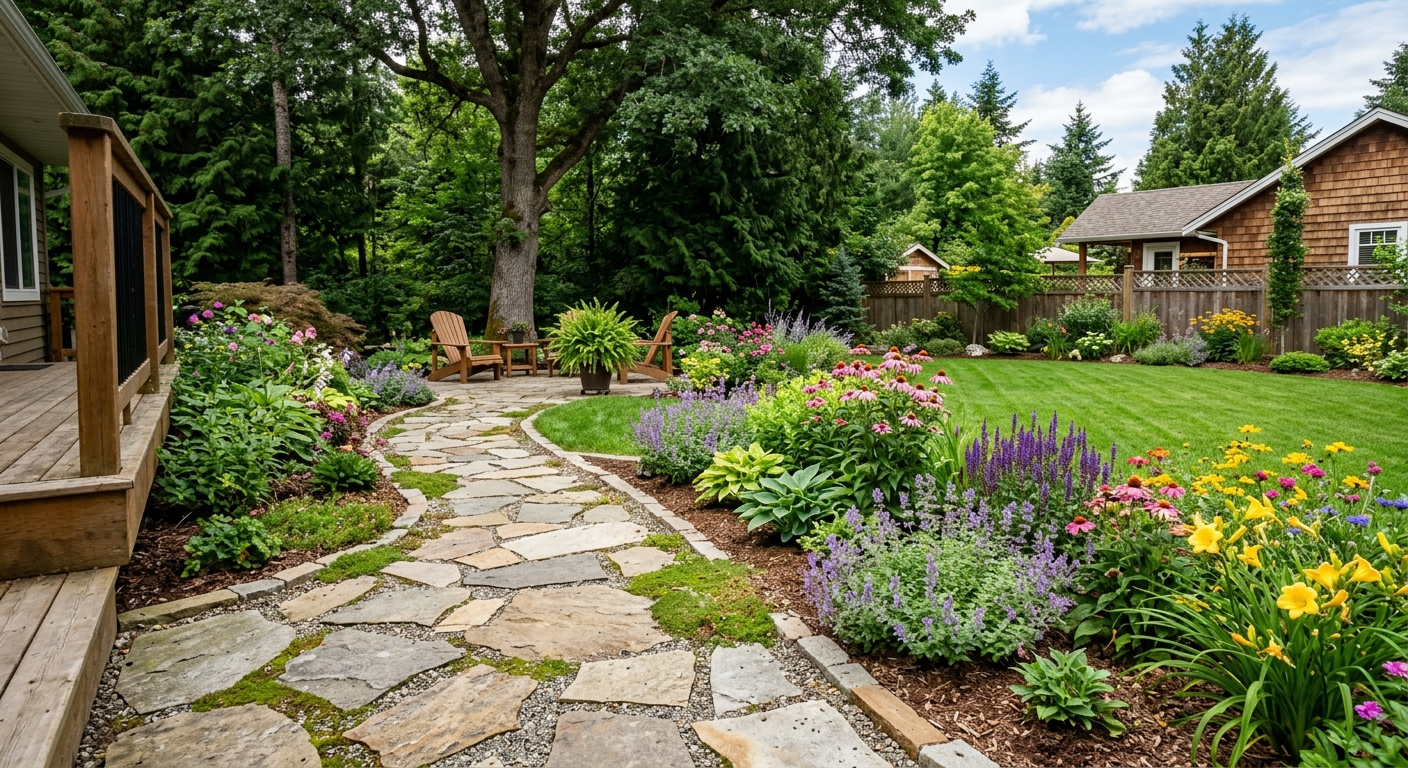
Landscaping options and costs in Limoges
Limoges, Ontario is a small community with big-yard potential—according to the 2021 Census, the town has a population of 2,048, which often translates into many single-family properties where owners invest in curb appeal and outdoor living. In a town like this, most projects are designed around what fits your lot’s layout and how quickly you want results: some homeowners start with a clean “foundation” of grading and drainage, while others begin with visible features like a patio, retaining wall, or new tree and shrub beds. In the Toronto economic region, the overall housing market also means there’s steady demand for practical upgrades such as walkways to the front door, backyard entertaining space, and winter-ready planting.
Pricing in Limoges typically mirrors GTA economics: labour is widely scheduled around the frost-free window (roughly May to October), and freeze–thaw cycles in southern Ontario drive higher construction standards for patios, steps, and retaining walls. Contractors also adjust plant palettes for hardiness (generally zones 6a–7a in the GTA), balancing winter lows and hot, often humid summers. Availability can tighten during spring kick-off because crews are booked for sod and stone install days, and that can affect scheduling rather than just cost.
In Limoges, you’ll see especially strong contractor demand in the residential pockets near the main community core, where homeowners often refresh front yards and entry paths. With that in mind, here’s a realistic comparison of common landscaping services and typical pricing ranges so you can line up your options with your budget.
| Service |
Description |
Season |
Price Range |
| Full landscape design and installation |
Site assessment, design plan, grading/drainage coordination, planting, sod/seed, and hardscape as included |
Spring to early fall (May–Oct) |
$8,000–$40,000 |
| Sod installation (supply, grade, lay, roll) |
Remove dead grass, fine-grade, soil prep, supply sod, lay, roll, and first watering plan |
Best mid-spring to late summer |
$2,500–$8,000 |
| Lawn seeding (grade, seed, starter fertilizer) |
Light grading, seed blend selection, starter fertilizer, raking, and straw/mulch coverage as needed |
Early spring or early fall |
$1,400–$5,200 |
| Interlocking patio or walkway |
Excavation, compacted base, geotextile/geogrid where needed, interlocking stone, edging, and jointing sand |
Spring to early fall |
$6,000–$30,000 |
| Retaining wall (interlocking block) |
Layout, excavation, base course, drainage stone/weep provisions, wall blocks, and topsoil finishing |
Spring to early fall |
$6,000–$30,000 |
| Tree and shrub planting |
Soil prep, planting holes, amendments, staking (if required), mulching, and first-season watering guidance |
Spring and fall preferred |
$800–$6,000 |
Prices are estimates only and vary by project scope, site access and material selection.
What affects the price of landscaping in Limoges
In Limoges, the same “type” of landscaping job can land 30–50% apart from one contractor to another, even when the scope looks similar on paper. The difference usually comes down to what’s under the surface: how much excavation is required, whether soil is being corrected (not just topped), how drainage is handled, and whether the hardscape base is built to resist southern Ontario’s freeze–thaw cycles. Toronto-area labour is also consistently higher than many rural pockets because crews, trucks, and scheduling are managed to meet the same short work season.
Zone and frost timing drive what’s practical. In the GTA (often zone 6a–7a), we can install a fuller range of shrubs and perennials, but we still build for winter lows near –23 to –18°C. Prairie regions (zone 2–4) typically need ultra-hardy, drought- and wind-tolerant plants, and the working season can be several weeks shorter. Coastal BC can support lush, long-season palettes, but heavy rainfall areas still require careful drainage details. In the dry BC interior, water restrictions shape irrigation design—often more drip and tighter hydro-zoning. In southern Ontario, you’ll usually see moderate winter recovery, with the need for summer irrigation planning during dry spells.
Two common Limoges cost examples: (1) If you’re adding an interlocking patio on existing grade with soft clay or poor drainage, excavation and granular base prep can push the project toward the upper end of the $6,000–$30,000 hardscape band. (2) If you want instant impact with sod, many projects fall into the $2,500–$8,000 range, while seeding often comes in notably lower—unless you need extensive re-grading first. Housing-age matters too: older yards frequently have buried fill, uneven settling, or outdated drainage, and fixing that can add thousands before any planting starts.
| Price Factor |
Why It Matters |
Cost Impact |
| Yard size in sq ft — the primary cost driver for softscape |
More square footage means more soil prep, mulch, seed/sod, and labour hours |
Often the largest swing: can change total cost by several thousand dollars |
| Grading and drainage work — slope corrections add significant cost |
Correcting slopes protects foundations and prevents ponding after spring melt and heavy rain |
Can add 20–40% to softscape totals in clay-heavy sites |
| Drainage bed or French drain installation |
Intercepts water and reduces hydrostatic pressure near foundations and walls |
Commonly a mid-project “add-on” that can cost thousands |
| Plant material tier — native shrubs vs. ornamental vs. mature specimen trees |
Genetics, container size, and size-at-installation affect both plant cost and planting labour |
Mature specimens can move “planting” from the $800–$6,000 band toward the top end |
| Hardscape vs. softscape ratio — walls and patios cost more per sq ft than lawn |
Stone, base materials, and compaction time increase cost dramatically versus planting |
Switching even 100–300 sq ft of lawn to patio can swing budgets quickly |
| Irrigation system design and installation |
Heads, zoning, backflow prevention, and correct coverage reduce summer stress |
May add a substantial add-on if full lawn/bed coverage is desired |
| Soil amendment and topsoil required |
Clay soils often need amendment for rooting and drainage; new topsoil must be compatible |
Costs rise if trucking, import quantities, and re-compaction are needed |
| Tree removal or stump grinding before new planting |
Removal affects access, safety, and stump grind depth to prepare for planting/grass |
Can add thousands and can delay the start of planting or sod |
Permits & regulations in Ontario
In Ontario, most typical yard improvements—planting, sodding, seeding, mulching, and most softscape work—usually do not require a permit. However, retaining walls are the common “permit trigger.” As a practical rule of thumb in many Ontario municipalities, retaining walls above about 1.0 m (3.3 ft) may require a building permit and sometimes engineered drawings, especially if loads or complex drainage are involved. Grading changes can also require approval if they affect drainage patterns toward neighbouring properties or stormwater connections.
Before any digging for planting holes, footing bases, or drainage runs, call for utility locates so you don’t hit buried services. Also confirm local irrigation and water-use rules—while those are often discussed most in drought periods elsewhere in Canada, homeowners in southern Ontario should still plan irrigation responsibly during dry spells to avoid bylaws and water waste.
To verify a contractor in Limoges step-by-step, I recommend: (1) ask for proof of Ontario business registration/eligibility to do the work you’re hiring, (2) request a current certificate of insurance showing liability coverage, (3) confirm they carry WSIB coverage (or the correct alternative clearance, if applicable) and that their workers are covered for onsite work, (4) keep the certificate expiry dates in writing, and (5) ensure the scope clearly states whether permits (if required) are the contractor’s responsibility or yours. If they won’t provide documentation promptly, that’s a red flag.
Planning a landscape that thrives in Limoges's climate
In Limoges, the goal is to design with the natural rhythm of the local hardiness and frost calendar—zone-appropriate plants, smart grading, and durable bases that can survive southern Ontario’s freeze–thaw cycles. Start with plant selection: choose native and zone-appropriate species that handle winter cold and humid summers with less watering and less winter protection. Then decide on lawn establishment method. Sod gives instant curb appeal, but it typically costs 3–4x more per square foot than seeding; it’s usually best when you need a fast visual change or you’re bringing in clean topsoil and grading already planned. Seed is budget-friendlier for larger areas, especially when you can schedule the work for early spring or early fall.
Drainage and grading are where Toronto-area projects often succeed or fail. Correct slopes and soil compaction help prevent pooling that can stress foundations and create muddy zones that destroy new grass. For hardscape like patios and retaining walls, base preparation must reach below the frost-impacted depth and use properly compacted granular layers to reduce settlement and heaving.
For low-maintenance design, aim for mulch-forward beds, groundcovers, and a limited palette of hardy perennials rather than constant replanting. Add rain-garden style swales where water naturally runs, and consider xeriscape-inspired “low-water zones” using drought-tolerant plantings—especially on the driest sides of the home—paired with targeted drip irrigation rather than spraying the whole yard.
As a concrete example: if you’re deciding between seeding and sod, spending toward the $2,500–$8,000 sod band can be justified when you’re also improving drainage and want a finished look for an event or early-season sale. If your yard needs mostly soil correction and you can wait for establishment, seeding can stretch the budget and leave funds for a higher-impact planting bed or a small interlocking walkway.
| Element |
Climate Consideration |
Maintenance Level |
Price Band |
| Sod lawn installation |
Needs consistent moisture during establishment in spring/late summer; hardens off through the winter |
Medium (watering during establishment; mowing once rooted) |
$2,500–$8,000 |
| Native perennial garden |
Zone-appropriate plants handle winter lows; mulch helps during freeze–thaw and spring thaw |
Low to medium (weeding first year; trims and cut-backs later) |
$800–$6,000 |
| Mulched shrub border |
Dense spacing reduces weed competition; winter hardiness varies by species so choose proven varieties |
Low (mulch refresh annually; occasional pruning) |
$1,200–$7,500 |
| Interlocking stone patio |
Built to resist heaving from freeze–thaw; proper base and drainage joints are critical |
Low (occasional joint sand top-up; power washing as needed) |
$6,000–$30,000 |
| Retaining wall (block) |
Requires stable base and drainage stone so water doesn’t push behind the wall through winter cycles |
Low (visual inspections after heavy rain; minor touch-ups) |
$6,000–$30,000 |
| Drip irrigation system |
Helps manage summer humidity and dry spells while protecting plants during establishment |
Low to medium (seasonal adjustments; winter blowout if installed as designed) |
$1,800–$9,500 |
How to choose a landscaping contractor in Limoges
Choosing the right contractor in Limoges is mostly about documentation and clarity. For Ontario work, ask for proof of liability insurance (so you’re protected if something is damaged), and confirm workers are covered by WSIB (or the applicable clearance documentation where required). How to check: request certificates directly and verify the policy number, coverage amounts, and expiry dates; if they provide a WSIB clearance letter/confirmation, keep it in your file for your project records.
Next, get 2–3 itemised written quotes, not just a lump sum. A good quote breaks down labour and materials: excavation quantities, base material type and thickness, soil amendments, stone/sod/seed costs, delivery fees, and what’s included for edging, disposal, and cleanup. Pay attention to inclusions and exclusions: is permit paperwork included if a retaining wall triggers it, is disposal of excess soil included, and is topsoil supply specified (not just “topsoil”). Also confirm warranty details—workmanship warranty length is important, and ask whether product/manufacturer warranties apply and whether they’re transferable to you.
For payment, never agree to more than about 10–15% upfront. Hold back the remainder until the job is completed and you’ve reviewed grading, irrigation performance (if included), and plant survival setup steps. Finally, get a written start date and completion estimate with weather contingencies, since sod, seeding, and hardscape schedules can shift around rain or heavy frost.
- Request liability insurance certificate with active dates and correct insured party details.
- Confirm WSIB coverage/clearance for the workers who will be on your property.
- Ask if they’re licensed/registered for the type of work being done (where applicable to their business structure).
- Get itemised labour + materials breakdown (base thickness, stone type, soil amendment).
- Confirm disposal is included (excess soil, packaging, and construction debris).
- Ask who pulls permits if a retaining wall requires one and who pays the fees.
- Verify what’s excluded: stump removal, tree cutting, utility locating, and irrigation season shutdown.
- Clarify base construction specs (geotextile/geogrid usage, compaction method, drainage provisions).
- Ensure planting lists include plant sizes and quantities (not “allowance only” without numbers).
- Ask about warranty terms in writing: workmanship duration and how service calls are handled.
- Use a staged payment schedule (keep 10–15% as a holdback until final walkthrough).
- Confirm the timeline in writing, including rain/frost delays and rescheduling process.
Red flags I see too often in the Limoges area: quotes that don’t specify base thickness for patios/walls, “sod included” but no plan for grading correction, refusal to provide insurance/WSIB documentation, vague scope language like “topsoil as needed” without quantities, and asking for large upfront payments or cash-only arrangements.
Frequently asked questions — landscaping in Limoges
How do I plan a low-maintenance yard?
For a low-maintenance yard in Limoges, design around plant hardiness and water-smart layout. In the GTA zone range, choose reliable, zone-appropriate shrubs and native perennials, then build structure with mulch-forward borders so you’re not constantly weeding. Start by fixing grading and drainage so you’re not trying to grow grass in a damp pocket after spring melt. For lawn, consider whether you truly need sod right away: sod projects commonly land in the $2,500–$8,000 range, while seeding can be much less—so you can allocate savings to longer-lived planting beds. If your summers are dry, use targeted irrigation (drip for beds, limited zones for grass) instead of broad spraying. Finally, keep the palette tight: fewer plant types with better spacing reduces labour over the first two seasons.
How deep should a retaining-wall base be for local frost?
In Ontario, the exact base depth depends on wall height, site drainage, and the wall system, but the key concept is that you must build below frost-impacted movement and ensure adequate granular base support. For Limoges (southern Ontario), freeze–thaw cycles can cause heaving if the base isn’t compacted and layered properly. In practice, reputable installers excavate to a stable depth and use a properly compacted granular base, with drainage stone behind the wall so water doesn’t build pressure through winter. If the wall is near or above the common ~1.0 m permitting threshold, you may need permit steps and sometimes engineered guidance—so ask your contractor to specify base course depth and drainage provisions in writing. Don’t accept “good enough” when the whole purpose is long-term stability.
How much does professional landscape design cost?
Professional landscape design in the Toronto region varies by how much is included: concept-only versus a full plan set with planting schedules and construction-ready details. As a practical budgeting guide, full landscape design and installation packages in this area commonly fall within the $8,000–$40,000 range, depending on the amount of hardscape, grading, and plant material. If you’re just seeking design help, you may pay less than a full build, but the contractor’s time and how many revisions are included will determine the number. When comparing quotes in Limoges, look for what the design includes: soil/drainage recommendations, plant lists with sizes, and whether the plan is tied to the construction schedule. A detailed plan can prevent expensive rework—especially where freeze–thaw and drainage are involved.
How do I compare landscaping quotes?
In Limoges, compare quotes like-for-like. First, require itemised breakdowns: labour hours, excavation and base materials, stone/sod/seed quantities, soil amendments, disposal, and any irrigation components. Second, check specs that affect winter performance: base thickness and compaction details for patios and retaining walls; drainage provisions like French drains or drainage stone; and whether geotextile/geogrid are included where needed. Third, confirm inclusions such as utility locates, grading correction, and cleanup. Contractors sometimes use allowances instead of hard numbers—so ask what the allowance covers and whether you’ll pay extra for the actual materials. Finally, match scope to price bands: for example, if one quote includes sod and proper grading and the other only says “topsoil,” the lower price may not be comparable. A clear scope is usually worth more than a small discount.
How long does a landscaping project take in Limoges?
Project duration in Ontario depends on scope and weather, because the frost-free window (roughly May to October) is when lawns, plants, and hardscape are easiest to install reliably. A small planting job (trees/shrubs) can take a day or two, while sod is often scheduled for a concentrated install day followed by establishment watering. Interlocking patios or walkways typically require multiple phases: excavation, base preparation and compaction, stone setting, and jointing/finishing—so expect several working days, not a single afternoon. Retaining walls involve careful excavation, block installation, and drainage stone placement, which also drives time. In Limoges, rain can slow grading and delay base work, and late frost can push start dates. A good contractor will give you a written start date, an estimated completion window, and a weather contingency plan.
What is the best grass type for a Limoges lawn?
For a lawn in Limoges, the “best” choice depends on sun exposure, traffic, and whether you want appearance speed or budget flexibility. Many southern Ontario homeowners do well with cool-season turfgrass blends selected for durability and rooting in local soils, particularly in areas with freeze–thaw cycles. If you want a fast, uniform look and can water consistently during establishment, sod is often chosen—commonly priced in the $2,500–$8,000 range depending on area and prep. If budget matters, seeding can still produce a strong result when you grade correctly, use proper seed rates, and time the work for early spring or early fall; labour might fit within the $1,400–$5,200 range for typical seeded areas. Either way, the biggest success factor is prep: correct grading, soil amendment if clay is present, and proper irrigation during germination.