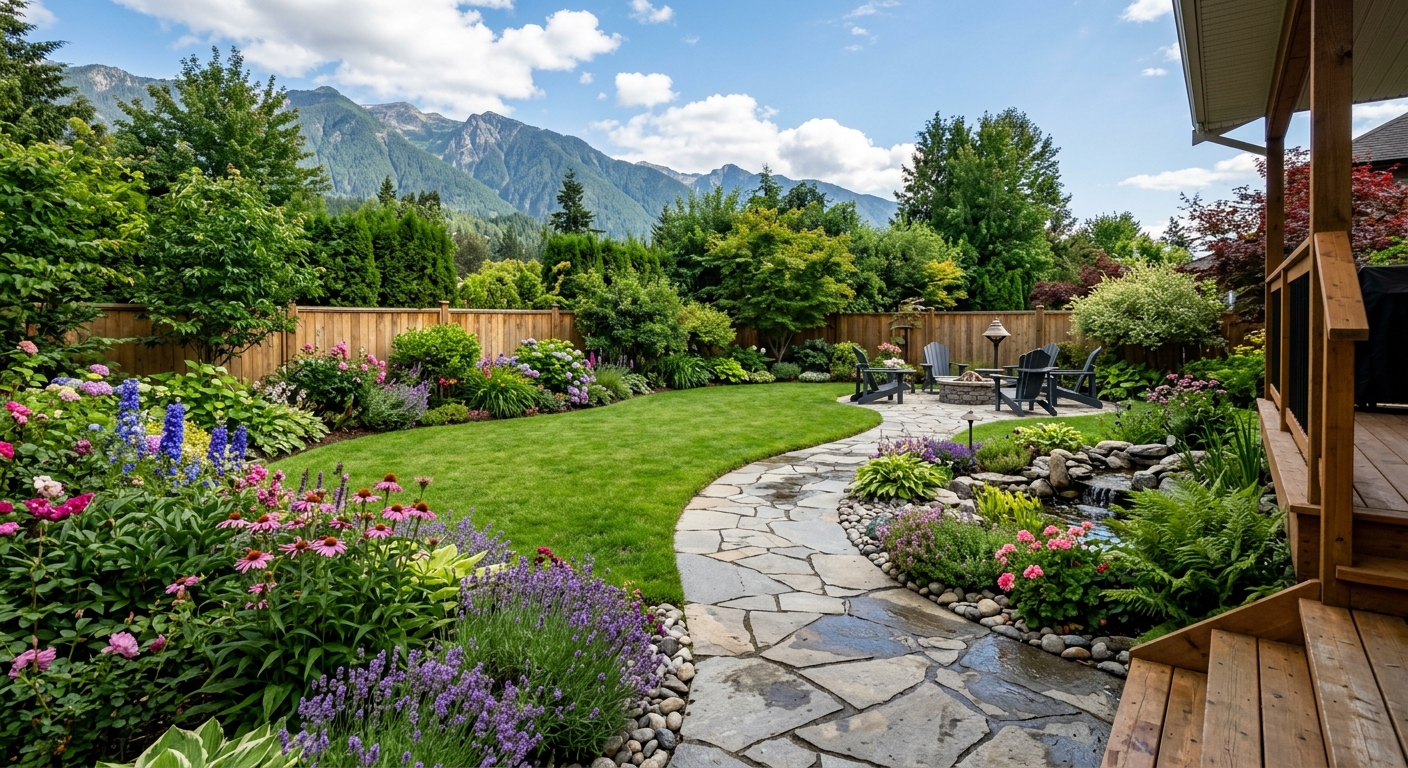
Landscaping options and costs in Columbia Hills
Columbia Hills, Ontario is a great place to invest in a yard makeover—especially if your home type comes with the space to do it. In our local area, many households live in single-detached neighbourhoods where residents typically have the room for real softscape upgrades and longer-term plantings (Statistics Canada, 2021 Census). In a community of 7,125 people (Statistics Canada, 2021 Census), landscaping demand stays consistent through the working season, with homeowners aiming for curb appeal before the summer peak.
Toronto-area pricing is shaped by two big realities: a freeze–thaw winter and clay/filled soils that can hold water. Even when you’re only doing “a few changes,” contractors often need deeper granular bases, extra drainage, and careful compaction to protect patios, steps, and retaining walls over time. Labour availability also concentrates into the frost-free window (roughly May to October), so late scheduling can add cost.
In Columbia Hills, the trade tends to be especially busy around the Meadowbrook and Rutherford Road vicinity where more residents plan front-yard upgrades and driveway-friendly walkways before the busier months. If you’re weighing options, the table below gives you a realistic starting range to compare design, lawn work, hardscaping, and tree/shrub planting together.
| Service |
Description |
Season |
Price Range |
| Full landscape design and installation |
Site walk, concept + grading/drainage plan, plant layout, hardscape/softscape installation, soil amendment and cleanup |
May to October (planting best in spring/fall) |
$8,000–$40,000 |
| Sod installation (supply, grade, lay, roll) |
Grading/leveling, topsoil where needed, sod supply, install and roll, initial watering guidance |
Late April to mid-July; also early September to late October |
$2,500–$8,000 |
| Lawn seeding (grade, seed, starter fertilizer) |
Light topdressing, seed selection, starter fertilizer, raking, rolling, and establishment schedule |
Spring (April/May) and early fall (mid-August to mid-September) |
$1,200–$5,500 |
| Interlocking patio or walkway |
Excavation, base (granular + compaction), edge restraints, interlocking stone, joint sand, sealing optional |
May to October (weather dependent) |
$6,000–$18,000 |
| Retaining wall (interlocking block) |
Footing depth, drainage gravel/weep provisions, block installation, geogrid if needed, finish backfill |
May to October |
$6,000–$30,000 |
| Tree and shrub planting |
Soil prep, amended planting beds, staking where required, mulch rings, watering plan |
Spring and fall (best results with cool temps) |
$800–$6,000 |
Prices are estimates only and vary by project scope, site access and material selection.
What affects the price of landscaping in Columbia Hills
In Columbia Hills, two neighbours can receive quotes that differ by 30–50% for the “same” job because Toronto pricing reacts to site complexity and the winter-readiness of the work. Hardscape and drainage are especially sensitive to details: when contractors must correct slope, manage clay moisture, and build bases deep enough for freeze–thaw cycles, labour and material consumption rises quickly. Design also changes labour—basic layout and planting can be efficient, while a full concept with graded transitions, drainage strategy, and a coordinated palette takes more drafting time and crew coordination.
Climate drives the working season and the plant palette. GTA hardiness zones 6a–7a support many woody plants, but winter lows near –23 to –18°C and spring frosts dictate install timing. Prairie regions (Zone 2–4) have shorter growing seasons and colder winters, pushing designs toward ultra-hardier, drought-tolerant species and simpler palettes; labour can concentrate into fewer weeks. Coastal BC (Zone 7–8) can support a longer growing season and lush planting, but heavy-rain drainage details still matter. Dry BC interior and Alberta often include water restrictions, which changes irrigation design toward drip systems and low-precipitation planting. In Southern Ontario, we typically see a moderate season but dry spells in summer, so irrigation planning still affects costs.
Concrete examples from local sites: (1) Clay-filled lots that pond after rain often require subdrains or French drainage beds, pushing you toward the higher end of retaining wall & hardscaping budgets (like $6,000–$30,000) rather than a light surface project. (2) If your lawn needs full regrade before sod, the sod job can move toward $2,500–$8,000 because excavation and topsoil amendment become part of the package.
Housing age matters too: older homes with settled foundations can correlate with uneven grades, so drainage and grading may need more corrective work—often the difference between a mid-range and a top-end quote.
| Price Factor |
Why It Matters |
Cost Impact |
| Yard size in sq ft |
Determines labour hours for excavation, hauling, base prep, and quantities of sod/seed/mulch |
Major increase; doubling area can more than double cost when access is difficult |
| Grading and drainage work |
Slope corrections and regrading reduce pooling and protect foundations during freeze–thaw cycles |
Often adds significant cost; can shift a job into a higher budget band |
| Drainage bed or French drain installation |
Collects and redirects water from low spots and saturated clay zones |
Moderate-to-high increase depending on outlet distance and digging depth |
| Plant material tier |
Native shrubs vs. ornamental varieties vs. mature specimen trees affects purchase and planting labour |
Low tier is typically easiest; mature specimens raise total budget quickly |
| Hardscape vs. softscape ratio |
Patios, walkways, and walls require deeper granular bases, restraints, and more structural prep |
Hardscape trades are usually higher cost per sq ft than lawn/bed work |
| Irrigation system design and installation |
Ensures summer establishment and protects lawns/plantings during dry spells |
Can move a project into a higher overall range if you add zones and control |
| Soil amendment and topsoil required |
Clay and fill soils often need imported topsoil and amendments for drainage and rooting |
Costs rise with hauling distance and how much depth the beds require |
| Tree removal or stump grinding before new planting |
Impacts schedule, disposal, and the ability to install beds and drainage without obstructions |
Can add noticeable expense, especially with large stumps or root mass |
Permits & regulations in Ontario
In Ontario, most routine landscaping does not require a permit. Planting, sodding, seeding, mulch/bed installation, and standard softscape work typically fall under homeowner/contractor “maintenance and improvement” activities with no formal building permit. However, retaining walls are a common exception: retaining walls above a typical height threshold (often 1.0 m in many Ontario municipalities) may require a building permit and, in some cases, engineered drawings depending on height, design, and loading conditions. Also note that work affecting lot grading can trigger approvals—especially when grading changes alter drainage direction toward a neighbouring property or toward storm sewer connections.
Before digging in Columbia Hills, always plan for utility locates. Call to have buried utilities identified before you dig for planting holes, subdrains, or wall footings; this is non-negotiable for safety and compliance.
Here’s a homeowner-friendly step-by-step way to verify your contractor in Ontario:
- Ask for their Ontario business details and confirm the trade/company information matches the quote.
- Request a current certificate of insurance (general liability) with the right coverage limits for landscaping and excavation.
- Confirm worker coverage: ensure they carry WSIB clearance (where applicable) or the correct WCB documentation for the workers who will be on site.
- Make sure insurance dates are current and correspond to your project window.
- For wall projects, ask whether permits (and any required engineering) are included in the scope and timeline.
- Get everything in writing: scope, exclusions, disposal, and responsibilities for locates/permits.
Planning a landscape that thrives in Columbia Hills's climate
To make a landscape thrive in Columbia Hills, you plan around what the yard will experience: GTA-style hardiness (zones 6a–7a), seasonal freeze–thaw, and winter wetness that can overwhelm roots if drainage is wrong. The goal isn’t just “pretty”—it’s a design that stays stable and looks good through spring thaw and hot, often humid summers.
1) Plant selection: Choose zone-appropriate native and cold-tolerant species that handle winter lows around –23 to –18°C. This usually reduces winter protection needs and improves survival. 2) Sod vs. seed: Sod gives instant curb appeal, but it costs roughly 3–4x per sq ft compared to seeding because you’re buying a living product and paying for hauling and installation. Seeding is slower to look great, but it’s easier on the budget for larger areas.
3) Drainage and grading: In Toronto-area clay soils, pooling near foundations quickly becomes a plant and hardscape problem. We often build the slope away from the house and integrate drainage beds where low spots form. 4) Hardscape preparation: For patios and steps, base prep must be built for the frost line impacts—proper compaction, drainage, and correct depths reduce heaving and settling.
5) Low-maintenance strategies: Use mulched shrub borders, groundcovers, and perennials with reliable spacing so you’re not weeding and replanting every year. For water-smart yards, consider rain gardens or targeted xeriscape elements—especially in the drier summer spells—without turning the whole yard into a gravel-only look.
For example, if your front lawn is 500 sq ft, sod may fall in the $2,500–$8,000 band depending on prep and topsoil needs. If you only need establishment and you can wait for full coverage, seeding is often the better value—freeing budget for drainage correction or a small patio where the added cost is genuinely justified.
| Element |
Climate Consideration |
Maintenance Level |
Price Band |
| Sod lawn installation |
Needs consistent moisture during establishment through warm spells and spring/fall transitions |
Low after establishment; medium during first 2–8 weeks |
$2,500–$8,000 |
| Native perennial garden |
Better winter survival in zones 6a–7a; resilient to seasonal swings with proper bed prep |
Low to medium (spring cutback, occasional weeding) |
$1,800–$6,500 |
| Mulched shrub border |
Mulch moderates soil temperature and helps retain moisture during dry stretches |
Low (mulch refresh and light pruning) |
$1,200–$5,500 |
| Interlocking stone patio |
Freeze–thaw demands proper base thickness and drainage for long-term stability |
Low (periodic joint maintenance) |
$6,000–$18,000 |
| Retaining wall (block) |
Backfill and drainage gravel protect against water pressure and winter frost effects |
Low (inspections after extreme weather) |
$6,000–$30,000 |
| Drip irrigation system |
Supports efficient watering through dry weeks while reducing runoff on clay |
Medium (seasonal settings and occasional head checks) |
$1,500–$6,500 |
How to choose a landscaping contractor in Columbia Hills
Choosing a contractor the right way matters in Columbia Hills because the work must survive our winters, not just look good on day one. Start with verification. Ask for proof of Ontario business standing and current general liability insurance for the project type (including excavation and hardscape). Next, confirm WSIB or WCB coverage for the workers who will be on site, and request documentation and/or a clearance letter where applicable. Don’t accept screenshots that don’t show coverage dates—ask for the certificate of insurance directly.
Then request 2–3 itemised written quotes. You want a breakdown that shows what’s labour, what’s materials, what’s disposal/hauling, and what’s included for prep (like grading, base materials, and soil amendment). A good quote clarifies inclusions and exclusions: Is permit work included for retaining walls if required? Are locates included or responsibility of the homeowner? Is removal of existing sod, old stone, or topsoil disposal included, and how is it handled?
Warranty also needs specifics. Ask for the workmanship warranty length and what it covers (settling, cracking, base issues). Confirm the product/manufacturer warranty details and whether it’s transferable to you as the homeowner. Finally, payment terms should be reasonable: never pay more than about 10–15% upfront, and use a holdback until the job is complete and final walkthrough items are done.
Get a clear start date and completion estimate in writing. If the schedule is vague, it often means the plan is too—and that’s risky in freeze–thaw season and short planting windows.
- Verify they provide a current certificate of insurance with correct project dates.
- Confirm WSIB/WCB coverage and obtain a clearance letter or documentation.
- Insist on itemised quotes (labour + materials + equipment + disposal).
- Ask who pulls permits (if any) for retaining walls and whether engineering is required.
- Check whether utility locates are included in the work plan.
- Ensure base depths, drainage provisions, and compaction steps are described for hardscape.
- Confirm soil amendment specs (topsoil depth, compost type/amount, and grading direction).
- Ask about sod/seed establishment responsibilities and watering guidance.
- Confirm plant source and whether substitution is allowed—use a decision process if plants are unavailable.
- Get a workmanship warranty in writing and understand the claim process.
- Use a payment schedule with a 10–15% upfront maximum and a holdback.
- Require a start date and a completion timeline tied to weather windows.
Red flags in Columbia Hills include: contractors who won’t share insurance/WSIB/WCB documentation, quotes that are “lump sum” with no scope details for drainage/base prep, promises to finish hardscape outside of weather-appropriate windows, missing warranty terms, and requests for large deposits (far beyond 10–15% upfront) before any measurable work starts.
Frequently asked questions — landscaping in Columbia Hills
What is the best grass type for a Columbia Hills lawn?
For Columbia Hills and the wider Toronto area, the best choice is usually a cool-season grass blend that can handle spring frosts and humid summers. Many homeowners do well with a perennial ryegrass mix for faster establishment plus a fescue component for texture and shade tolerance—especially if your yard gets partial sun near driveways or mature trees. If you want a practical benchmark, consider the amount of site prep you’ll get first: in poorly drained clay areas, even good seed can struggle. If you’re going the sod route, the typical budget lands in the $2,500–$8,000 range depending on prep, while seeding is often the more budget-friendly path when you’re willing to wait for full coverage. A local contractor can also match the seed mix to sun/shade and foot-traffic conditions.
When should I aerate and overseed my lawn in Columbia Hills?
In Ontario’s GTA climate, aeration and overseeding are typically most successful in fall, when the soil is still warm and grass can recover before winter. A common approach is late August through mid-September (timing can shift based on weather), with spring aeration as a backup if your lawn is thin and weeds are controlled. Aeration helps relieve soil compaction—important on older lots where foot traffic and clay create hard ground. After aerating, overseed with a blend suited to your sun level and use starter fertilizer. If your lawn is patchy because of drainage issues, you may need to address grading before expecting results. For comparison, sod may fall in the $2,500–$8,000 band, but aeration plus overseeding is usually a lower-cost way to improve thickness when the base drainage is already acceptable.
What trees grow best in Columbia Hills's climate zone?
In Columbia Hills (GTA area, hardiness zones roughly 6a–7a), you can grow many hardy deciduous trees and a range of cold-tolerant shrubs. Homeowners often do well with species like serviceberry, crabapple varieties, and shade trees such as littleleaf linden and common varieties of maples—chosen based on your mature size, soil moisture, and sun. The biggest factor isn’t just cold tolerance; it’s whether your yard stays too wet in spring due to clay. If you have a low spot, trees with better tolerance to seasonal moisture and thoughtful bed drainage perform better. When you budget for planting, tree and shrub installs commonly sit in the $800–$6,000 range depending on plant size and whether the job includes soil amendment and staking. A good planting plan also accounts for freeze–thaw soil movement by using proper planting depth and mulch, not bare trunks.
How much does sodding a yard cost in Columbia Hills?
In Columbia Hills, sod pricing usually depends on how much prep is required: grading, removal of existing turf, topsoil/compost additions, and how accessible the yard is for delivery. For many typical residential lots, sod installation budgets land in the $2,500–$8,000 range. If the yard needs regrade to prevent pooling near the foundation, the sod cost often climbs because drainage and soil amendment become part of the installation process. Timing also matters: sod is best installed in late spring and early fall when temperatures support root establishment and watering can be consistent. If you want to manage cost, ask for a quote that separates “base prep” from “sod supply and lay”—you’ll see what you’re paying for, and you can decide whether seeding is an option for less-visible areas.
How do I prevent weeds in my Columbia Hills garden?
Weed prevention in Columbia Hills is mostly about spacing, soil preparation, and mulch—then controlling weeds early. Start by removing established weeds and roots before planting beds. Improve the bed with amended soil and proper depth so plants fill the space; bare soil invites weed germination. Add a 2–3 inch layer of quality mulch around shrubs and perennials (not against stems) to reduce light hitting the soil. Use landscape fabric only with caution—on some projects it can trap moisture in ways that aren’t ideal for drainage, especially on clay. Better results often come from a weed barrier plus correct plant spacing and regular early-season weeding. Also, keep beds edged so weeds don’t creep in from lawn areas. If you’re budgeting for bed work, consider that better soil prep and a healthier plant layout typically cost more up front, but it reduces repeat labour later.
How do I design a low-water yard in Columbia Hills?
A low-water yard in Columbia Hills focuses on efficiency and soil health, not just choosing “dry” plants. Start by improving infiltration and reducing runoff in clay areas: correct grading so water moves where you need it, and consider a rain garden or targeted drainage where water collects. Choose zone-appropriate native perennials and mulched shrub borders that tolerate summer heat and recover after dry spells. For turf, seed where you can and avoid overwatering—cool-season grass needs the right schedule, not constant moisture. For irrigation, a drip system designed for your plant zones is often more efficient than sprinklers, especially along borders. If you’re budgeting for systems, drip irrigation is commonly a separate line item that can land in the $1,500–$6,500 range depending on zones and complexity. Always follow Ontario water-use bylaw requirements and adjust watering to weather and rainfall to avoid waste.